


Worcester Blush Ivory Porcelain
Worcester blush ivory porcelain brings together soft, tinted ceramic grounds and delicate hand-painted floral sprays that define late Victorian and Edwardian display pieces.

Worcester Blush Ivory Porcelain
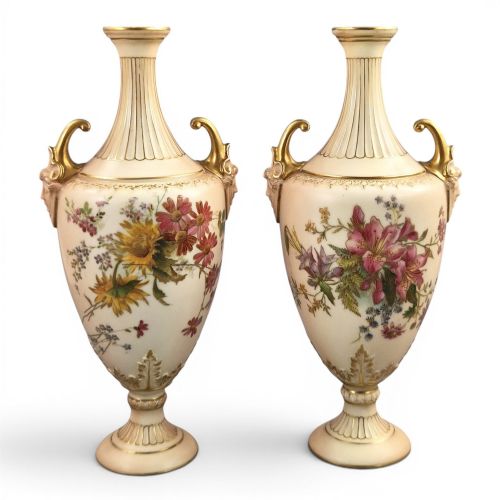
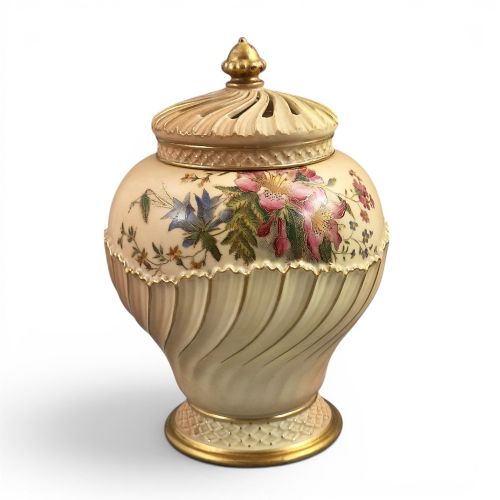
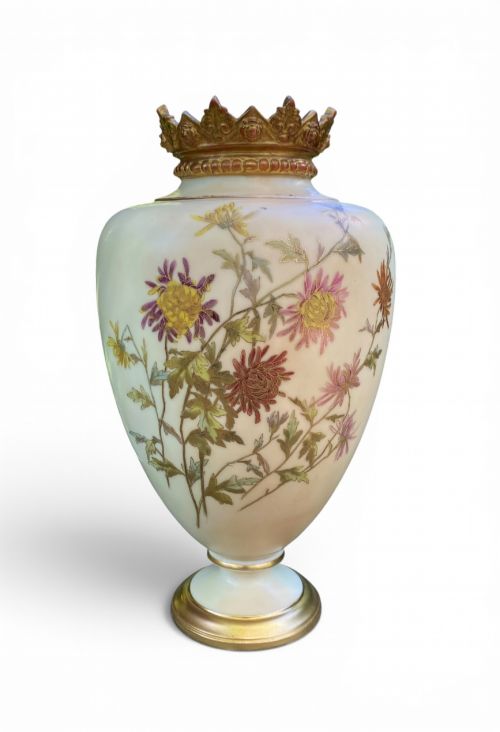
When searching for worcester blush ivory porcelain, buyers encounter a distinct palette of creamy, peach-tinged ceramic bodies combined with gilt highlights and polychrome floral decoration. The pieces span functional and decorative forms, ranging from tea trios and loving cups to ewers, cachepots, and jardinieres.
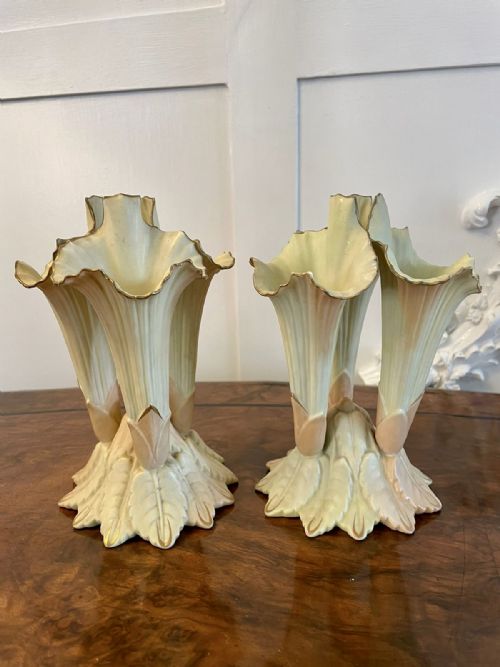
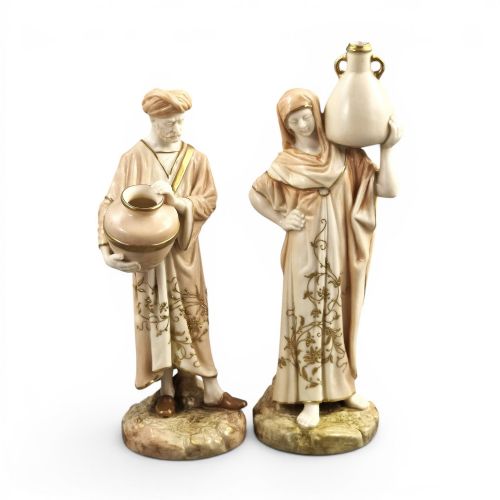
Vases and decorative figures dominate the selection, often taking inspiration from Victorian Orientalism or neoclassical revival styles. Collectors frequently find works modelled by James Hadley alongside standard factory shapes dated from the late nineteenth century into the Edwardian period and the early twentieth century.
The inventory includes specialised items such as spill vases, pot-pourri jars, and figural groups depicting water carriers and musicians. These items reflect a Victorian taste for exoticism and naturalism executed on a fine ceramic base.
How they were made
Makers shaped the porcelain body and applied a specialised matte tinted glaze to create the signature warm, ivory-colored ground before firing. Artisans then hand-painted floral sprays, primarily chrysanthemums and roses, directly onto the porous surface.
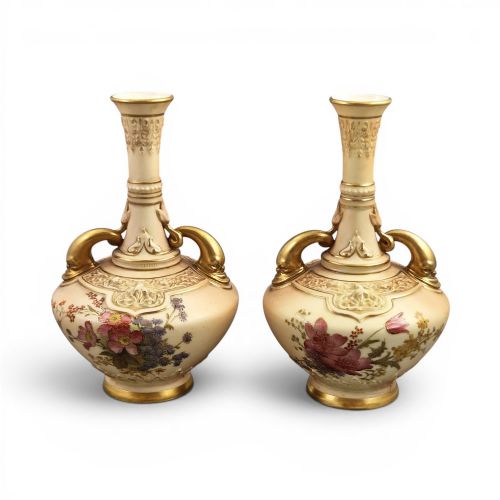
Enamel colours and extensive gilding were layered over the glaze, often complemented by gold leaf highlights and pierced handles. Many pieces incorporated intricate moulded details, such as dolphin handles or classical figures, requiring skilled assembly before final firing.
Materials recorded on this page include enamel, gold leaf, and specialised tinted ceramic glazes.
What varies in quality
The distinction between standard production items and superior pieces rests on the complexity of the modelling and the finesse of the hand-painted decoration. Figural works and large sculptural ewers demand greater artistry from the modeller than simple ovoid vases or standard jugs.
Painted detail dictates the upper tier of the range, where individual floral sprays show subtle shading and crisp enamel work rather than mechanical transfer printing. The application of heavy gilding and the precision of pierced handles further separate exceptional examples from ordinary production.
Royal Worcester·Locke And Co·James Hadley
The Worcester Blush Ivory Porcelain Glossary
- Blush Ivory
- A matte tinted porcelain glaze developed by Worcester that creates a warm, creamy pinkish-cream background. It serves as the canvas for hand-painted floral motifs.
- Ewer
- A large, ornate jug with a flared spout and a sweeping handle, traditionally used for holding water but produced here as a purely decorative ornamental object.
- Cachepot
- An ornamental flower pot cover designed to hold a plant pot inside. These ceramic vessels often feature hand-painted floral decoration and gilt borders.
- Spill Vases
- Tall, slender vessels designed to hold thin wooden spills used for lighting fires or candles. They frequently appear in matching pairs within Victorian table settings.
- Pot-Pourri Jar
- A lidded ceramic vessel pierced to allow scented dried plant material to perfume a room. The covers are often shaped with detailed moulding and gilt highlights.
Worcester Blush Ivory Porcelain: Frequently Asked Questions
How do you date these pieces?
Royal Worcester items carry coded factory marks stamped on the base, including dots and letters that indicate specific years of manufacture. Stylistic clues such as Victorian aesthetic motifs or Edwardian classical revival shapes also help establish chronology.
Archival model numbers recorded on the underside link individual pieces to production registers maintained by the pottery.
Were these items meant to be used?
While many pieces took the form of functional objects like teapots, jugs, and cups, most served primarily as decorative ornaments in formal Victorian parlours. Items such as ewers and jardinières were displayed on mantelpieces and side tables rather than utilised for serving.
Delicate gilding and hand-painted enamel surfaces made daily practical use uncommon for the finer decorative ranges.
How do factory marks differ?
Factory stamps evolved over the decades, incorporating crown and circle arrangements alongside date ciphers that changed annually. Subsidiary makers like Locke and Co used their own distinct stamped signatures alongside the primary pottery marks.
Understanding these variations allows collectors to distinguish between nineteenth-century production and later twentieth-century editions.