


Victorian Porcelain Jardiniere
A victorian porcelain jardiniere brings nineteenth-century horticulture indoors, offering a decorative vessel to house potted plants in style.

Victorian Porcelain Jardiniere
When you search for a victorian porcelain jardiniere, you encounter ornamental plant containers and cachepots produced primarily during the nineteenth century. These items functioned as indoor display vessels for ferns and flowering plants, protecting interior surfaces while adding colour to drawing rooms and reception spaces.
The pieces listed on this page span the mid-nineteenth century through the early twentieth century, reflecting the broad Victorian and Edwardian manufacturing periods. Alongside traditional jardiniere forms, you find related vessel types such as wine coolers, centrepiece bowls, and plant stands integrated with porcelain plaques.
French and English origins dominate the selection, showcasing distinct stylistic revivals from the era. Makers from Worcester, Derby, and Coalport sit alongside French examples featuring elaborate metal mounts and hand-painted decoration.
Materials and Construction
Potters shaped these vessels from fine ceramic and porcelain bodies, often applying delicate enamel colours and blush ivory grounds by hand. Artisans utilised hand-painted floral motifs and figural scenes, occasionally highlighting details with gold leaf.
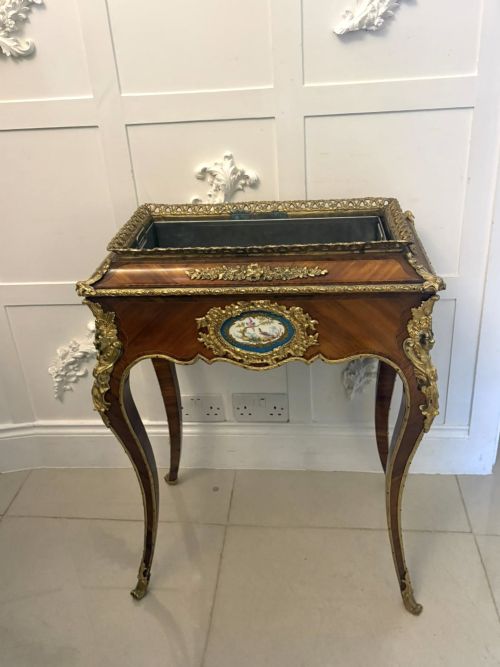
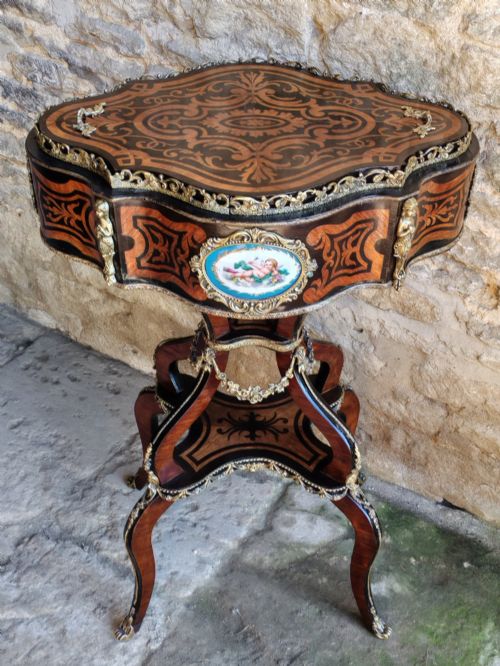
Many French pieces incorporate ormolu mounts, securing the porcelain body within cast bronze frameworks. Structural elements in select items combine kingwood, rosewood, and ebonised timber to create elevated stands and planter mounts.
One exceptional jardiniere captures a Victorian moment by portraying a young girl pausing by a rustic fence.
Assessing Quality and Execution
The distinction between standard production and top-tier pieces rests upon the precision of the hand-painting and the complexity of the porcelain body. Superior examples exhibit finely detailed brushwork, crisp enamelling, and well-executed figural subjects rather than simple printed patterns.
Mounting and secondary materials further define the hierarchy of these objects. Heavy, finely chased ormolu mounts and solid hardwood structures indicate higher manufacturing investment than plain ceramic bodies alone.
Royal Worcester·James Hadley·Royal Doulton·Royal Crown Derby·Coalport
The Victorian Porcelain Jardiniere Glossary
- Jardiniere
- An ornamental pot or stand designed to hold flowers or plants indoors. These vessels often sit upon tables or floor stands.
- Cachepot
- A decorative pot used to conceal an ordinary flowerpot, preventing water damage to furniture. They typically feature flat bases and lack drainage holes.
- Ormolu
- Gilt bronze mounts applied to furniture and decorative ceramics during the eighteenth and nineteenth centuries. The technique involves a mercury-gilding process on cast bronze.
- Blush ivory
- A matte cream-coloured porcelain finish pioneered by Royal Worcester, typically decorated with soft pastel florals and gilt accents. It gained immense popularity during the late Victorian period.
Victorian Porcelain Jardiniere: Frequently Asked Questions
What is a jardiniere used for?
A jardiniere served as an ornamental container for housing potted plants and flowers inside nineteenth-century homes. It allowed homeowners to display greenery in formal rooms without risking water damage to tables and floors.
Beyond holding plants, larger versions functioned interchangeably as wine coolers for dining rooms. They added a decorative focal point to centre tables, windowsills, and dedicated plant stands.
How do I date a porcelain jardiniere?
Dating relies on maker marks, stylistic clues, and the surrounding materials. Pieces bearing Victorian registration marks or specific factory ciphers help narrow the production decade.
Stylistic shifts also provide guidance, moving from mid-century Rococo Revival forms toward later blush ivory finishes and Edwardian simplicity. The presence of metal mounts often reflects French Napoleon III or Louis XV revival tastes of the 1860s.
Where were these pieces made?
The pieces originate primarily from English potteries and French workshops. English makers such as Worcester, Derby, and Coalport produced distinct porcelain bodies and painted designs.
French makers concentrated heavily on combining porcelain with gilt bronze ormolu mounts and exotic timbers like kingwood. Both traditions catered to affluent Victorian interiors across Europe.