


Edwardian Ceramic Planter
These edwardian ceramic planter options bring period charm to interiors, offering sturdy vessels that hold indoor plants with timeless grace.
Edwardian Ceramic Planter
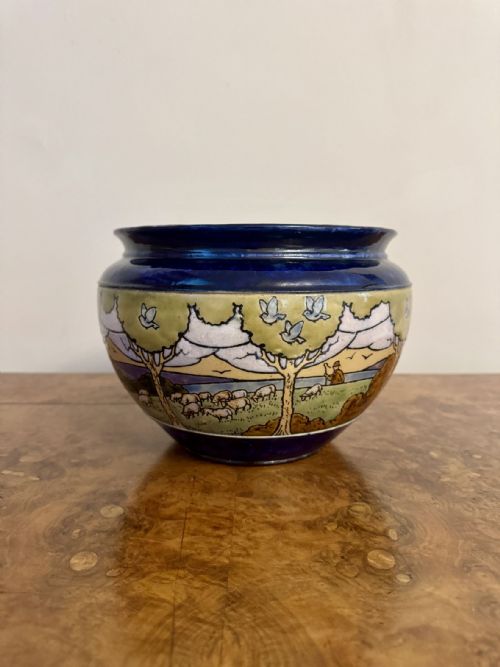
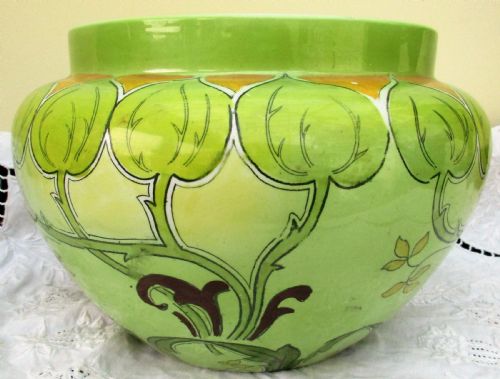
An edwardian ceramic planter encompasses a range of jardiniere vessels and garden planters originating from the late nineteenth century through the early twentieth century. Buyers encounter forms including large jardinieres, pedestal bowls, and posy holders shaped from clay and porcelain.
The selections span periods like the Edwardian era, nineteenth century, and the early nineteen-twenties, incorporating styles such as Art Nouveau and Arts and Crafts. These pieces function primarily as decorative containers for flora within domestic spaces.
How They Were Made
Potters shaped these items using earthenware, porcelain, stoneware, and terracotta, applying surface glazes and enamel finishes for protection and sheen. Some examples integrate decorative elements such as gold leaf accents or Ruskin cabochons.
Workshops utilised moulding and throwing techniques to achieve forms like three-handled jardinieres and posy holders. Artisans embellished surfaces with blush ivory finishes and applied motifs characteristic of the Art Nouveau and Arts and Crafts movements.
A boy with a wheelbarrow once found new purpose holding posies.
What Varies in Quality
Quality rests upon the crispness of the moulded form and the depth of the glaze, distinguishing standard utilitarian vessels from refined studio output. Pieces bearing specific artistic attribution or hand-painted details display greater craftsmanship.
The integration of applied decorative cabochons or precious leaf elements elevates the visual weight of the ceramic body. Better examples maintain structural integrity across complex silhouettes such as pedestal stands and multi-handled planters.
Royal Doulton·W.A. Adderley·Krister KPM Waldenburg·Royal Worcester·Compton Pottery·Minton·Coalport
The Edwardian Ceramic Planter Glossary
- Jardiniere
- An ornamental pot or stand designed to hold flowers or plants indoors. These vessels often sit on matching pedestals or directly on furniture surfaces.
- Posy Holder
- A small ceramic vessel intended for arranging short-stemmed flowers or posies. They appear in domestic settings as tabletop ornaments.
- Earthenware
- Porous pottery fired at relatively low temperatures and typically covered with a glaze. It forms the base for many domestic planters and chamber vessels.
- Cabochon
- A polished, convex gemstone or coloured glass element without facets. Potters set these into metal or ceramic mounts as decorative accents.
- Blush Ivory
- A specific ceramic finish featuring soft, creamy tones with delicate floral shading. Royal Worcester popularised this technique during the late nineteenth and early twentieth centuries.
Edwardian Ceramic Planter: Frequently Asked Questions
Where should I place an edwardian ceramic planter?
These planters suit interior spaces where plants require a decorative housing, such as hallways or living rooms. Their substantial forms anchor corners or table centres effectively.
Ensure the surface beneath is protected against moisture if the vessel lacks an internal tray. Placing them near natural light enhances the glazed surfaces.
How do I identify an Art Nouveau planter?
Art Nouveau examples feature fluid, organic lines inspired by natural forms, often incorporating stylised floral motifs. Look for whiplash curves and asymmetrical shaping on the ceramic body.
Glazes on these pieces tend to flow naturally across the surface, emphasising the handcrafted aesthetic of the period.
Can these planters hold live plants directly?
Many of these vessels were designed to house potted plants rather than soil directly. Using an inner nursery pot prevents moisture damage to the antique ceramic interior.
Drainage holes are uncommon in historical jardinieres, making indirect planting the safest method for preservation.
What is the difference between a jardiniere and a flower pot?
A jardiniere functions primarily as an ornamental container designed to display a potted plant attractively. Standard flower pots focus more on utility and direct horticulture.
Jardinieres often feature richer glazes, handles, or matching pedestals intended for formal display.