


Gilded Ceramic Planter
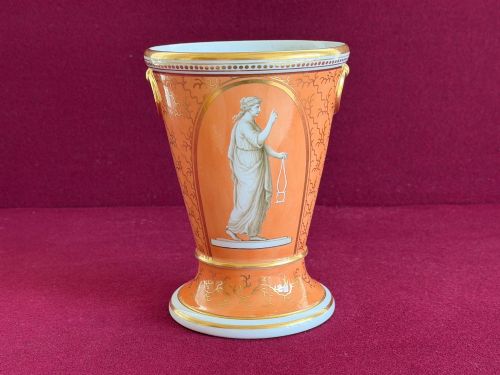
A gilded ceramic planter brings the rich surface work of nineteenth-century ceramicists and metal gilders straight into a room.
Gilded Ceramic Planter
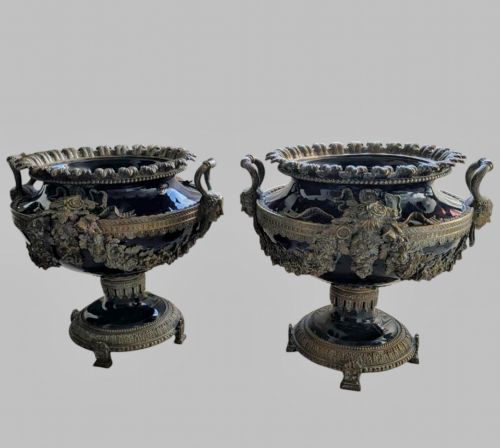
A gilded ceramic planter encompasses a range of vessel forms designed to house plants and flowers, predominantly appearing on this page as jardinières, cachepots, and campana vases. These pieces span from the Georgian period through the Victorian era and into the early twentieth century, reflecting shifting domestic tastes across European and Japanese workshops.
The most frequent examples encountered here are porcelain and earthenware jardinières adorned with gilt details, alongside decorative bowls and figural flower carts. Makers from English factories like Royal Worcester and Royal Doulton sit alongside French and German manufacturers, offering everything from blush ivory finishes to armorial decoration.
Buyers seeking a gilded ceramic planter will find works influenced by Rococo Revival and Art Nouveau styles. The diversity of origins ranges from Worcester porcelain of the early nineteenth century to Japanese Satsuma bowls of the same broad era.

Materials and technique
The foundation of these pieces relies on ceramic bodies formed from porcelain, earthenware, or glazed ceramic, shaped into vessels and figures before firing. Artisans applied hand-painted enamel and detailed glazes, often incorporating blush ivory or deep blue grounds beneath the surface decoration.
Gilding was then applied using gold leaf or gilt bronze mounts, highlighting handles, rims, and moulded relief work. Factories employed specialised ceramicists and painters, such as James Hadley at Royal Worcester, to execute intricate figural and floral scenes alongside the metallic embellishments.
The listings here include porcelain, earthenware, and gilt bronze materials spanning the Georgian, Victorian, and early twentieth-century periods.
Distinctions in execution
Quality in these pieces is dictated by the fineness of the ceramic body and the precision of the hand-painted details. Early Worcester porcelain and pieces from established factories display superior control over the glaze and gilding, whereas commercial output from later decades can present simpler forms of transfer printing.
The application of gold leaf and gilt bronze mounts also separates standard production from exceptional works. Superior examples integrate the gilding harmoniously with the ceramic contours, maintaining crisp definition in moulded motifs and hand-painted subjects.
Flight and Barr·Barr Flight and Barr·Royal Doulton·Royal Worcester·Doulton Burslem·Kister Scheibe Alsbach·Vion and Baury·Coalport
The Gilded Ceramic Planter Glossary
- Jardiniere
- A large ornamental pot or stand for holding plants or flowers. These vessels often feature decorative handles and footed bases.
- Cachepot
- An ornamental pot used to conceal an ordinary flower pot. They typically lack drainage holes at the base.
- Gilding
- The application of gold leaf or powder to a surface. On ceramics, this accentuates raised mouldings and rims.
- Blush ivory
- A soft, creamy ceramic finish developed by Victorian potteries. It provides a subtle matte background for floral painting.
- Campana
- A bell-shaped classical urn form often utilised for vases and garden ornaments. These vessels frequently feature flared rims and pedestal bases.
Gilded Ceramic Planter: Frequently Asked Questions
What is a jardiniere?
A jardiniere is a decorative ceramic vessel designed to hold potted plants or cut flowers inside a home.
Unlike standard flower pots, these ornamental pieces usually feature elaborate handles, painted scenes, and gilded surfaces meant for display in formal reception rooms.
How do I care for my planter?
Protect the delicate enamel, painted scenes, and gold leaf by keeping these vessels away from direct moisture.
Use a separate inner plastic pot for any living plants to prevent water from damaging the historic ceramic body and interior glaze.
How do I date a piece?
Examine the style, factory marks, and ceramic body to determine the likely period of manufacture.
Georgian and Victorian pieces often bear specific factory backstamps or registration numbers that help narrow down the decade of production.
What is blush ivory?
Blush ivory is a matte, creamy ceramic finish pioneered by Victorian potteries to mimic the look of aged ivory.
This surface acts as a soft ground for delicate hand-painted floral motifs and subtle gilding.