


Art Nouveau Ceramic Pot
These art nouveau ceramic pot examples bring fluid, organic forms and rich glazes straight to any interior.

Art Nouveau Ceramic Pot
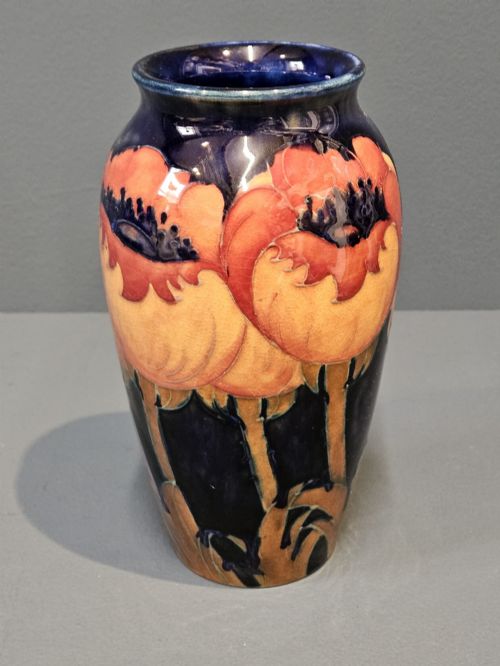
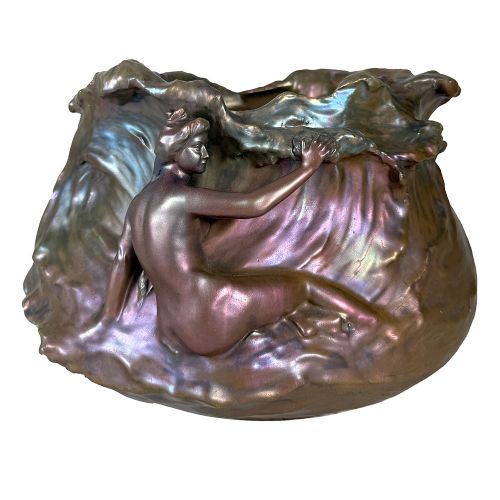
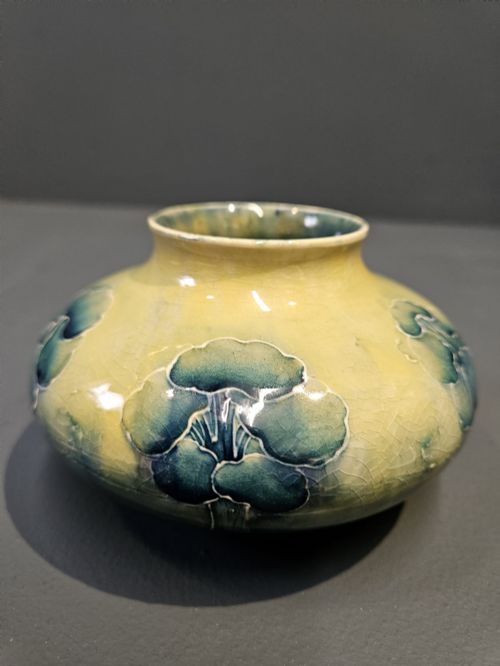
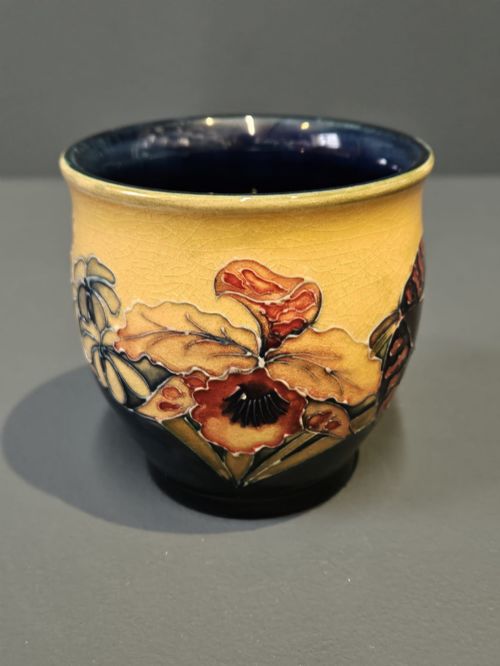
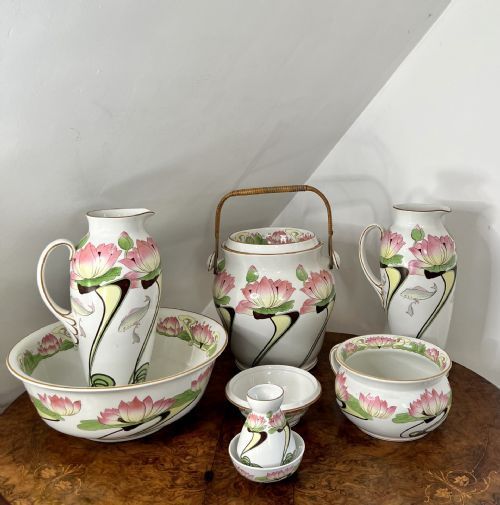
An art nouveau ceramic pot represents the flowing lines and natural motifs characteristic of the movement, spanning periods from the late nineteenth century into the early twentieth century. Buyers encounter forms such as vases, jardiniere pieces, decorative jars, tobacco jars, and wash sets created by makers like Moorcroft, Royal Doulton, and Bretby Pottery.
The objects originate from British makers and workshops working across the Victorian, Edwardian, and later periods, often retail-distributed through outlets like Liberty and Co. Many items exhibit the signature stylistic crossovers of the era, merging late Victorian sensibilities with the distinctive sinuous curves of Art Nouveau and Arts and Crafts design.
How they were made
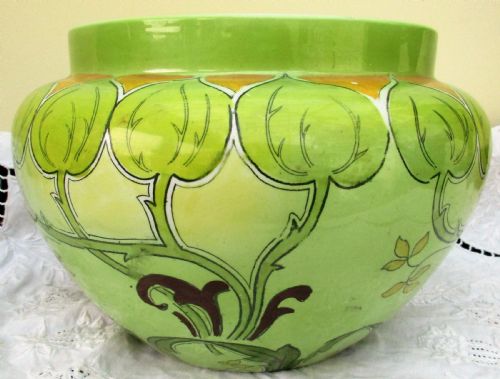
Potters utilised earthenware and stoneware as the primary bodies, shaping vessels into robust forms designed to hold water or dry goods. Surface decoration frequently relied on specialised ceramic glaze techniques to achieve depth and variation in colour.
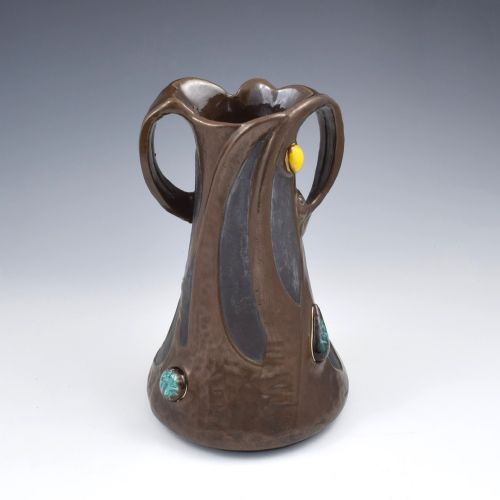
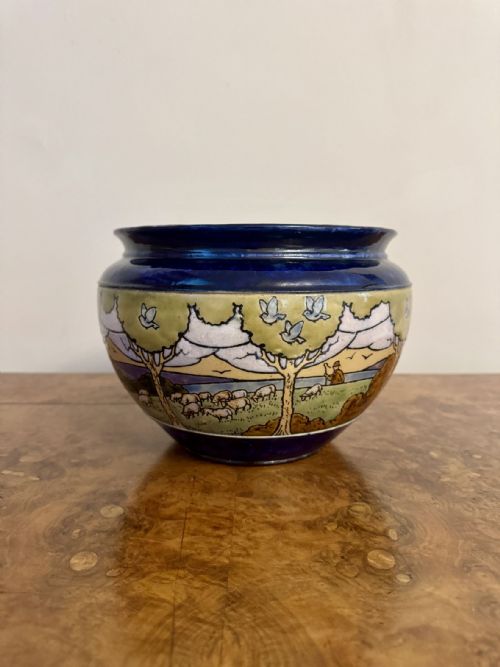
Makers embellished surfaces with distinctive finishing touches, including copper effect treatments, applied gold leaf, and jewelled cabochons. Hand-painted designs and tube-lined patterns brought floral and organic motifs to life across the ceramic body.
Listings feature earthenware and stoneware bodies finished with varied ceramic glazes, copper effects, and gold leaf.
What varies in quality
The standard of an art nouveau ceramic pot depends on the precision of the modelling and the depth of the glaze finish. Pieces featuring complex decorative elements such as jewelled cabochons or copper effect surfaces demonstrate higher ambition in studio execution.
Association with documented designers or retailers elevates the standing of a piece, particularly when factory marks confirm factory attribution. The crispness of the moulded relief and the richness of the applied ceramic glaze dictate the visual impact of the final object.
Moorcroft·Bretby Pottery·Royal Doulton·W.A. Adderley·Macintyre and Co·William Moorcroft·Maud Bowden
The Art Nouveau Ceramic Pot Glossary
- Jardiniere
- A large ceramic pot or planter designed to hold live houseplants or floral arrangements. These vessels often sit on heavy pedestals or directly on tabletops.
- Earthenware
- A porous type of pottery fired at lower temperatures, requiring a vitreous glaze to become waterproof. It serves as the base body for many domestic decorative pieces.
- Stoneware
- A sturdy, vitrified pottery body fired at higher temperatures until non-porous. This material provides exceptional durability for utilitarian vessels like tobacco jars and large vases.
- Cabochon
- A polished, convex gemstone or glass piece lacking facets, frequently set into the ceramic surface as decorative relief. These elements catch the light and enhance the tactile quality of the pot.
Art Nouveau Ceramic Pot: Frequently Asked Questions
What is an art nouveau ceramic pot used for?
These vessels primarily function as decorative containers, display vases, and indoor planters for floral arrangements or houseplants. Historically, specific forms also served practical household roles as tobacco storage jars or wash set components.
Today, collectors use them to introduce organic lines and period character into contemporary interiors. They require careful placement away from high-traffic edges due to their delicate ceramic construction.
How do I identify the maker?
Makers typically stamped, painted, or impressed their marks, ciphers, or facsimile signatures onto the underside of the ceramic base. Additional retailer stamps, such as marks for Liberty and Co, often appear alongside the manufacturer's logo.
Matching the glaze style, decorative motifs, and recorded shape numbers helps confirm the origin of unmarked or partially marked pieces. Reference books dedicated to British pottery factories provide clear guides for decoding these historical signatures.
Are these pots waterproof?
Stoneware and glazed earthenware bodies generally hold water safely, though older porous clays can develop hairline moisture seepages over decades of use. Checking the interior glaze for stability helps determine if a pot can safely hold fresh cut flowers.
Using a discreet plastic liner inside antique jardinieres and vases protects the historic ceramic fabric from mineral deposits and moisture damage. This simple precaution preserves the interior glaze and prevents water staining.