


Royal Doulton Pottery Vessel
A royal doulton pottery vessel brings tactile British ceramic history into a room through salt-glazed stoneware, moulded earthenware and hand-painted surfaces.
Royal Doulton Pottery Vessel
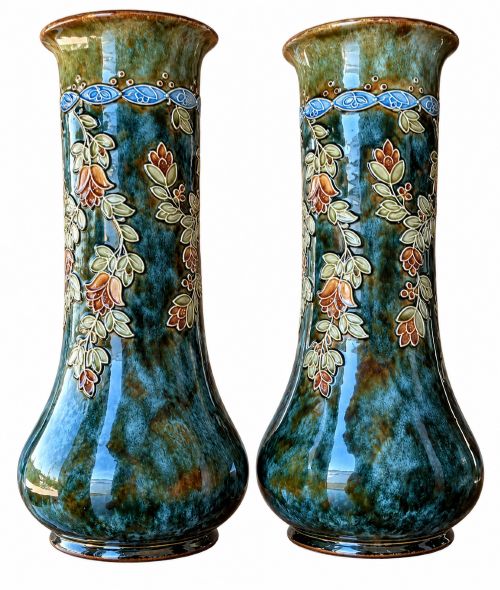
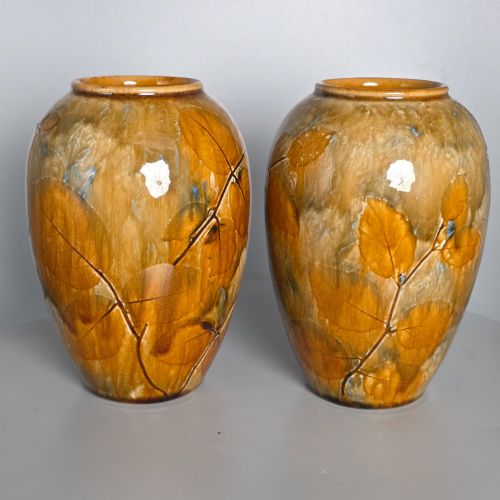
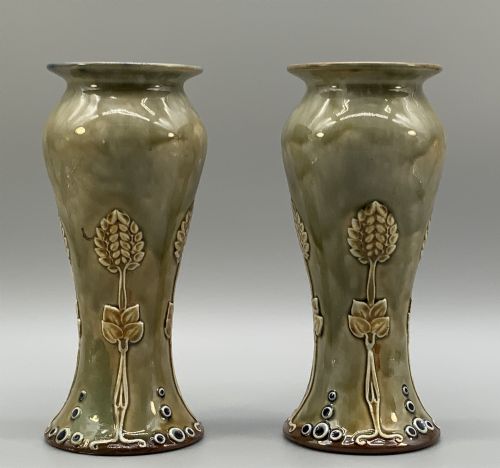
When you search for a royal doulton pottery vessel, you encounter a diverse spectrum of utilitarian and decorative forms spanning the late nineteenth and early twentieth centuries. These pieces encompass baluster vases, commemorative loving cups, jugs, pitchers and jardinieres originating from Victorian and Edwardian workshops.
The most common examples on this page are stoneware vases and commemorative vessels reflecting Art Nouveau, Arts and Crafts and Art Deco design movements. They range from modest domestic items to large, intricately decorated exhibition pieces.
The materials and techniques visible in these listings demonstrate the transition from heavy Victorian salt-glaze manufacturing to lighter, more colourful ceramic experimentations of the 1920s and 1930s.
How they were made
Makers utilised stoneware and earthenware bodies, throwing them on a potter's wheel or casting them in moulds before applying glazes, slips and enamel floral decor. Many pieces combine textured salt-glaze surfaces with hand-painted highlights in gold leaf and vibrant pigments.
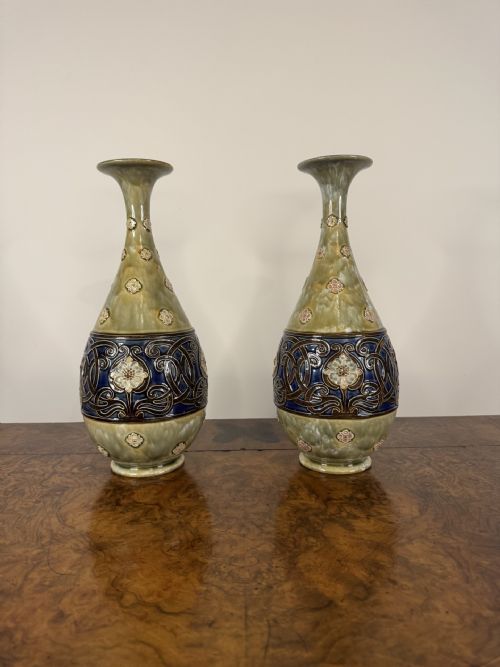
Specialised surface treatments such as Slater's patent texturing involve pressing lace or fabric into damp clay to create intricate background patterns beneath coloured glazes.
Firing techniques varied from high-temperature kiln settings for durable stoneware to controlled reduction firings that produced rich flambé effects.
Listings span from the 1880s to the 1930s, uniting Victorian salt-glazed stoneware with colourful Edwardian hand-painted ceramics and Art Deco glazes.
What varies in quality
The standard of a royal doulton pottery vessel rests upon the crispness of the modelled relief, the control of the glaze and the complexity of the hand-painting. Pieces bearing specific artist ciphers or signatures show superior individual brushwork and compositional thought compared to standard factory output.
Proportion and balance define the superior items in this range, particularly in matched pairs where symmetry and uniformity of glaze application are difficult to achieve. Pieces decorated with named subjects or historical portraits command attention through their distinct artistic execution.
Louisa Wakely·John H Plant·Emily Stormer·Ethel Beard·R Allen
The Royal Doulton Pottery Vessel Glossary
- Stoneware
- A robust, vitrified ceramic fired at high temperatures until non-porous. It provides a durable ground for rich salt glazes and incised decoration.
- Baluster
- A vertical architectural form featuring a rounded lower body tapering to a narrow neck. This shape frequently underpins Victorian and Edwardian vase designs.
- Loving cup
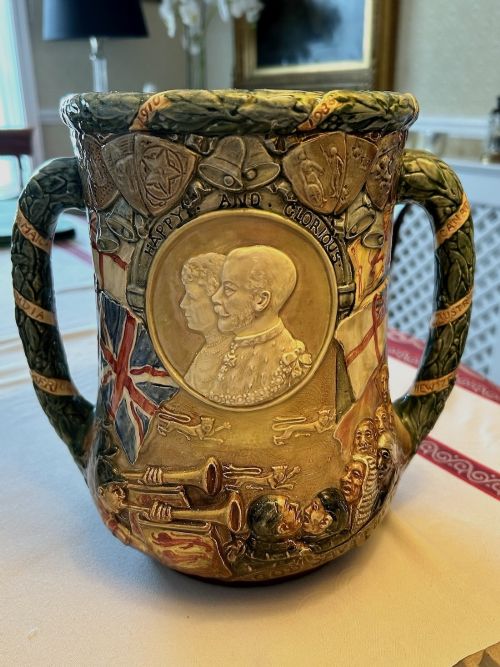
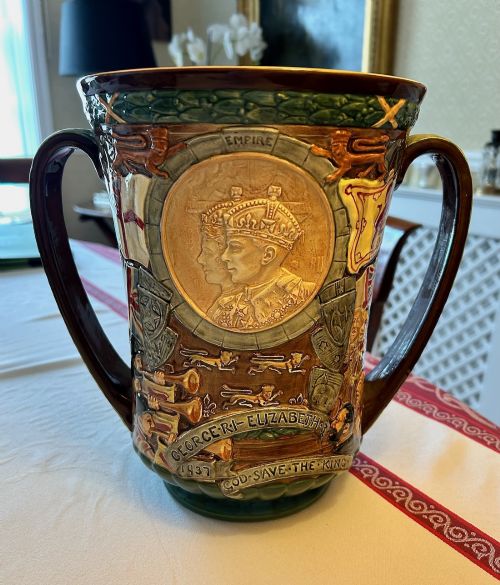
- A large drinking vessel equipped with multiple handles, often produced to commemorate royal coronations and jubilees. These pieces frequently feature detailed moulded portraits and inscriptions.
- Slater's Patent
- A manufacturing technique involving the impression of lace or textiles into damp clay surfaces. It creates a textured background that holds contrasting coloured glazes.
- Flambé
- A vibrant, unpredictable glaze effect achieved through copper reduction firings. It produces mottled red and purple streaks across the ceramic body.
Royal Doulton Pottery Vessel: Frequently Asked Questions
How do I date a royal doulton pottery vessel?
Dating relies on stylistic clues, paste composition and stamped factory marks found on the base. Victorian and Edwardian pieces often display impressed monograms alongside specific studio ciphers.
Later pieces from the 1920s and 1930s introduce brighter enamel palettes and commemorative dates for royal jubilees and coronations that narrow the window of manufacture.
What is Lambeth stoneware?
Lambeth stoneware refers to pottery produced at the Doulton London factory using dense, impermeable clay bodies. These items typically feature incised foliage, beaded borders and salt-glazed finishes characteristic of the Arts and Crafts movement.
Artists at the Lambeth studios worked independently on individual pots, resulting in unique decorative variations across identical vessel shapes.
How were commemorative loving cups used?
Commemorative loving cups served primarily as display items or ceremonial vessels for civic and domestic celebrations. Their multiple handles allowed them to be passed safely among guests during toasts.
Issued for events such as coronations and jubilees, they captured contemporary public sentiment through moulded portraits and heraldic motifs.
What is Mandarin Ware?
Mandarin Ware is a distinctive line of brightly glazed pottery produced during the 1920s. It is characterised by vivid solid ground colours, notably yellow, paired with contrasting enamel decorations.
These pieces represent a distinct shift away from sombre Victorian stoneware towards the cheerful palettes of the Art Deco period.
Where should I display a ceramic jardiniere?
A ceramic jardiniere functions best on sturdy low furniture where its decorative exterior and rim can be viewed from above. These heavy pots were designed to hold potted plants indoors.
Protecting delicate surfaces from moisture requires placing an appropriate liner inside the vessel before introducing any damp soil or foliage.