




Cobalt Blue Jardiniere
A cobalt blue jardiniere brings rich depth and striking plant display to a room, drawing the eye with its deep glazed colour.
Cobalt Blue Jardiniere
A cobalt blue jardiniere is a decorative plant pot designed to hold indoor greenery or floral arrangements while concealing a plain terracotta flowerpot inside. These vessels range from compact cachepots to large floor-standing fish bowls intended for substantial plants.
Buyers searching for a cobalt blue jardiniere will encounter pieces spanning the Victorian era through the early twentieth century. English factories, French makers, German kilns, and Asian workshops all produced distinctive iterations during these decades.
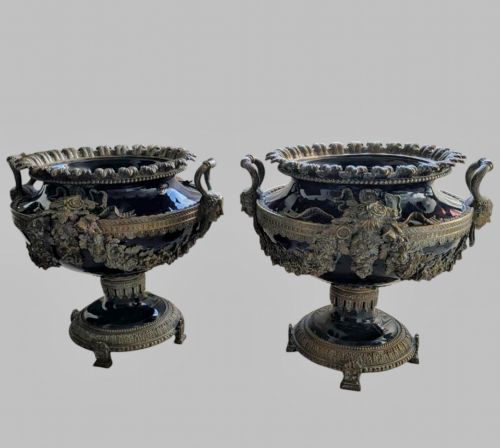
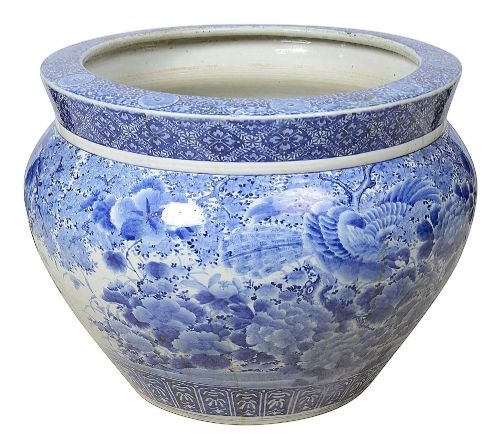
The selections on this page feature forms from the late nineteenth century and early twentieth century. Common stylistic expressions include Victorian neoclassical motifs, Japanese Imari patterns, and French rococo revival details.
How they were made
Potters shaped these vessels from ceramic, porcelain, earthenware, and stoneware using traditional throwing and moulding techniques. Artisans applied rich cobalt glazes, sometimes incorporating salt glazing or intricate majolica enamelling to achieve deep surface textures.
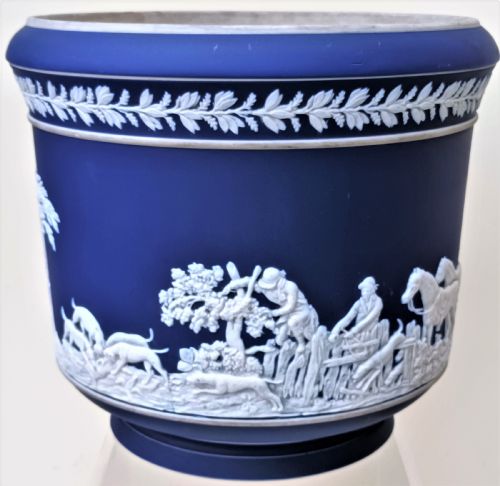
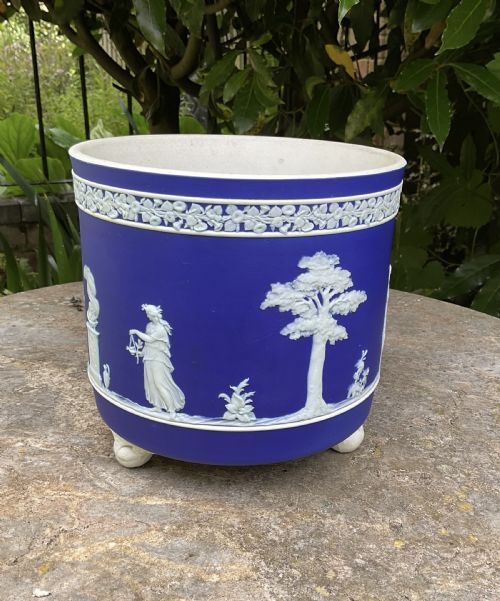
Many examples incorporate applied relief work, such as jasperware figures, or delicate hand-painted motifs finished with gold leaf accents. Firing these pieces at high temperatures ensured the vibrant blue pigments fused permanently with the vitreous body beneath.
Listings feature porcelain, stoneware, and glazed earthenware from the Victorian era up to the 1920s.
What varies in quality
The standard of a cobalt blue jardiniere rests upon the crispness of its moulding and the depth of its glaze. Superior pieces exhibit even, unclouded cobalt coloration without pooling or dryness in the fired finish.
Hand-painted detailing and fine relief work elevate certain items above standard production wares. Finer examples balance sculptural weight with precise decorative execution, showing careful attention to interior finishing as well as exterior ornament.
William Adams and Sons·Royal Doulton·Doulton Lambeth·Minton·George Jones·Royal Crown Derby·Coalport
The Cobalt Blue Jardiniere Glossary
- Jardiniere
- An ornamental pot or stand for holding plants or flowers. These vessels sit upon tables or floors to display greenery.
- Cachepot
- A decorative container used to conceal an ordinary flowerpot. The term translates from French as hiding pot.
- Jasperware
- A type of fine stoneware developed in the eighteenth century featuring contrasting raised white reliefs against a coloured ground. Cobalt blue provides the most famous background for this technique.
- Majolica
- earthenware decorated with opaque coloured glazes fired on a tin-lead base. This method yields vibrant hues and glossy surfaces.
- Salt glaze
- A glassy finish formed by throwing common salt into the kiln during high-temperature firing. This process creates a textured, pebbled surface across the stoneware body.
Cobalt Blue Jardiniere: Frequently Asked Questions
What is a cobalt blue jardiniere used for?
These decorative pots primarily serve to hold potted plants and large floral arrangements inside the home. They function as ornamental cachepots that hide utilitarian flowerpots.
Historically, larger versions also served as fish bowls or standalone decorative centrepieces within grand interiors. Their deep blue glazes provided a striking contrast against green foliage.
How do I care for my jardiniere?
Protect the antique ceramic or porcelain body by placing a secondary liner inside the vessel to hold water and soil. This prevents moisture from seeping through porous earthenware or older glaze.
Clean the exterior gently using a soft, dry cloth to remove dust. Avoid harsh chemical cleaners that might damage nineteenth-century glazes or gold leaf details.
How can I tell Victorian pieces apart?
Victorian examples often display distinct stylistic markers such as neoclassical reliefs, majolica enamels, or rich salt-glazed finishes. Examining the base often reveals impressed maker marks or registration numbers tied to the nineteenth century.
Weight, clay body composition, and glazing style also help differentiate British earthenware from continental and Asian imports of the same period.
Can these pots go outside?
Most antique ceramic and earthenware jardinieres are designed for indoor use. Frost and freezing temperatures can cause historic clay bodies and glazes to crack or craze.
Keeping these pieces inside preserves the delicate cobalt surfaces, enamels, and applied decorations from weathering and structural damage.