
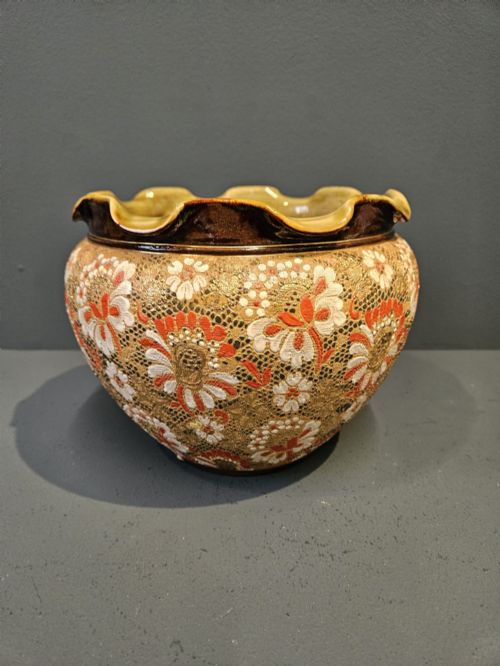
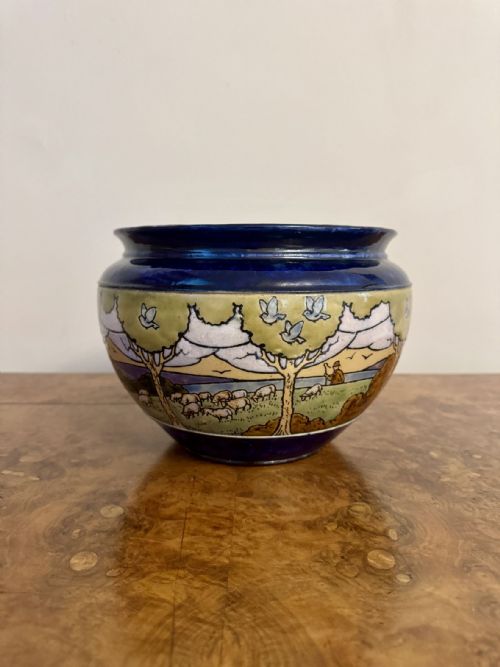


Doulton Lambeth Planter
These doulton lambeth planter pieces are heavy art pottery vessels made to hold large indoor plants and display remarkable Victorian craftsmanship.
Doulton Lambeth Planter
A doulton lambeth planter takes the form of a sturdy jardiniere or large basin designed for substantial greenery in Victorian interiors and conservatories. These vessels appear in solid stoneware and glazed ceramic forms dating from the nineteenth century up to the nineteen-twenties.
The selection centres heavily on Victorian and Arts and Crafts examples, alongside Slaterware variants and specific window planter formats. Most pieces derive from the Victorian era and the decades immediately following, reflecting prolific British art pottery production.
How they were made
Makers utilised dense stoneware and ceramic bodies, fired at high temperatures to achieve durable, vitrified vessels suitable for holding soil and water. Artisans applied rich glazes and sometimes enamel or gold leaf details to highlight textured surfaces.
Many items incorporate characteristic Doulton surface decoration techniques, combining incised patterns with distinct colour glazes across Victorian and Arts and Crafts styles.
Some nineteenth-century makers used actual lace pressed directly into wet clay to create their intricate surface patterns.
What varies in quality
The distinction between ordinary and superior pieces rests on the crispness of the modelled detail and the depth of the glaze application. Early Victorian examples often display finer hand-finished ornament and more complex surface textures than later production runs.
Overall scale and proportion dictate desirability, with larger window planters and substantial jardiniere bases commanding stronger visual presence than standard table vessels.
The Doulton Lambeth Planter Glossary
- Jardiniere
- A large ornamental pot or receptacle used for holding flowers or potted plants. These freestanding vessels typically sit on floors, plant stands, or tabletops.
- Stoneware
- A robust, vitrified ceramic type fired at high temperatures until semi-vitreous and impermeable. This material resists moisture naturally, making it ideal for plant receptacles.
- Slaterware
- A specific Doulton ceramic technique involving textured clay pressed against lace or fabrics before firing. This process creates a distinctive woven pattern across the body.
- Arts and Crafts
- A design movement valuing handcraftsmanship and traditional materials over mass production. Pieces from this style often feature honest, structural decoration inspired by nature.
Doulton Lambeth Planter: Frequently Asked Questions
What is a jardiniere?
A jardiniere is a decorative ceramic pot designed to hold a living plant rather than planting directly into the vessel. They usually sit inside a matching saucer or stand to catch drainage water.
These pieces served as prominent interior decoration in Victorian drawing rooms and conservatories. Their generous proportions allowed large ferns and palms to take centre stage in domestic spaces.
How do I care for stoneware?
Stoneware is remarkably durable and requires little maintenance beyond gentle washing with warm water and mild soap. Avoid abrasive scrubbers that might dull the glazed surface.
When using these vessels for live plants, place a plastic nursery pot inside rather than filling the antique piece directly with soil. This prevents moisture from seeping into unglazed interior bases over time.
How do I date these pieces?
Dating relies heavily upon impressed factory marks stamped into the clay base, alongside stylistic clues such as floral motifs or geometric patterns. Victorian pieces often feature specific registry numbers or early company monograms.
Stylistic shifts also help narrow the timeline, moving from ornate Victorian relief work towards the simpler, tactile textures favoured during the Arts and Crafts movement.
Where were they displayed?
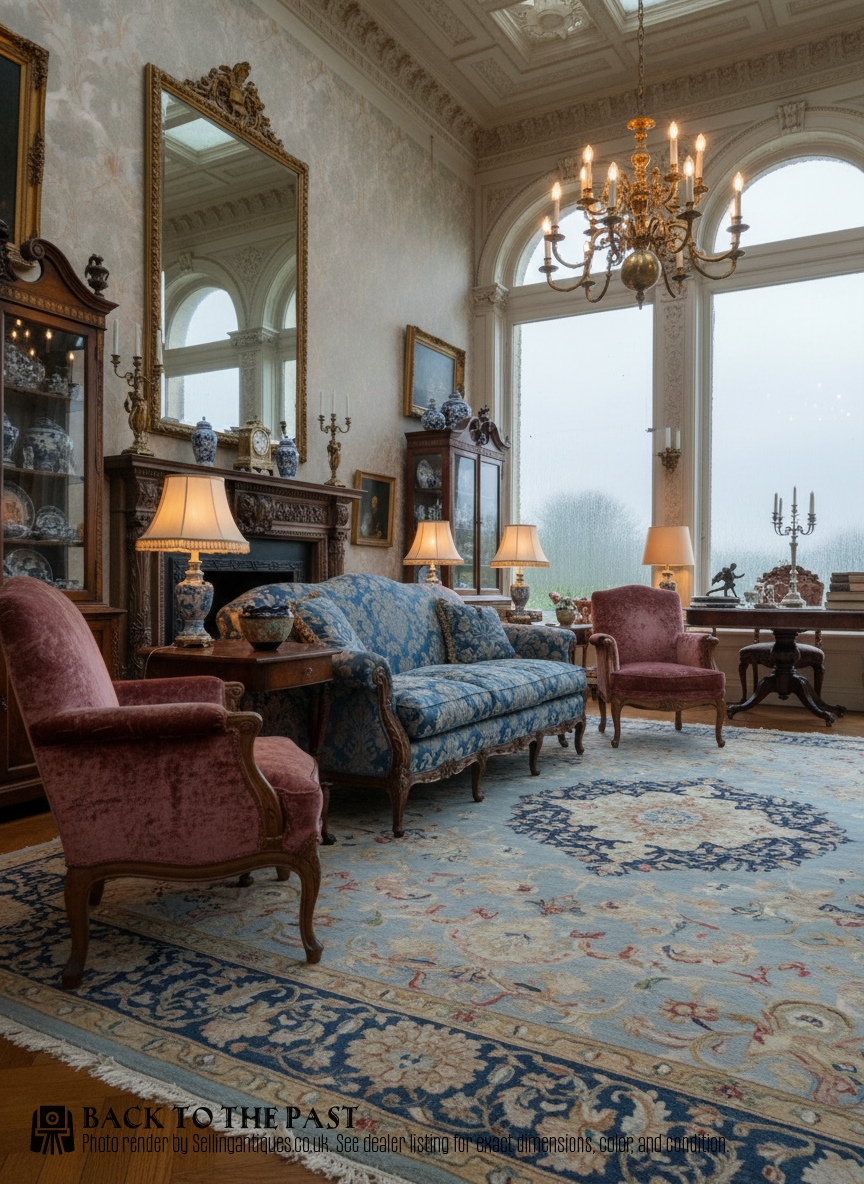
Original Victorian settings included entrance halls, ferneries, and spacious drawing rooms where large potted plants signalled prosperity and taste. Window planters occupied deep sills to showcase trailing greenery to the street.
Today, these substantial pots suit modern interiors just as well, anchoring large floor-standing houseplants or standing alone as sculptural ceramic objects.