
Wooden Tea Caddy Box
A wooden tea caddy box holds dry leaf safely while showing fine joinery.
Wooden Tea Caddy Box
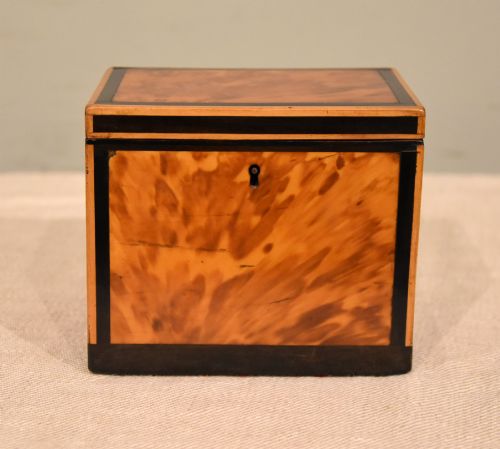
A wooden tea caddy box stores loose leaf inside domestic spaces from the eighteenth and nineteenth centuries. These vessels protect precious dry leaves from damp air and loss of aroma in period parlours.
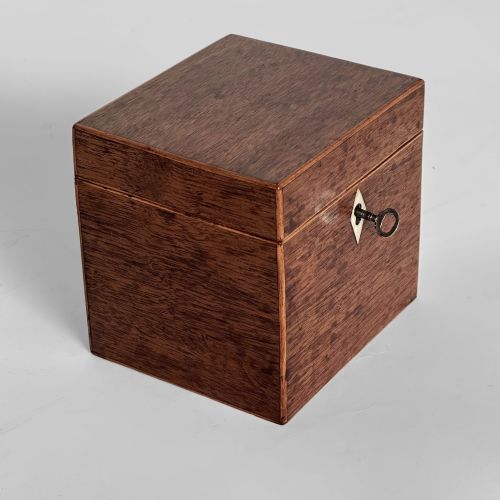
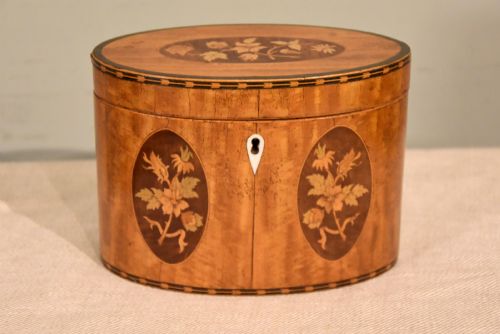
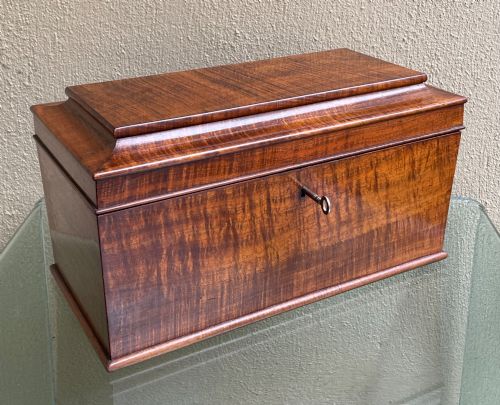
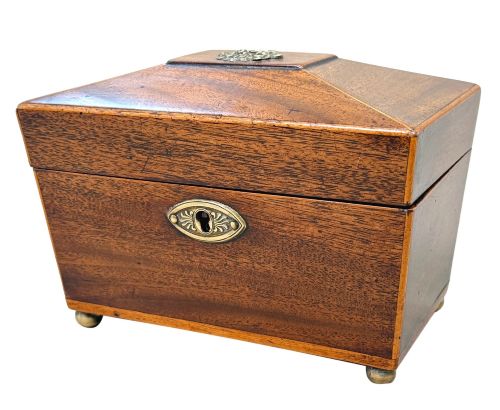
The selections here include rectangular, sarcophagus, and hexagonal shapes fashioned in Georgian, Regency, and Victorian workshops. Mahogany, rosewood, and walnut form the primary bodies of these containers.
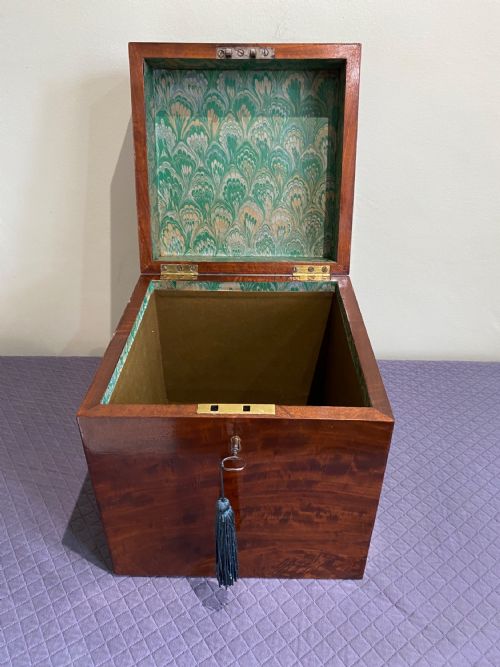
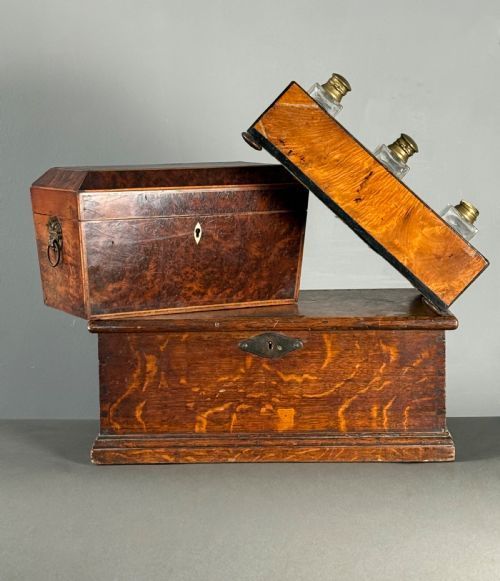
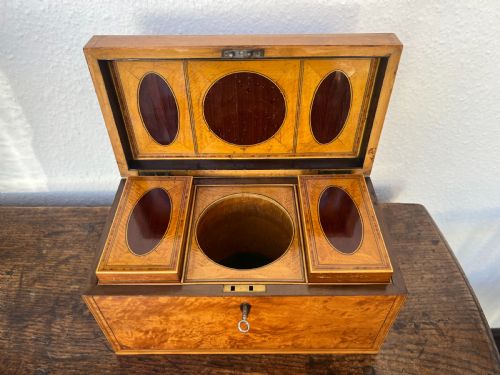
Makers shaped the interiors to hold compartments for distinct leaf types alongside glass mixing bowls. Many specimens retain original fitted components designed for daily domestic use.
How they were made
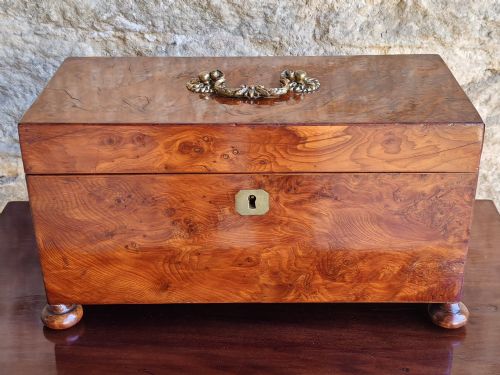
Cabinetmakers constructed the main bodies using solid hardwoods and dense veneers applied over carcases. Mahogany, rosewood, walnut, satinwood, and yew provide the structural foundations and decorative surfaces.
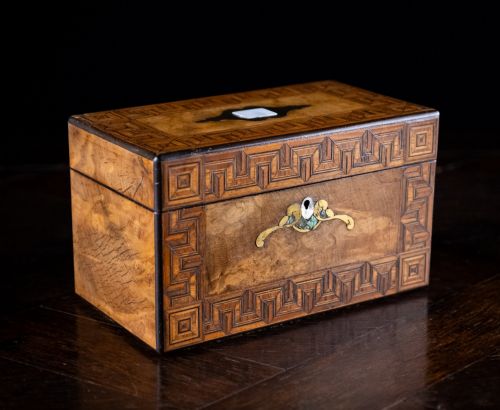
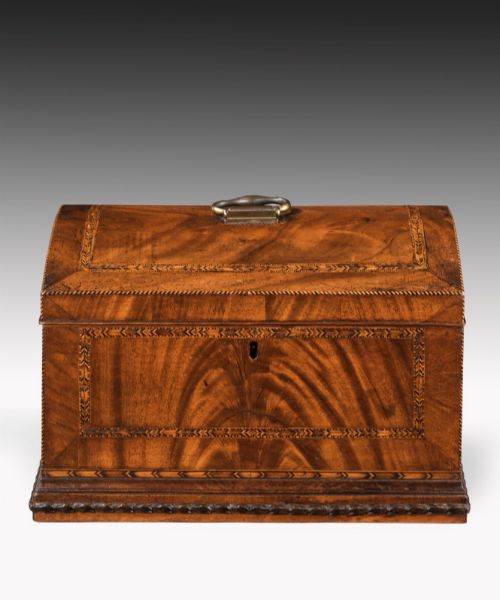
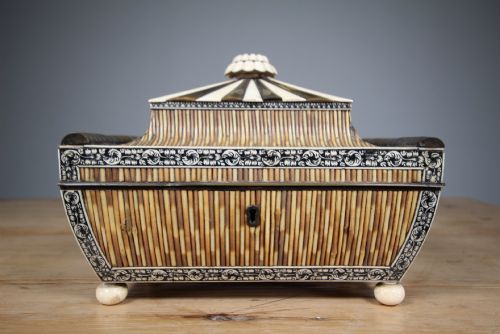
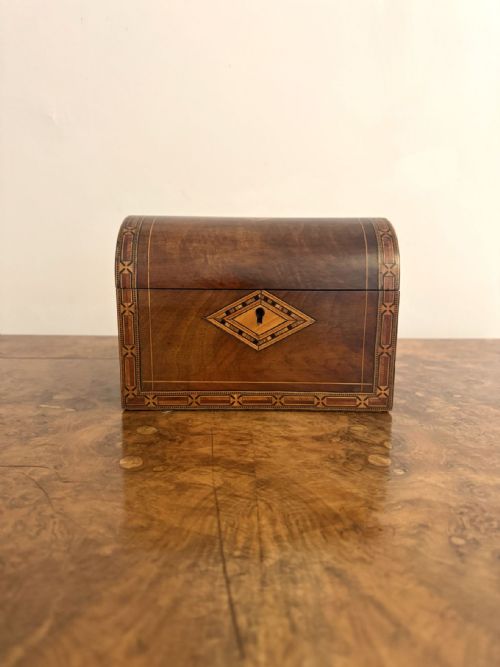
Workshops embellished surfaces with brass stringing, mother-of-pearl, bone, and parquetry geometric patterns. Tunbridge ware detailing incorporates minute wood mosaics arranged into pictorial or geometric bands.
Wooden Tea Caddy Box Retail Price Guide 2026
Typical asking prices for wooden tea caddy box among the pieces listed under this phrase on Sellingantiques today, from the lower quarter to the upper quarter. They describe what is for sale here now, not the wider market.
Some tiny specimens earn the title of mini tea caddies, designed to hold just enough leaf for an afternoon pot.
What varies in quality
The integrity of the timber selection dictates the visual success of the piece, particularly where burr veneers or contrasting stringing are employed. Grain matching across the lid and sides shows the skill of the original cabinetmaker.
Internal fittings such as lidded canisters, working locks with original keys, and intact glass mixing bowls elevate the standing of the box. Superior examples retain their original linings and hardware without later replacement.
Henry Hollamby
The Wooden Tea Caddy Box Glossary
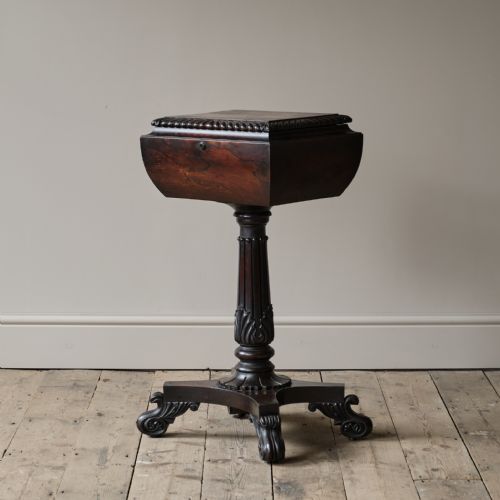
- Teapoy
- A larger standalone tea container mounted on a central pillar or legs rather than resting on a table. These items served tea in formal drawing rooms.
- Sarcophagus
- A box shape featuring a domed or steep-sloping lid resting on a flared base, mimicking classical architectural tombs. Regency cabinetmakers favoured this profile for luxury containers.
- Tunbridge Ware
- A type of woodworking originating from Kent that uses thousands of tiny dyed wood blocks to create mosaic pictures. These intricate patterns decorate the lids and panels of nineteenth-century boxes.
- Parquetry
- Geometric wood-mosaic work formed by fitting small veneer triangles and polygons together. This technique creates patterned surfaces across the exterior of the box.
- Navette
- A pointed oval shape resembling a little boat, popular for tea caddies during the Georgian period. The curved profile softens the geometry of the container.
Wooden Tea Caddy Box: Frequently Asked Questions
How were tea caddies used?
Tea was an expensive dry commodity stored securely under lock and key by the head of the household. Servants brought the caddy to the parlour where the host measured leaves into a mixing bowl.
Fitted internal compartments kept black and green teas separate before blending. The key remained with the owner to prevent household theft of the valuable leaf.
What is a teapoy?
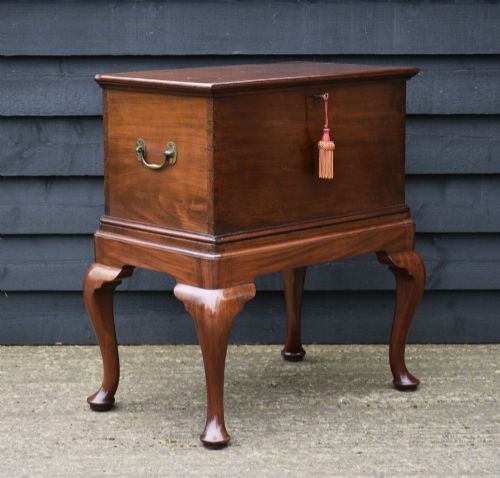
A teapoy is a container for leaf tea raised on its own pedestal stand or legs rather than placed upon a table. These larger pieces often incorporate internal mixing bowls and multiple caddies.
They functioned as independent tea-service stations in nineteenth-century drawing rooms. The term eventually described both the lidded box and its supporting stand.
How do I identify a Georgian tea caddy?
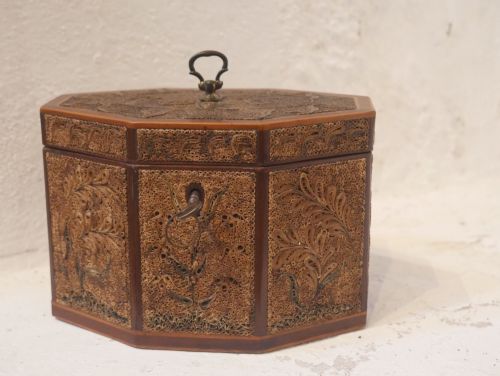
Georgian examples often display straight-sided rectangular, oval, or hexagonal forms executed in mahogany, satinwood, or tortoiseshell. Cabinetmakers relied on fine veneers, brass stringing, and paper filigree rather than heavy carving.
Interiors usually feature simple wooden compartments with drop-in lids. The proportions reflect eighteenth-century neoclassical design principles.
What is Tunbridge ware?
Tunbridge ware is a specialised form of mosaic woodwork produced in Kent using small squares of naturally coloured timbers. Artisans glued these wood blocks together to form intricate geometric or floral bands.
These decorative panels adorn the lids and sides of nineteenth-century boxes. The technique demonstrates high Victorian precision craftsmanship.