
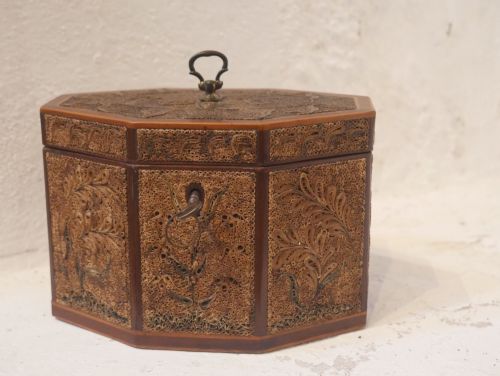
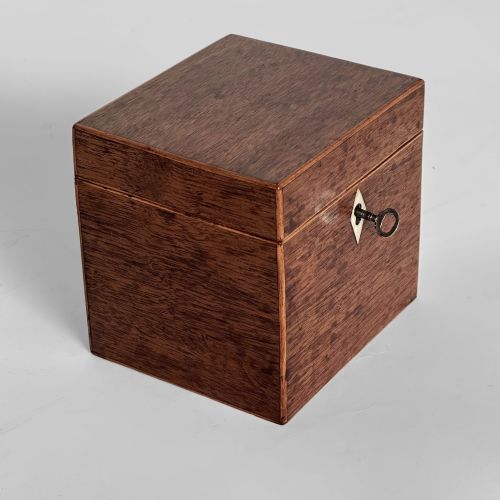
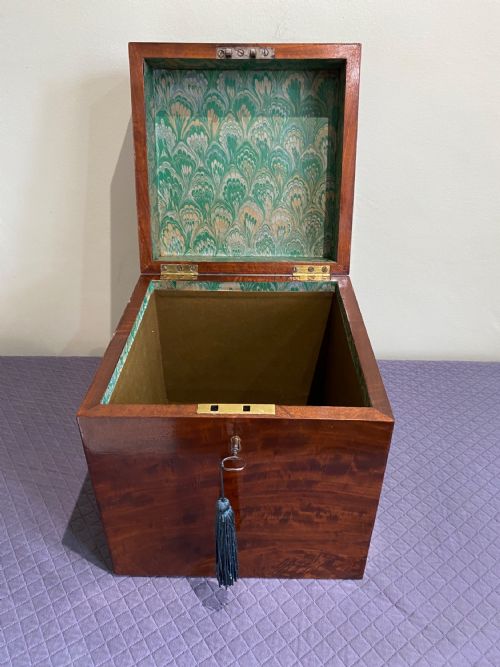
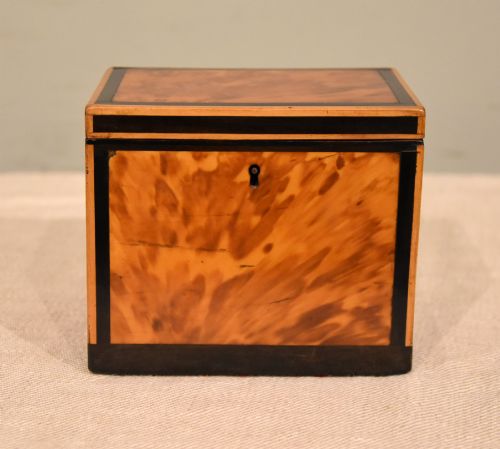

Georgian Wooden Caddy
A georgian wooden caddy holds the dried leaves that once cost more than gold, bringing tactile warmth and period joinery to a modern room.
Georgian Wooden Caddy
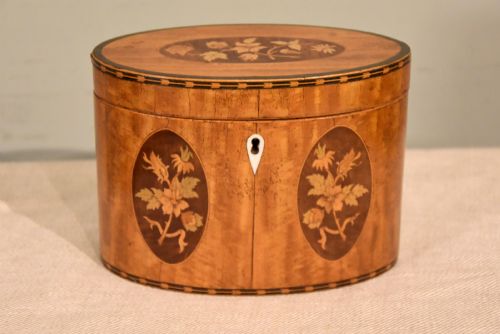
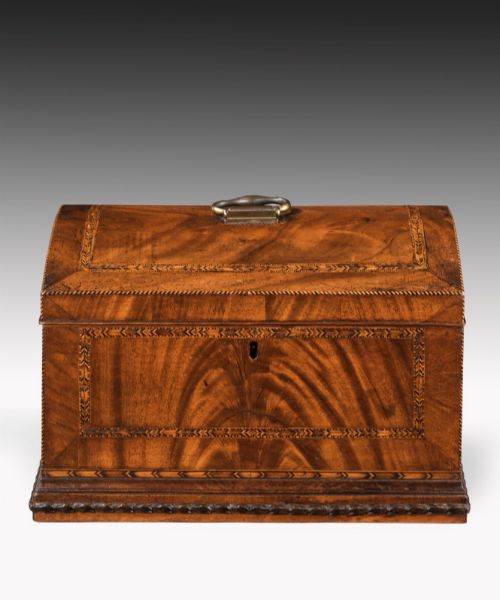
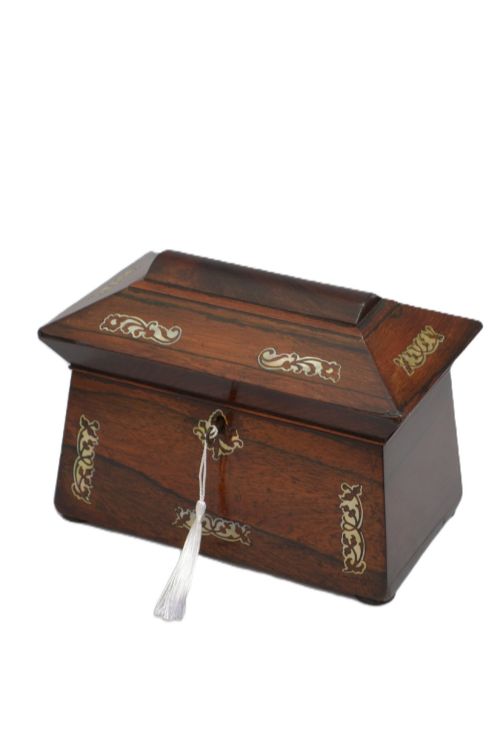
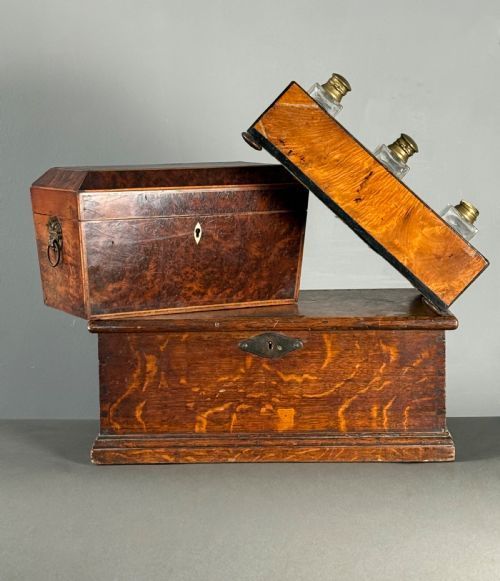
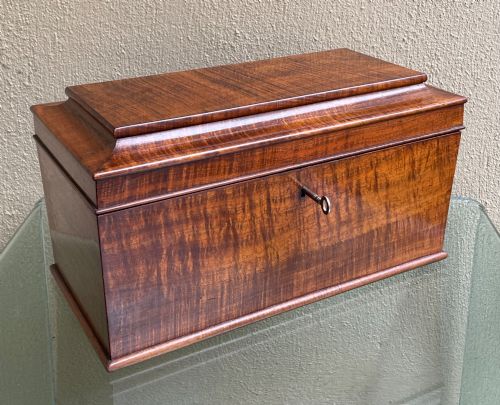
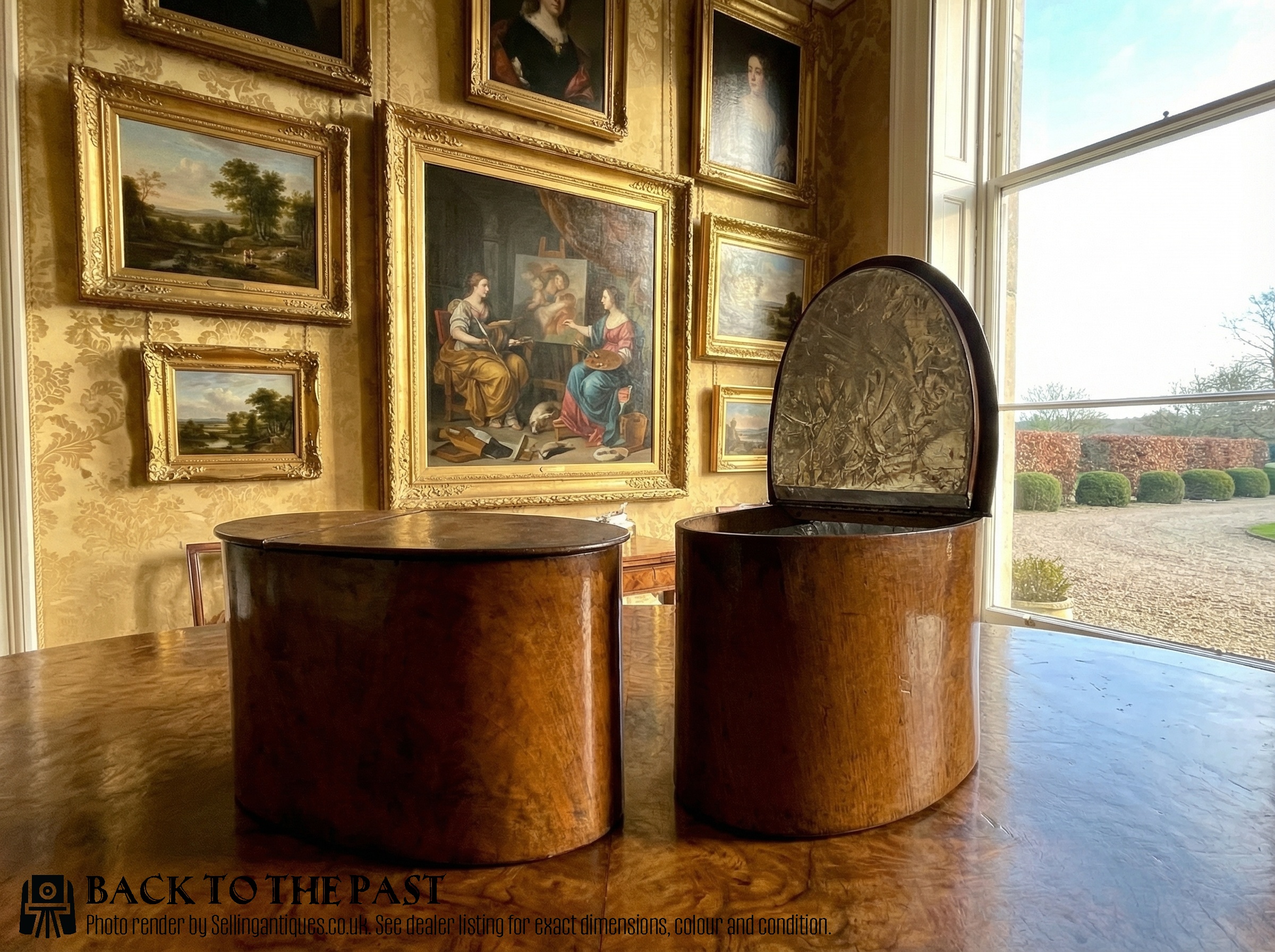
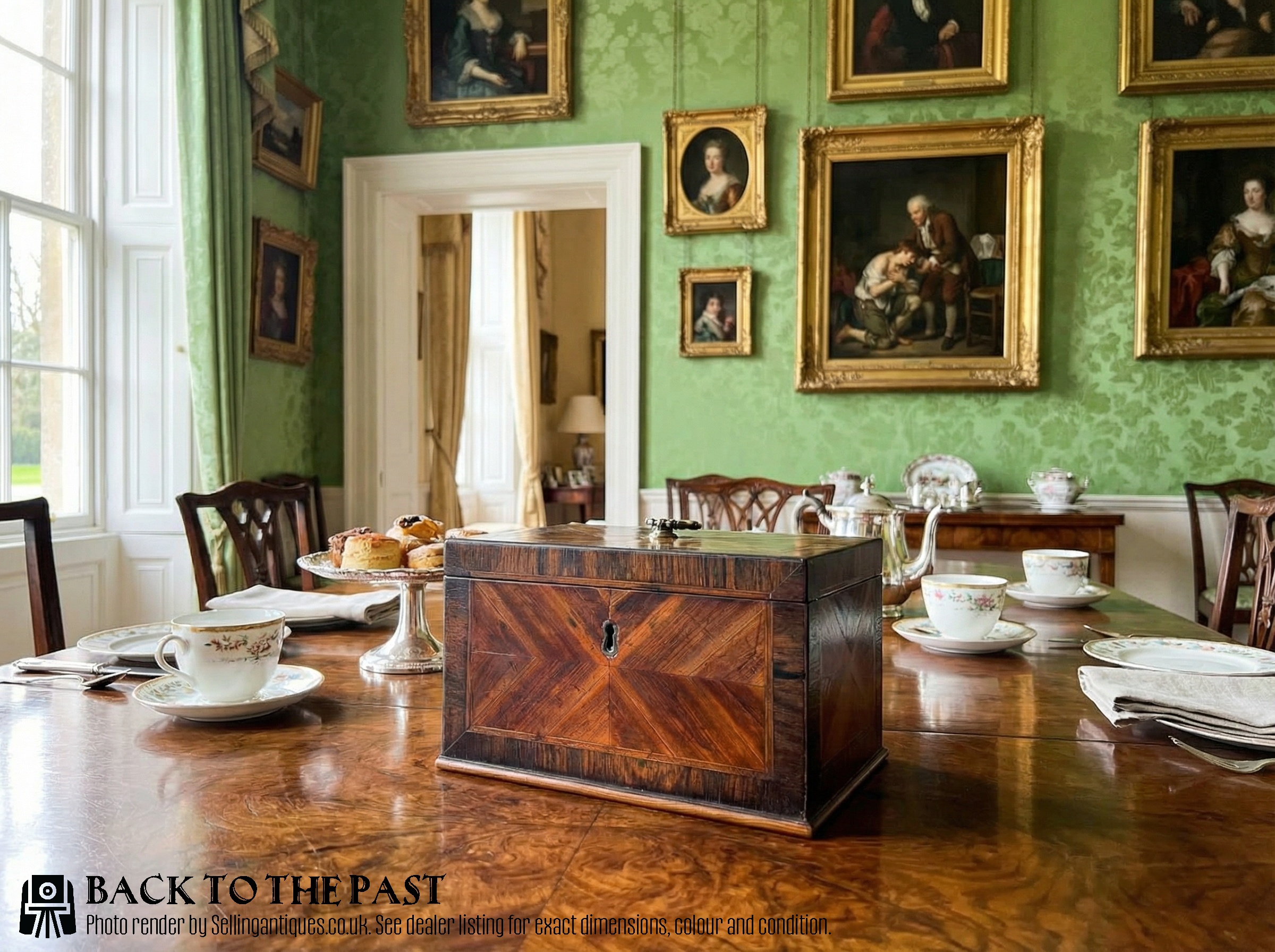
A georgian wooden caddy is a lidded box designed to store loose tea safely away from dampness and prying staff, often fitted with internal compartments and a working lock. You will most frequently encounter mahogany and rosewood examples shaped as rectangular coffers, sarcophaguses, or elegant oval and hexagonal forms from the eighteenth and nineteenth centuries.
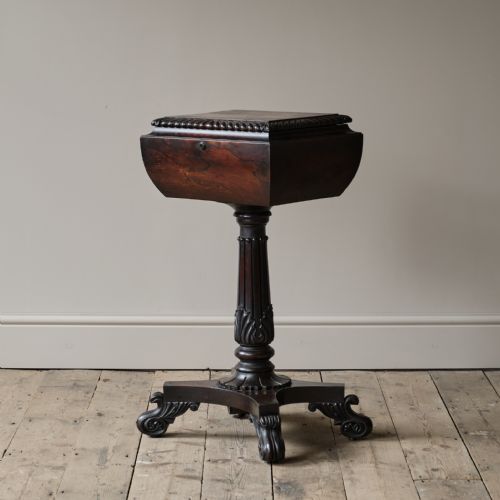
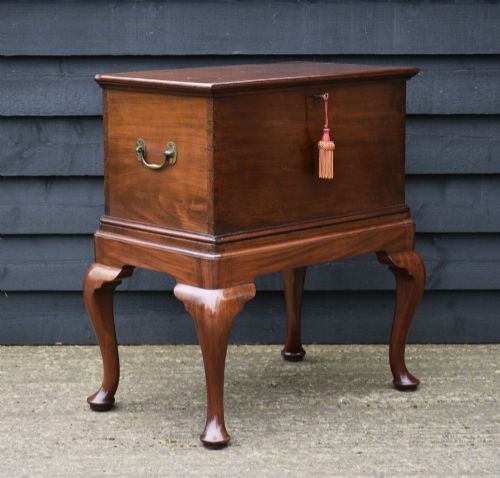
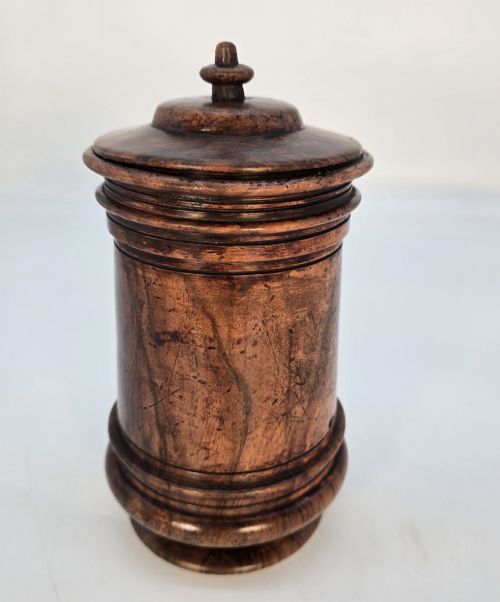
The objects span periods from the mid eighteenth century through the Regency era, taking forms that range from simple domestic receptacles to elaborate tea chests with glass mixing bowls and secret drawers. Alongside standard tea caddies, the selection includes related wooden containers such as teapoys, tobacco jars, and decorative boxes sharing the same materials and period craftsmanship.
How they were made
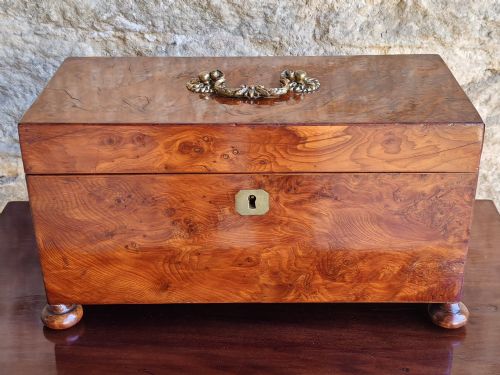
Cabinet makers built these boxes using dense timbers like mahogany, walnut, and rosewood, frequently applying fine veneers of satinwood, boxwood, and burr yew across curved surfaces. The woodwork relied on precise joinery, with decorative detailing achieved through contrasting stringing, parquetry, paper filigree, and intricate Tunbridge Ware mosaic patterns.
Hardware played a functional and decorative role, incorporating cast brass lion mask handles, escutcheons, hinges, and paw feet, sometimes accented with bone or mother-of-pearl inlay. Interiors often retained fitted wooden lids for internal canisters, lining papers, and delicate glass mixing bowls held securely within velvet or paper partitions.
Georgian Wooden Caddy Retail Price Guide 2026
Typical asking prices for georgian wooden caddy among the pieces listed under this phrase on Sellingantiques today, from the lower quarter to the upper quarter. They describe what is for sale here now, not the wider market.
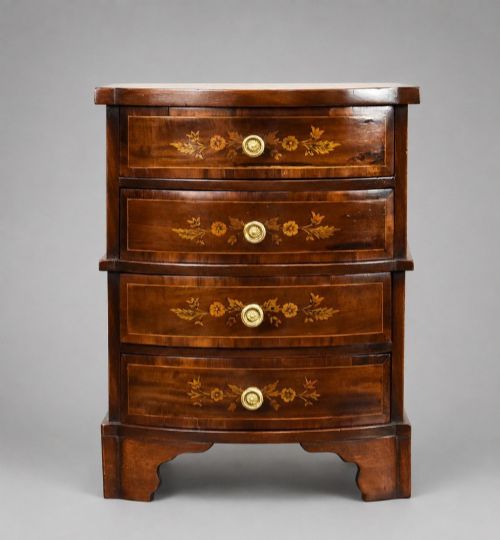
The selection includes specialised forms such as teapoys, cellarettes, and miniature chests alongside traditional lidded tea containers.
What varies in quality
The standard of a piece depends heavily on the choice and figuring of the timber veneers, such as richly grained burr yew or highly figured rosewood, matched evenly across the lid and sides. Superior examples display crisp inlay work, intact original feet and hardware, and well-executed internal compartments that retain their fitted secondary lids.
Construction methods and overall proportions separate standard utility boxes from high-status salon pieces, seen in complex curves like navette or sarcophagus shapes and the presence of working locks with original keys. The survival of fragile interior elements like glass bowls, mixing sticks, and delicate paper scrollwork indicates how well the box was kept over the centuries.
The Georgian Wooden Caddy Glossary
- Teapoy
- A small stand or table supporting a large tea caddy, often fitted with internal canisters and a mixing bowl.
- Sarcophagus shaped
- A box profile featuring a sloping, flared lower section reminiscent of a classical stone coffin, popular during the Regency period.
- Tunbridge Ware
- Woodworking characterised by tiny mosaic tiles formed from naturally coloured woods to create intricate geometric and pictorial designs.
- Escutcheon
- A protective brass plate surrounding a keyhole, frequently shaped as a shield or diamond on period boxes.
- Navette
- A pointed, boat-like shape with curved sides, often seen in the footprint of late eighteenth century tea caddies.
Georgian Wooden Caddy: Frequently Asked Questions
What was inside a tea caddy?
These boxes held expensive black and green teas securely under lock and key, protecting dry leaves from kitchen odours and household theft.
Inside, the space was typically divided into two or three compartments with internal fitted lids for different tea varieties, alongside a central glass bowl used for blending.
How do I spot a Regency caddy?
Regency pieces often feature bolder architectural forms like sarcophagus bodies, brass inlay, ring handles, and dark exotic woods such as rosewood.
Earlier Georgian examples tend to favour straight-grained mahogany, oval or hexagonal shapes, and delicate satinwood stringing rather than heavy brass mounts.
Did they all come with locks?
Most quality boxes were fitted with functional brass locks because tea was an exceptionally valuable commodity in the eighteenth household.
Keys were kept strictly by the head of the household, and surviving locks often retain their original hand-hammered mechanisms.
Where were they placed?
A caddy sat prominently on the sideboard or tea table in the formal reception rooms of country houses and town residences.
The hostess would unlock the box to measure out the leaves in front of her guests before the tea service began.