
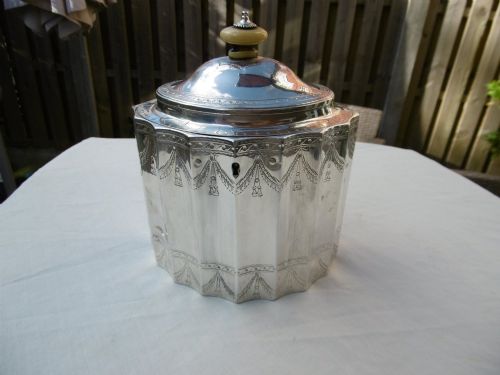
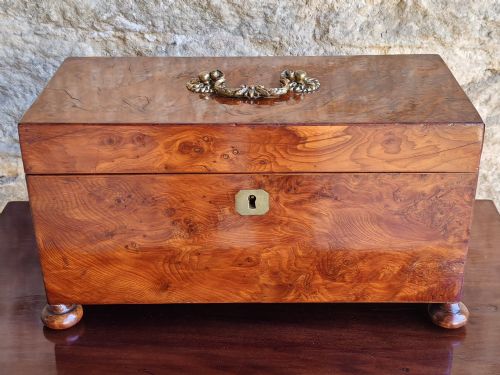
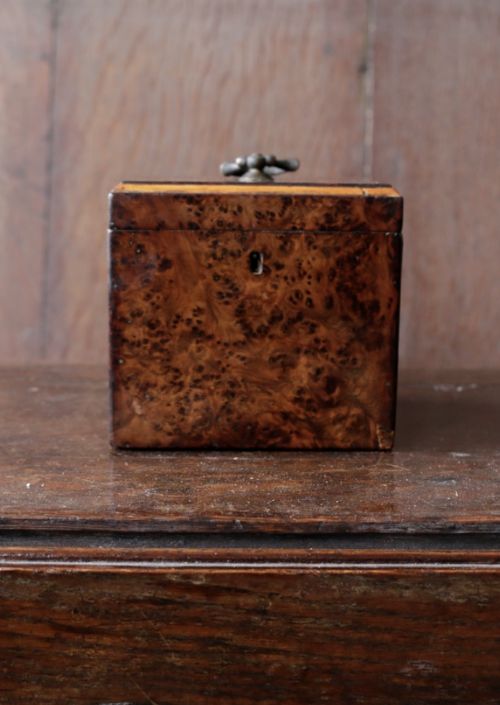


George III Tea Chest
A George III tea chest is a fine wooden container designed to safeguard precious leaves, offering collectors a tangible link to Georgian social rituals.
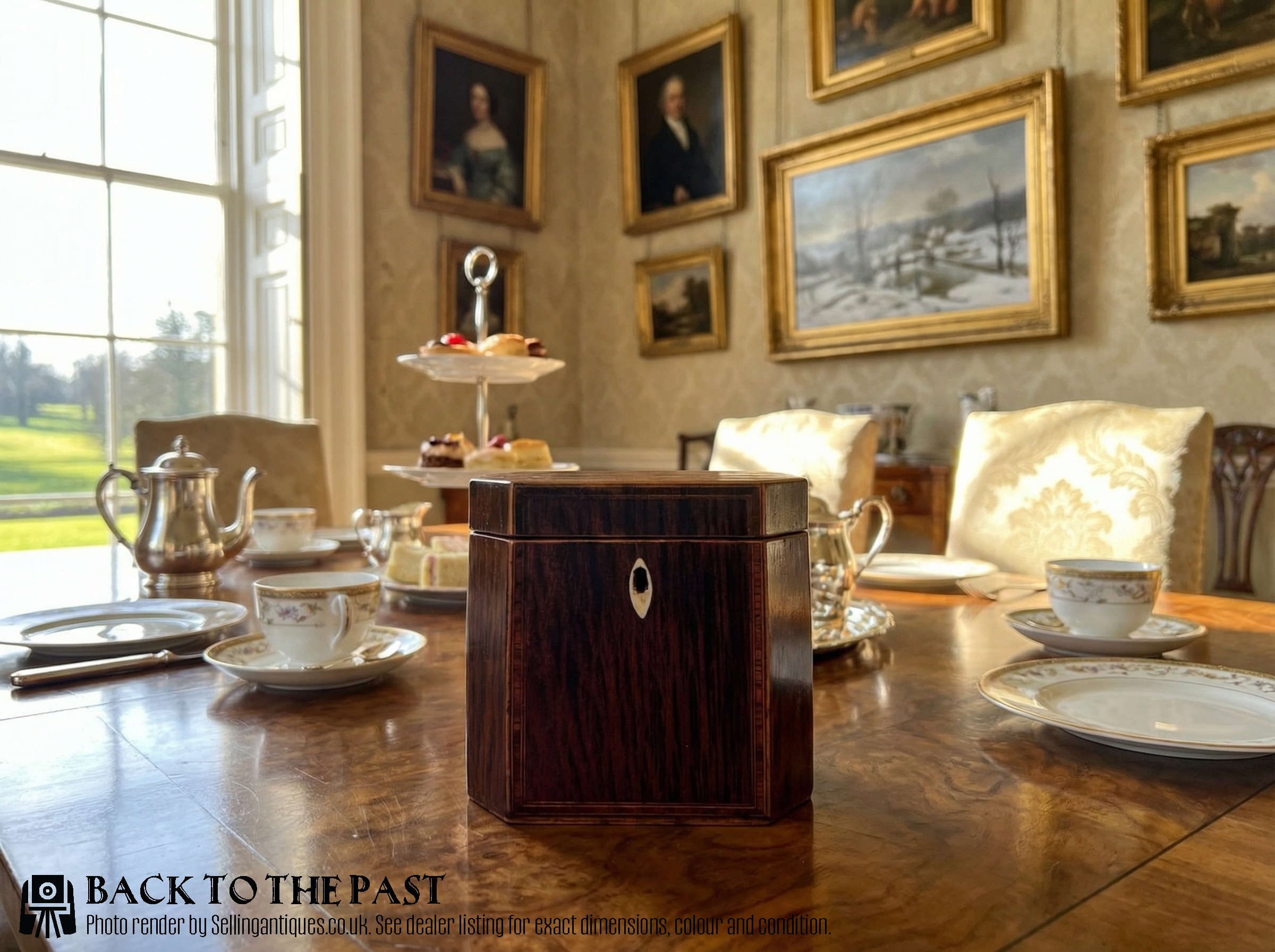
What these pieces are
A george iii tea chest is a functional box designed to store dry leaves safely under lock and key, reflecting the high value placed on tea during the Georgian era. These items appear primarily as tea caddies and tea chests in various rectangular and oval forms.
The pieces on this page span the late eighteenth and early nineteenth centuries, encompassing the Georgian period and the year eighteen hundred. Examples range from simple tabletop containers to larger chests equipped with interior compartments and mixing bowls.
Materials recorded in the evidence include mahogany, satinwood, partridge wood, burr yew, and teak, frequently enhanced with boxwood and marquetry inlay. Some variants incorporate brass fittings, bone escutcheons, and glass elements.
How they were made
Cabinetmakers utilised dense timbers such as mahogany and teak alongside exotic veneers like satinwood and partridge wood to construct the rigid carcase of each tea chest. These surfaces were frequently decorated with delicate boxwood stringing and complex marquetry inlay.
Internal arrangements involved precise joinery to create individual compartments for different tea varieties, sometimes housing glass mixing bowls secured within the wooden frame. Brass handles, hinges, and working locks with bone escutcheons completed the construction.
Retail Price Guide 2026
Typical UK retail prices for george iii tea chest, calculated from the Sellingantiques database of over a million retail prices indexed since 2003. This retail price guide relies exclusively on Sellingantiques data; no external sources or auction records are used, so the figures do not describe the wider market.
Listings feature woods such as mahogany, satinwood, partridge wood, burr yew, and teak, combined with bone and brass details.
What varies in quality
The distinction between standard examples and superior pieces rests on the choice of timber and the intricacy of the surface decoration. Selection of figured woods, such as burr yew or highly grained satinwood, elevates a piece above plain mahogany versions.
Mastery of inlay work and the preservation of original trade labels or fitted interiors signal a higher tier of craftsmanship. The inclusion of specialised materials like partridge wood and refined brass hardware further distinguishes the top of the range.
The George III Tea Chest Glossary
- Tea caddy
- A small container or box designed specifically for storing dry tea leaves. These vessels often featured internal lids and locks.
- Marquetry inlay
- Decorative patterns formed by inserting small pieces of contrasting wood and veneer into the primary surface. This technique creates complex geometric or pictorial designs.
- Escutcheon
- A protective flat plate surrounding a keyhole, frequently fashioned from bone or brass on these chests. It prevents the surrounding wood from wearing down through repeated use.
- Boxwood stringing
- Thin inlay lines of pale boxwood used to outline panels and edges on Georgian furniture. This provides a subtle contrast against darker timbers like mahogany.
Frequently Asked Questions
What is a George III tea chest?
A George III tea chest is a wooden storage box made during the reign of George III to keep valuable tea leaves secure. These containers often featured internal compartments to separate different types of tea.
They reflect the high social status of tea drinking in the eighteenth and early nineteenth centuries. Many examples double as decorative tabletop objects with fine woodwork and inlay.
How were these tea chests used?
Households used these chests to store dry tea leaves under lock and key because tea was an expensive commodity at the time. The master of the house or the housekeeper kept the key to control access.
Some chests included glass mixing bowls where different teas could be blended before brewing. Internal divisions kept green and black teas separate until serving time.
How do I care for a wooden tea chest?
Keep the wooden surface clean with a soft dry cloth and avoid placing the chest in direct sunlight or near heat sources. Excessive temperature changes can cause the delicate veneers and boxwood inlay to warp or crack.
Preserve the antique finish by avoiding modern chemical polishes and maintaining stable indoor humidity. Periodic gentle waxing helps protect the historical timber.
How can I tell the period of a tea chest?
Dating relies on observing the construction methods, timber choices, and overall style characteristics recorded in Georgian cabinetmaking. Pieces from this era often feature straight lines, mahogany or exotic wood veneers, and subtle boxwood stringing.
Hardware details like brass hinges and bone keyhole escutcheons also offer clues to the manufacturing date. Interior layouts and trade labels can further confirm the historical origin.