


Wooden Nesting Side Tables
These wooden nesting side tables pack neatly away until tea is poured, offering multiple surfaces without crowding the room.
Wooden Nesting Side Tables
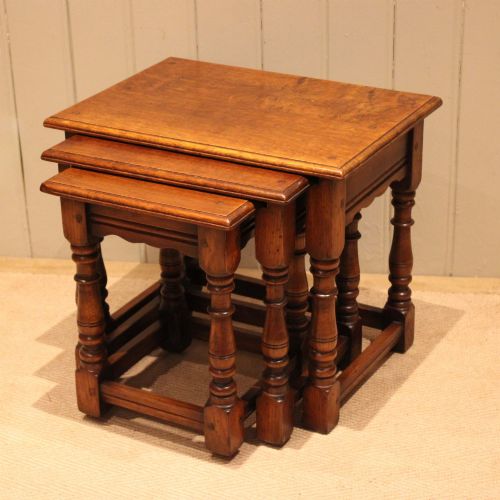
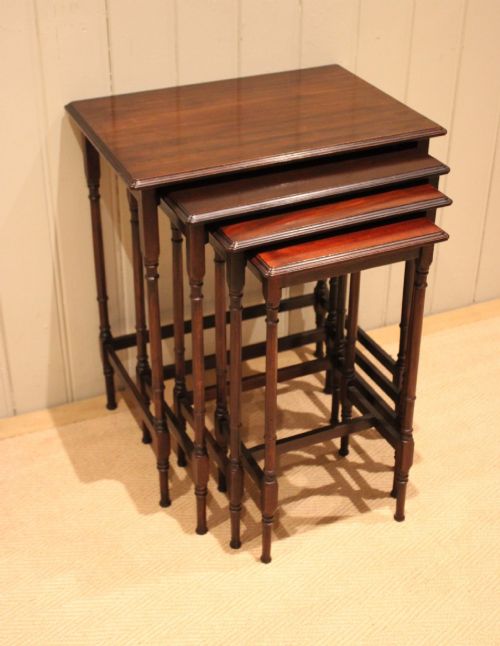
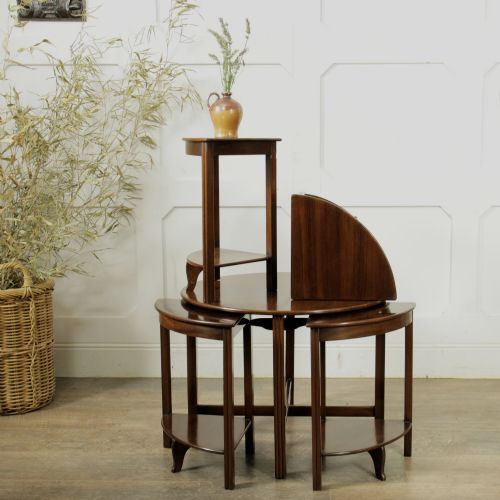
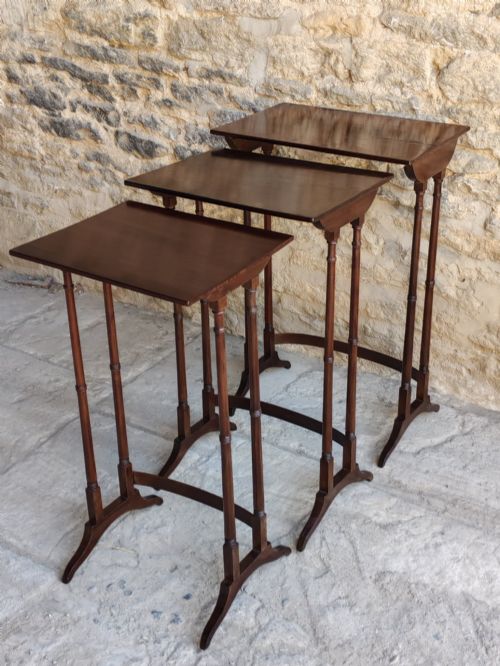
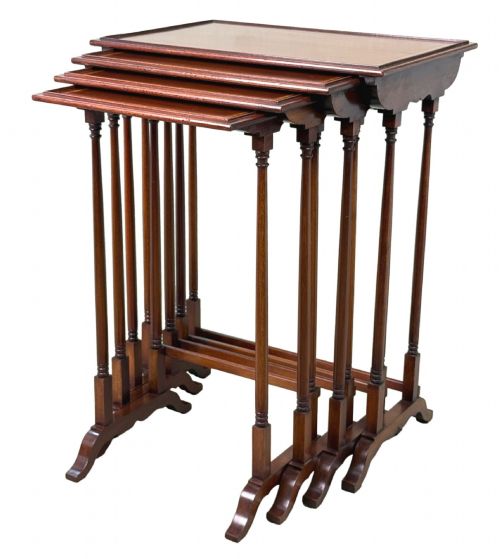
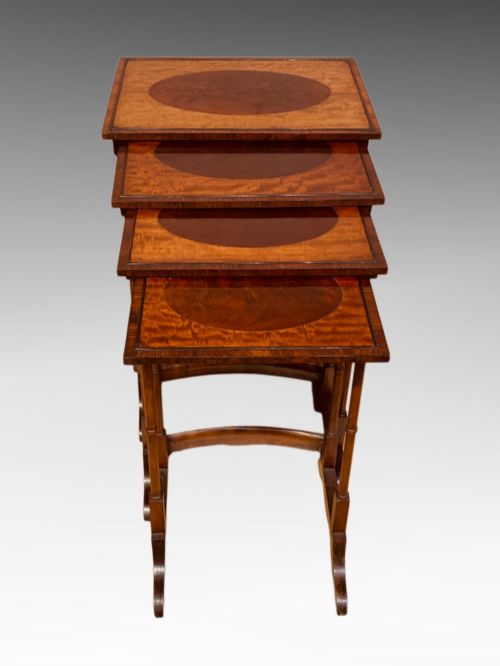
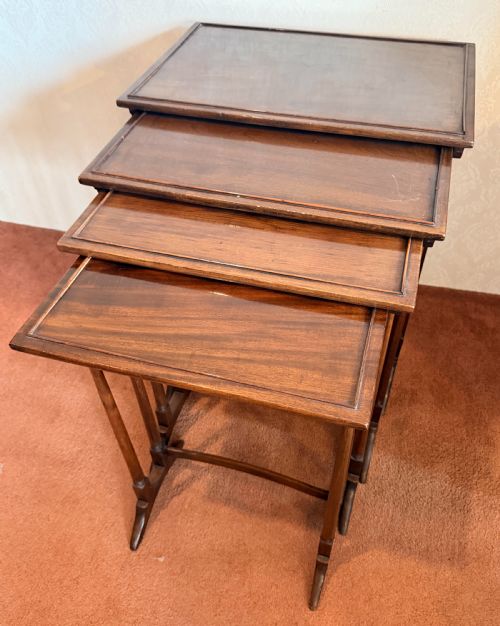
When you search for wooden nesting side tables, you encounter sets of graduated tables designed to slide one beneath another when not in use. The examples here include sets of three, four, and five tables spanning periods from the nineteenth century through the 1930s.
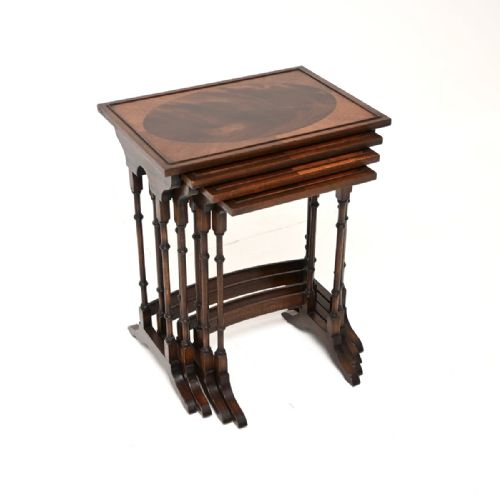
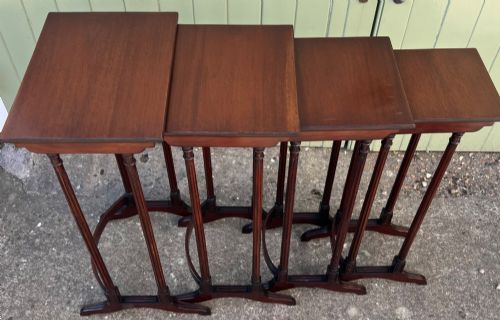
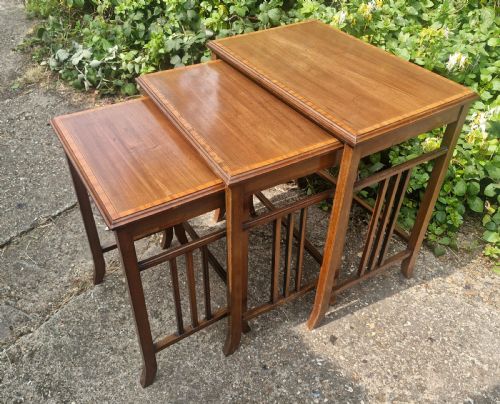
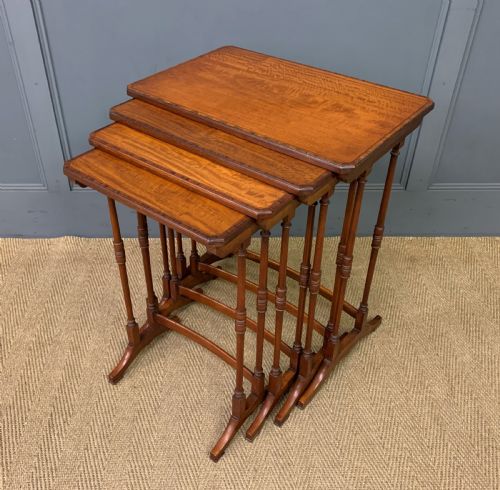
The form appears most frequently as a set of four, often termed a quartetto, styled in mahogany or inlaid satinwood from the Edwardian era. You also find walnut, oak, and rosewood versions reflecting Victorian, Regency, and Art Deco design influences.
Makers produced these tables as functional furniture for drawing rooms and parlours, where extra surface space was needed temporarily for books, drinks, or lamps. Their space-saving design made them a staple of period domestic interiors.
Construction and timbers
Cabinetmakers utilised dense hardwoods such as mahogany, rosewood, and walnut to ensure the slender frames could support daily use without warping. Satinwood and boxwood frequently provided contrasting inlay work and stringing along table edges.
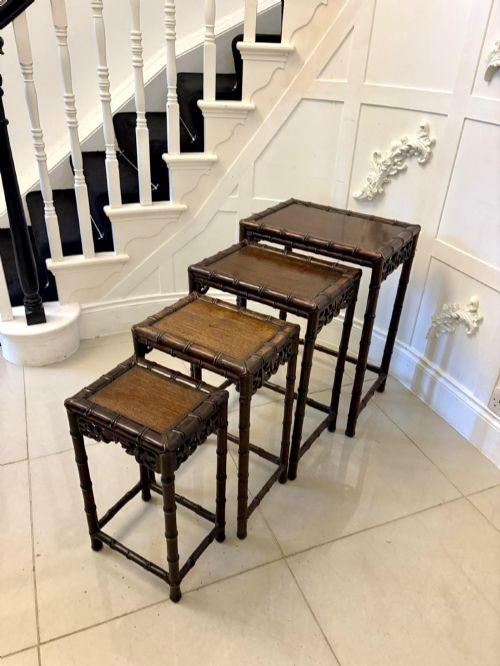
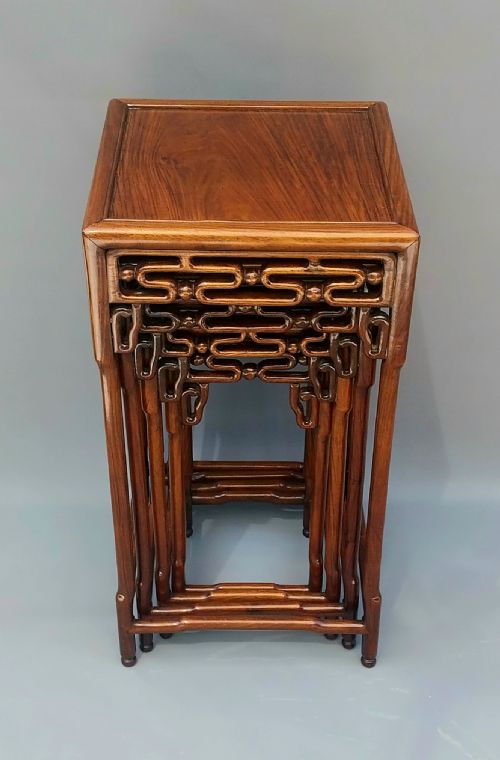
Veneering techniques allowed craftsmen to display figured grain patterns on table tops, supported by solid timber legs and rails joined by traditional methods. Some oriental and carved pieces relied on solid hardwoods like huanghuali or hongmu, shaped by hand.
Assessing quality
Quality rests in the precision of the graduated sizing and the integrity of the joints where the slender legs meet the tops. Finer sets maintain stability and tight alignment when stacked, with minimal play between the individual tables.
The choice of timber and the execution of inlay dictate the upper tier of pieces. Selected grain figures, crisp boxwood stringing, and well-preserved surface polishes distinguish better workshop output from standard commercial production.
Heal's
The Wooden Nesting Side Tables Glossary
- Quartetto
- A matched set of four nesting tables. This term appears frequently in nineteenth and early twentieth-century descriptions of graduating side tables.
- Stringing
- A narrow inlay of contrasting timber used to outline panels and table tops. It adds decorative contrast to mahogany and satinwood surfaces.
- Faux bamboo
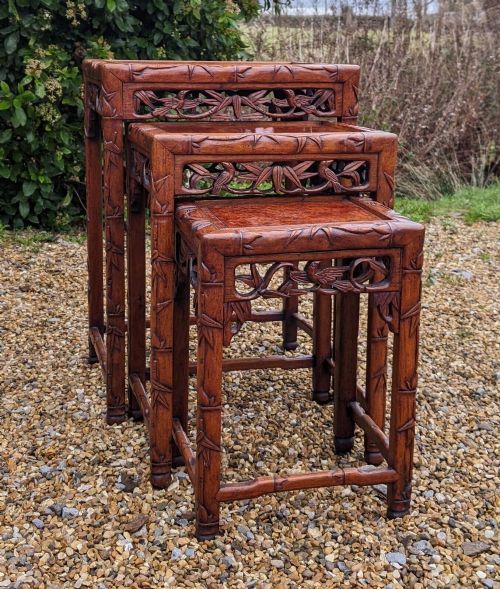
- Carved wood styled to resemble natural bamboo stalks. This decorative technique appears on nineteenth-century pieces influenced by oriental tastes.
- Serpentine form
- A gently undulating curved outline seen on table tops and rails. It softens the geometric rigidity of rectangular nesting sets.
- Hongmu
- A traditional Chinese term for dense red hardwoods. These durable timbers were often utilised for carved table sets.
Wooden Nesting Side Tables: Frequently Asked Questions
How were wooden nesting side tables used?
These tables served as versatile furniture in period sitting rooms, pulled out individually to hold tea cups, books, or writing materials. Once visitors departed, the smaller tables slid neatly back under the largest one to clear the floor space.
Their modular nature meant households could adapt their rooms instantly for entertaining without permanent furniture clutter.
What is a quartetto set?
A quartetto is a specific set of four nesting tables designed to graduate precisely in height and width. Each table fits entirely beneath the next largest one so the group occupies the footprint of just a single small table.
Cabinetmakers favoured this configuration during the Victorian and Edwardian periods for drawing room use.
How do I distinguish Edwardian from Victorian sets?
Victorian nesting tables tend to feature heavier mahogany construction, sometimes with bold turned supports or carved faux bamboo details. They often display deep, dark timber tones.
Edwardian sets frequently showcase lighter satinwood inlay, delicate Sheraton revival styling, and slender turned or square tapered legs that reflect a more restrained aesthetic.
How do I care for antique nesting tables?
Keep these tables away from direct sunlight and sudden temperature changes to protect the timber veneers and polished finishes. Regular dusting with a soft, dry cloth maintains the surface without buildup.
Lift the tables rather than sliding them across carpets or uneven floors to prevent stress on the delicate leg joints and stretcher rails.