

Wood Inlay Centre Table
A wood inlay centre table brings domestic theatre to a room, anchoring the floor plan with patterned timbers and decorative surface work.
Wood Inlay Centre Table
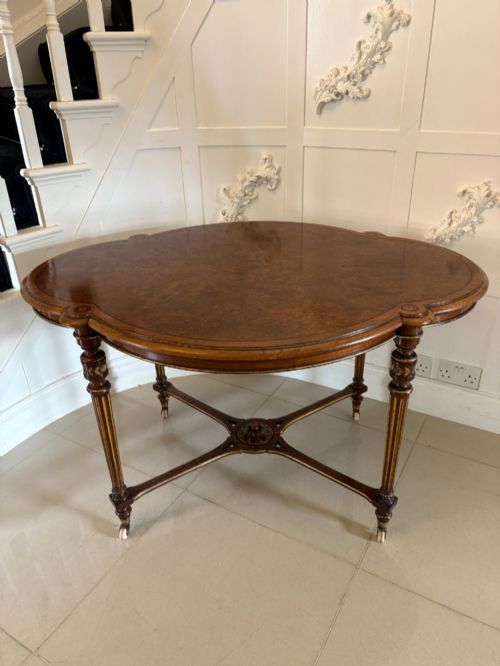
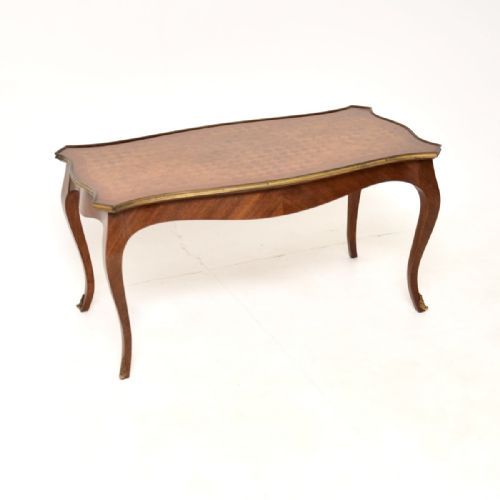
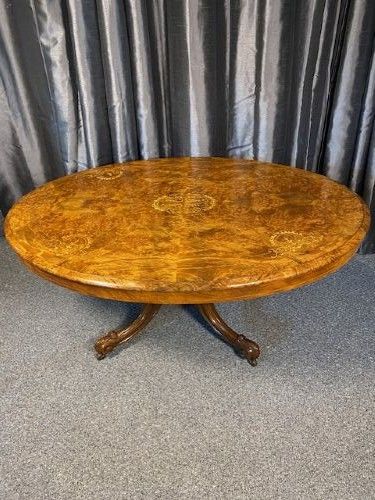
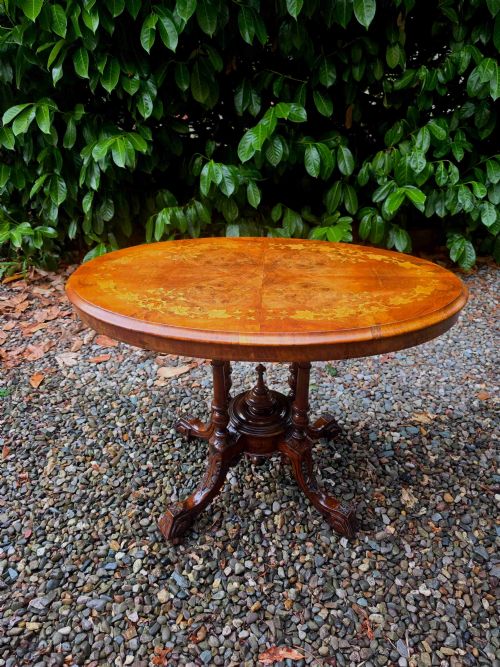
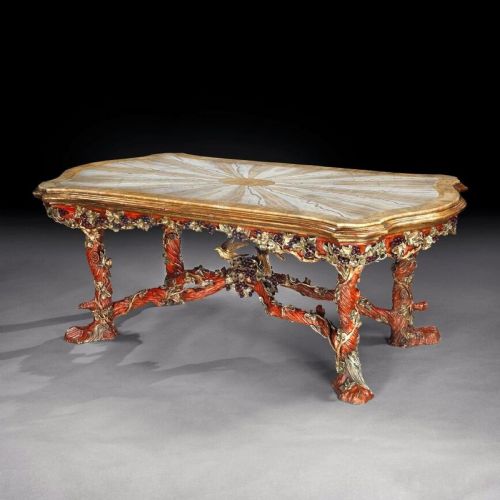
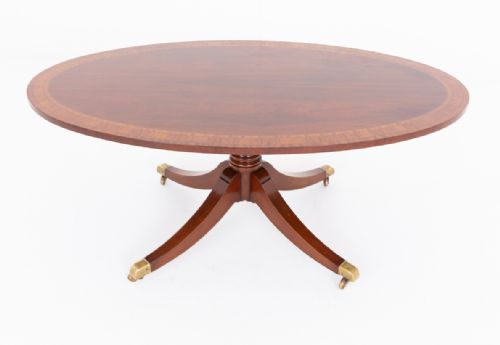
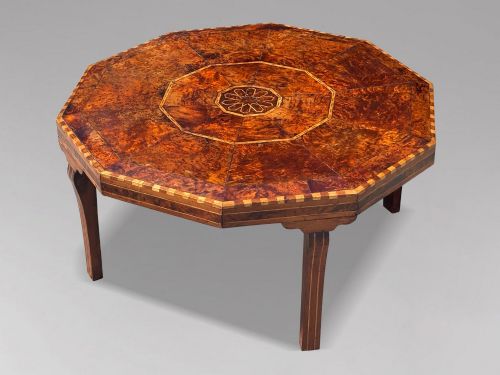
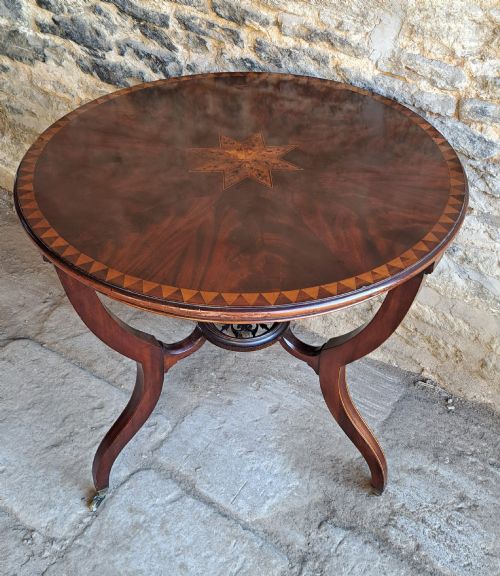
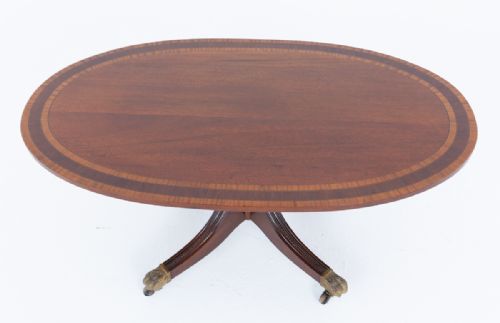
A wood inlay centre table is designed to stand free in a room rather than against a wall, displaying decorative surface work across the top. The form encompasses nineteenth-century walnut and mahogany pieces alongside coffee and occasional tables.
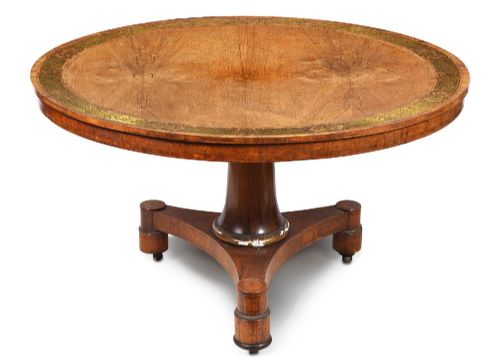
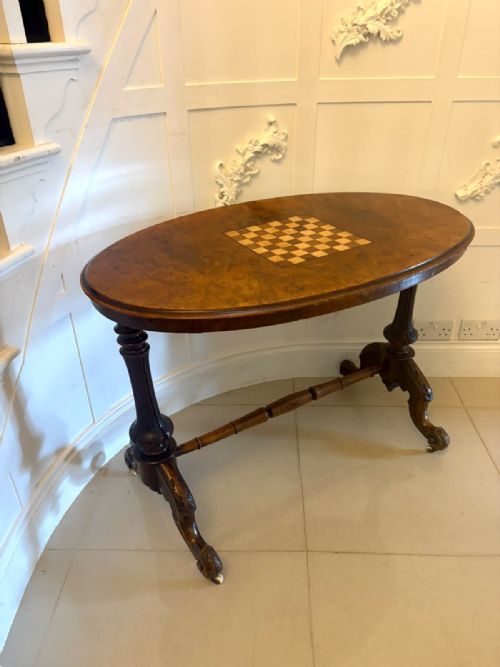
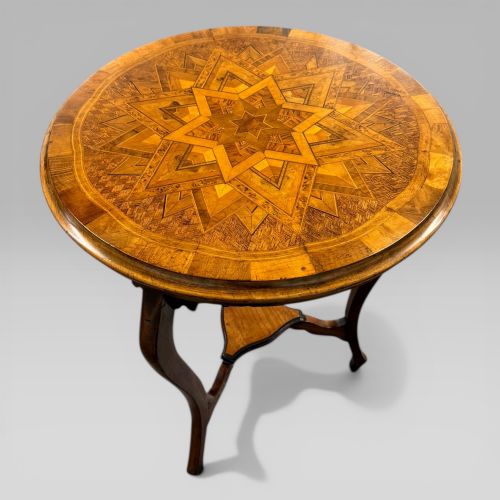
Victorian burr walnut and Edwardian satinwood pieces dominate the selection, often featuring circular or oval tops supported by pedestal bases or carved legs. Makers adapted these surfaces for multiple domestic uses, including chess tops and games tables.
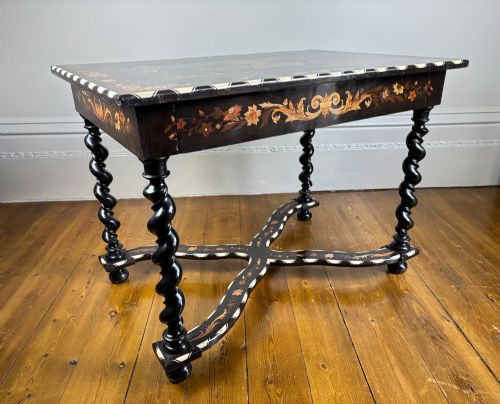
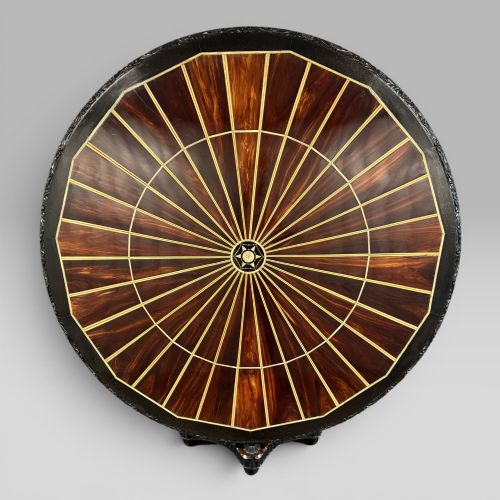
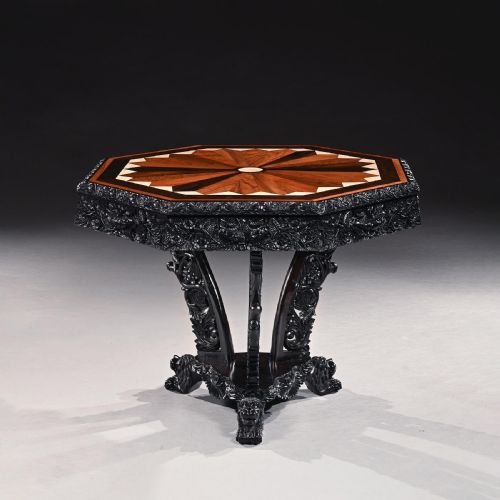
Regional variations appear across the inventory, ranging from Ceylonese ebony and calamander to Irish Killarney yew wood and Dutch ebonised marquetry with bone inlay.
Materials and construction methods
Craftsmen utilised figured veneers such as burr walnut, flame mahogany, and rosewood over solid secondary timbers to create patterned table tops. Marquetry inlay combined contrasting natural timbers to form botanical or geometric designs.
Brass, ormolu, and bone served as supplementary stringing and decorative highlights, embedded directly into the primary wood surface. Pedestal bases and carved supports utilised solid hardwoods to sustain the weight of heavy stone or timber tops.
Listings feature nineteen-century periods alongside Edwardian, Regency, and Art Deco eras, constructed from walnut, mahogany, rosewood, and satinwood.
Assessing quality in inlaid tables
The precision of the marquetry cutter determines the crispness of the design, where tighter joints between contrasting woods reveal superior workshop standards. The choice of timber grain, particularly dense burr walnut or figured satinwood, separates standard utility items from exhibition pieces.
Structural stability in freestanding tables depends on the joinery connecting the pillar to the platform base and feet. Finer examples integrate cast brass mounts, carved wooden details, and bone highlights without relying on surface paint to mask timber flaws.
Amleto Bertoni·Anton Seuffert·Egan Workshop
The Wood Inlay Centre Table Glossary
- Marquetry inlay
- A decorative technique where small pieces of veneer are assembled into pictorial or geometric patterns before being glued to a carcase. It requires exact hand-cutting to ensure tight joints.
- Burr walnut
- A timber sourced from the deformed growth or root of a walnut tree, yielding highly swirled and speckled grain patterns. Cabinet makers prized it for high-status table tops.
- Ormolu
- Gilded bronze mounts applied to the edges and legs of furniture during the nineteenth century. It provides a metallic contrast to dark woods.
- Specimen wood
- A table top composed of many small geometric tiles of different exotic timbers, often catalogued by origin. Collectors study these to identify regional cabinet-making traditions.
Wood Inlay Centre Table: Frequently Asked Questions
How do I use a centre table?
A centre table stands independently in the middle of a room, functioning as a display surface for lamps, books, or decorative objects. Because the decoration extends across all sides, it requires placement where people can walk around it.
In modern interiors, low versions serve as coffee tables while taller examples operate as occasional or hall tables. They work best away from walls where the inlaid top remains fully visible.
What is the difference between marquetry and inlay?
Marquetry involves assembling an entire picture or pattern from various veneers on a flat board before applying it to the furniture carcase. Inlay generally means cutting a recess directly into solid wood and inserting a contrasting material.
Both techniques appear frequently on nineteenth-century tables, sometimes combined with bone or brass stringing for added contrast.
How do I date a Victorian inlaid table?
Dating relies on combining timber choice, base construction, and decorative style within the nineteenth century. Mid-Victorian pieces often feature heavy burr walnut and carved pedestal bases, whereas later Edwardian examples tend toward lighter satinwood and slender tapered legs.
Regional clues, such as Ceylonese ebony or Killarney yew, also help narrow down the period and origin of the piece.
Are these tables sturdy enough for daily use?
Freestanding tables from the nineteenth century were built to withstand active domestic environments, utilising heavy pedestal bases or four-pillar supports. Solid hardwood frames and tight joinery ensure they remain stable under normal conditions.
Protecting the polished surface from excessive moisture and heat preserves the delicate wood veneers and marquetry work over time.