





Bone Inlaid Coffee Table
A bone inlaid coffee table brings tactile depth and rich geometric patterns into a room, drawing on traditions from Hoshiarpur, Ottoman lands and Moorish design.
Bone Inlaid Coffee Table
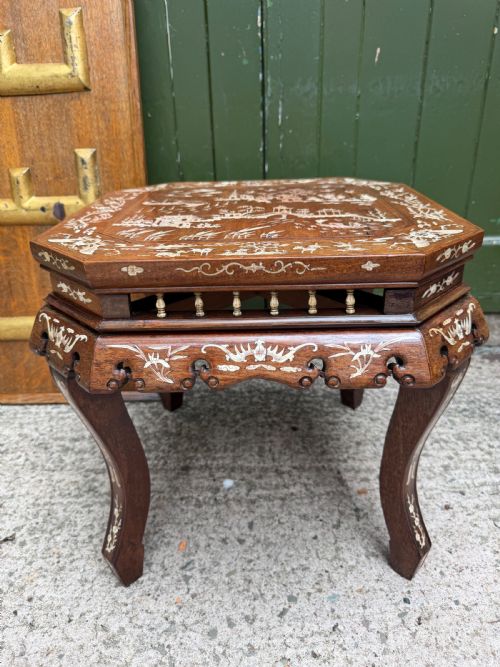
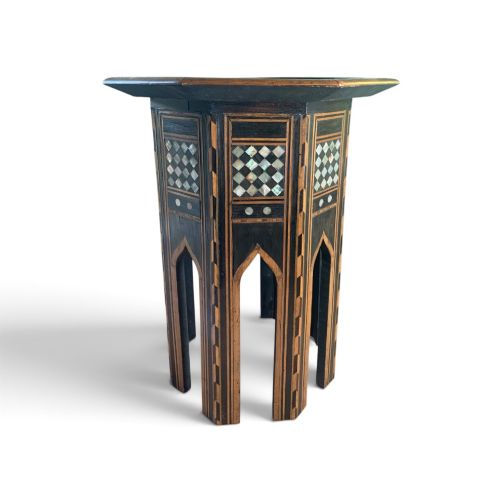
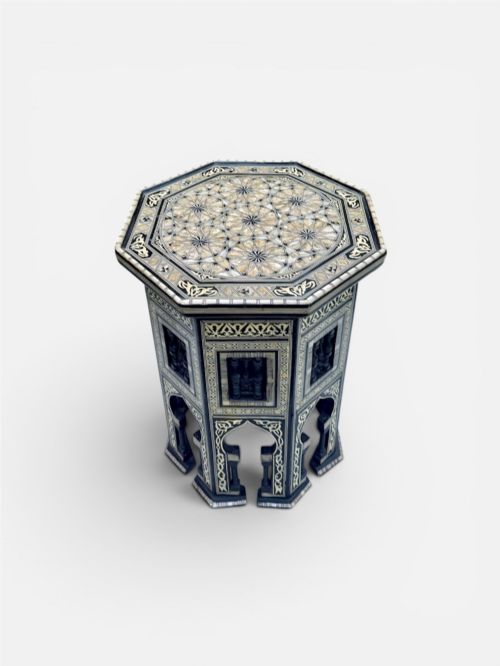
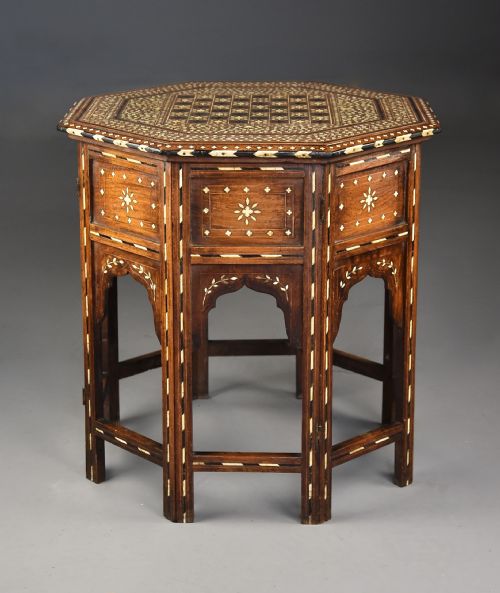
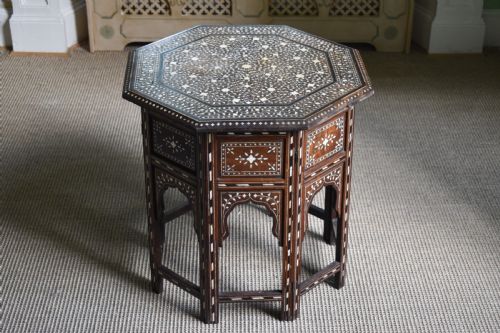
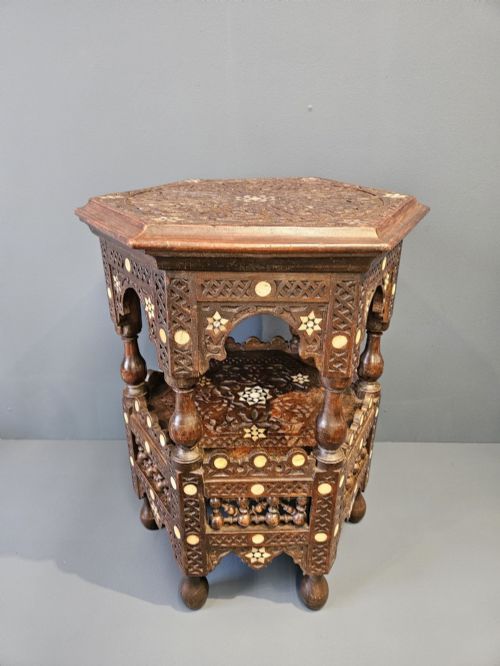
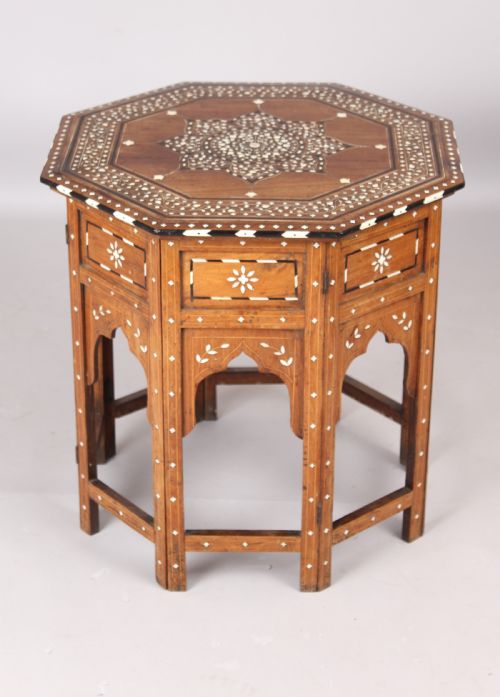
When you search for a bone inlaid coffee table, you enter a world of intricate low tables spanning the nineteenth and early twentieth centuries. The pieces on this page encompass various forms such as octagonal occasional tables, hexagonal Syrian tables, and carved side tables adapted over time for modern coffee use.
You are most likely to encounter Anglo-Indian and Moorish Revival examples made from hardwoods like rosewood, walnut, and ebonised wood. These items frequently display dense floral or geometric schemes that reflect late Victorian and Edwardian tastes for exotic furnishings.
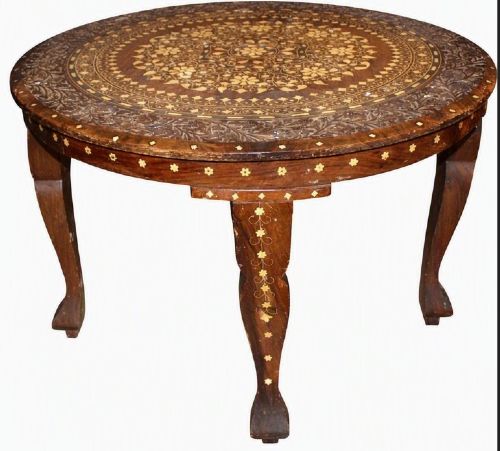
Many of these tables owe their aesthetic to workshops in Hoshiarpur or influences associated with retailers like Liberty & Co. They bridge the gap between historical decorative arts and functional domestic surfaces.
How they were made
Artisans carved dense hardwood structures from rosewood, walnut, or ebonised timber, providing a dark, contrasting ground for light-coloured embellishments. The timber frames often feature deep relief carving alongside flat surfaces prepared for decoration.
Workers shaped pieces of bone and mother-of-pearl by hand, fitting them meticulously into precise recesses carved into the wood. This mosaic technique created intricate scrollwork, foliage, and geometric borders across tops and panels.
A matched pair of occasional tables allows you to arrange a symmetrical tea setup fit for an Edwardian salon.
What varies in quality
The precision of the joinery and the density of the surface patterning separate finer examples from simpler production. Superior specimens display tightly fitted bone segments with minimal filler and deeply chiselled wood carving that retains crisp edges.
The choice of secondary materials also influences the piece, with mother-of-pearl accents and substantial hardwoods indicating higher workshop standards. Furthermore, stamped attribution or known retail provenance elevates certain tables above standard decorative items.
Liberty & Co
The Bone Inlaid Coffee Table Glossary
- Hoshiarpur
- A city in Punjab, India, renowned for its woodcarving and intricate bone and brass inlay traditions. Tables originating from here typically feature dense floral and geometric motifs across octagonal or square surfaces.
- Moorish Revival
- A nineteenth-century architectural and decorative style incorporating elements of Spanish, Islamic, and North African design. Pieces in this idiom often utilise horseshoe arches, intricate fretwork, and detailed inlay.
- Octagonal
- Having eight sides and eight angles. Many occasional and coffee tables from this period utilise an eight-sided geometry to display complex symmetrical patterns on the top surface.
- Ebonised wood
- Timber treated with a dark finish to imitate expensive ebony. This dark ground heightens the visual contrast of white bone and mother-of-pearl inlay.
- Mother-of-pearl
- An iridescent inner layer of shells used alongside bone in decorative inlay. It provides shimmering tonal variation when caught in the light.
Bone Inlaid Coffee Table: Frequently Asked Questions
How do I clean a bone inlaid coffee table?
Dust the surface regularly with a soft, dry cloth to prevent dirt from settling into the recessed areas between the bone and wood. Avoid using liquid cleaners, moisture, or chemical polishes, as these can loosen the adhesive and discolour the natural materials.
For stubborn dust trapped in the carved channels, use a clean, dry artist's brush with soft bristles. Maintaining a stable indoor humidity will also help protect the timber base from warping and the inlay from shifting.
Are these tables sturdy enough for daily use?
Most surviving examples were originally built as occasional or side tables rather than heavy-use furniture. While they function well as coffee tables in low-traffic settings, they require a gentle touch and consideration for their age.
Use coasters to protect the wooden and inlaid top from moisture rings and heat marks. Distributing weight evenly and avoiding excessive pressure on the edges will preserve the structural integrity of the carved joints.
How do I date a bone inlaid table?
Examine the construction methods, timber choice, and style of the carving to establish a general timeframe. Pieces associated with the nineteenth century often display hand-cut joinery and heavy hardwoods like rosewood or walnut.
Look for maker's marks, stamps, or retail signatures on the underside, though many traditional workshop pieces remain unsigned. Comparing the geometric complexity and material combination with documented examples from the same era helps narrow down the decade.
What is the difference between Moorish and Anglo-Indian tables?
Moorish revival tables typically draw on Islamic and North African architectural motifs, featuring lattice fretwork, arches, and geometric star patterns. They often reflect late Victorian European fascination with Mediterranean and Middle Eastern aesthetics.
Anglo-Indian tables, particularly those from centres like Hoshiarpur, showcase dense floral scrolls and wildlife motifs combined with traditional Indian woodworking techniques. Both styles utilise bone inlay, but the arrangement and specific carving motifs distinguish their geographic roots.