


Indian Marquetry Table
These Indian marquetry table examples bring intricate geometric patterns and dense exotic hardwoods straight into modern rooms.
Indian Marquetry Table
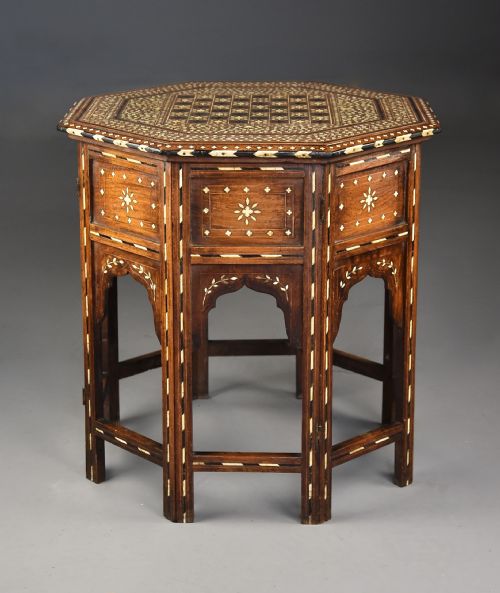
An Indian marquetry table encompasses low occasional pieces, folding octagonal surfaces, and heavy centre tables produced across the nineteenth and early twentieth centuries. These works emerge largely from colonial workshops, regional Indian centres such as Hoshiarpur, and Ceylonese makers.
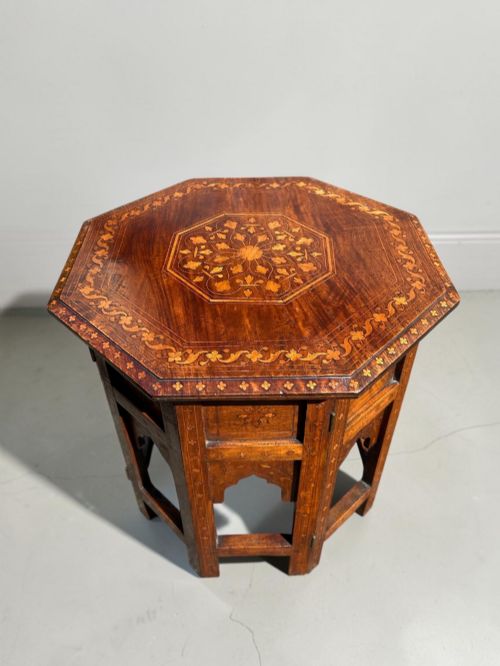
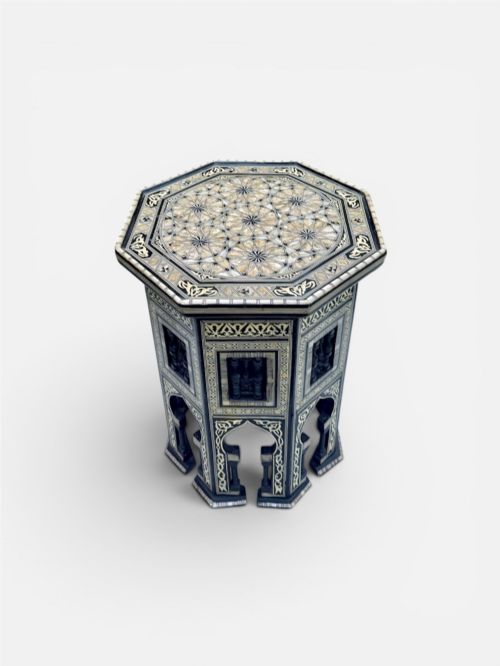
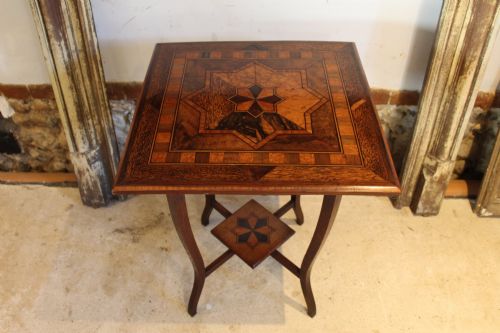
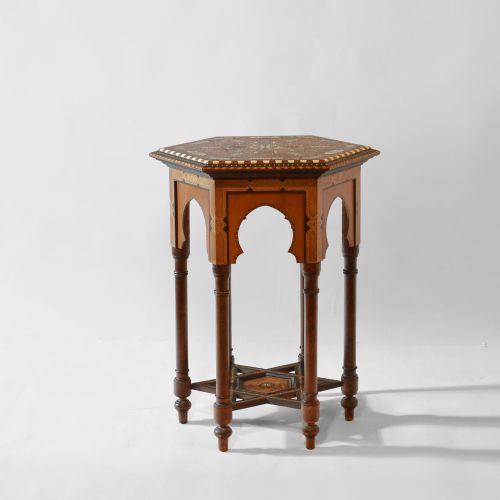
Buyers encounter numerous geometric shapes, including hexagonal and octagonal side tables alongside rectangular coffee tables. Anglo-Indian and Moorish revival styles dominate the selection, bringing complex patterned surfaces into domestic interiors.
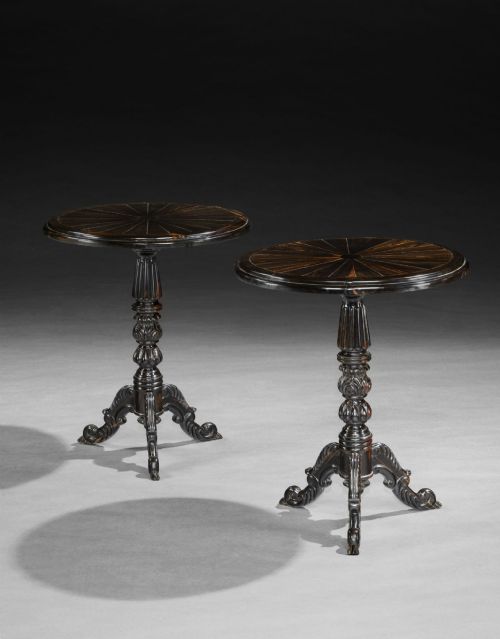
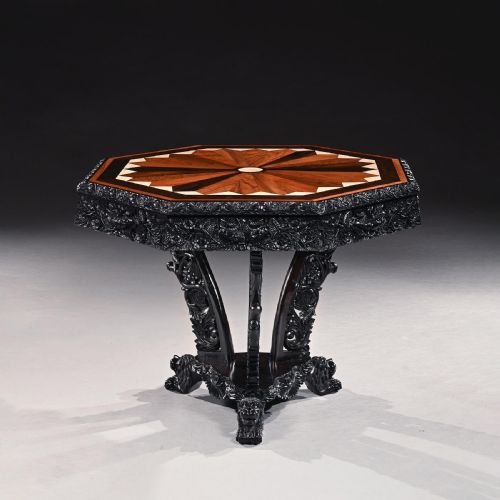
The material palette draws heavily on regional timbers and contrasting inlay elements to create dense optical effects. Surviving examples span from mid nineteenth century tripod supports up to twentieth century coffee tables.
Materials and Construction
Workshops utilise dense dark timbers such as ebony, rosewood, teak, and walnut as the primary structural foundations. These heavy woods provide stable platforms for intricate surface decoration.
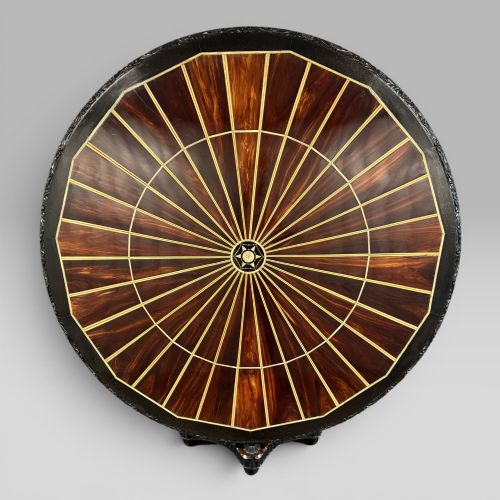
Artisans inset contrasting materials like bone, mother-of-pearl, brass wire, and paler specimen woods into precise channels carved across the top. This combination creates the characteristic mosaic effect associated with the style.
Carved structural details frequently support the inlaid surfaces, particularly on tripod forms and folding octagonal bases. Joinery methods reflect both traditional regional techniques and adaptations for European export markets.
At least one small table rests on carved wooden elephant supports.
Assessing Quality and Execution
Execution depends on the precision of the inlay work and the tightness of the geometric tessellation. Superior pieces display minuscule gaps between individual pieces of bone, brass, or wood.
The choice of base timber dictates the foundational grade, with solid ebony or calamander sitting above softer ebonised woods. Richness of grain and variety within specimen wood selections elevate the overall standard.
Depth of carving on structural elements and the complexity of the pattern deployment distinguish finer workshop production from simpler commercial outputs.
The Indian Marquetry Table Glossary
- Marquetry
- The art of applying pieces of veneer to a structure to form decorative patterns. Artisans cut various woods and materials to fit tightly together before gluing them to the substrate.
- Hoshiarpur
- A town in Punjab renowned for intricate wood inlay work. Makers there produced folding tables featuring dense bone and shesham or sandalwood marquetry.
- Specimen Wood
- Furniture constructed from or inlaid with numerous different botanical timbers. Each section displays its natural colour and grain without artificial staining.
- Octagonal
- Having eight sides and eight angles. Many tables associated with this search feature folding bases and eight-sided tops designed for versatility.
Indian Marquetry Table: Frequently Asked Questions
What is an Indian marquetry table?
These pieces are decorative surfaces featuring intricate wood, bone, or brass inlay created in South Asian workshops during the colonial period.
They range from small folding occasional tables to large centre pieces designed for nineteenth century drawing rooms.
How were these tables used originally?
Owners utilised them as occasional surfaces for tea, reading materials, or display in reception rooms.
Many octagonal designs featured folding bases to allow easy storage when not in use.
How do I care for inlaid wood?
Maintain stable humidity levels and avoid placing pieces near direct heat sources to prevent the wood and bone inlay from shrinking.
Dust gently with a dry cloth and apply occasional specialist wax to nourish the dense timbers.
How can I tell the age of a table?
Examine the construction methods, timber choices, and style markers such as Moorish arches or Victorian proportions.
Nineteenth century examples typically feature hand-cut marquetry and regional timbers distinct from later twentieth century production.