


Anglo Indian Hoshiarpur Table
An Anglo Indian Hoshiarpur table brings intricate geometric marquetry and dense carving into a room, offering a distinctive focal point for collectors of colonial craftsmanship.
Anglo Indian Hoshiarpur Table
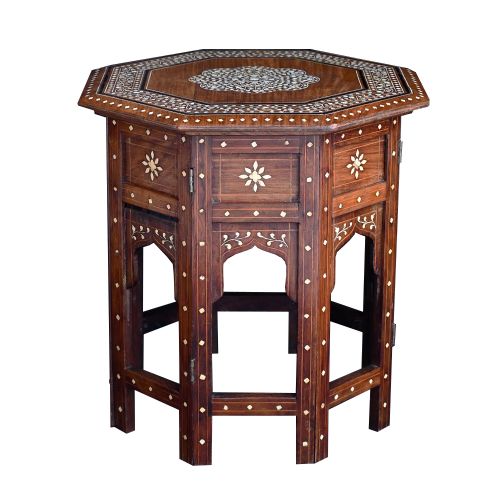
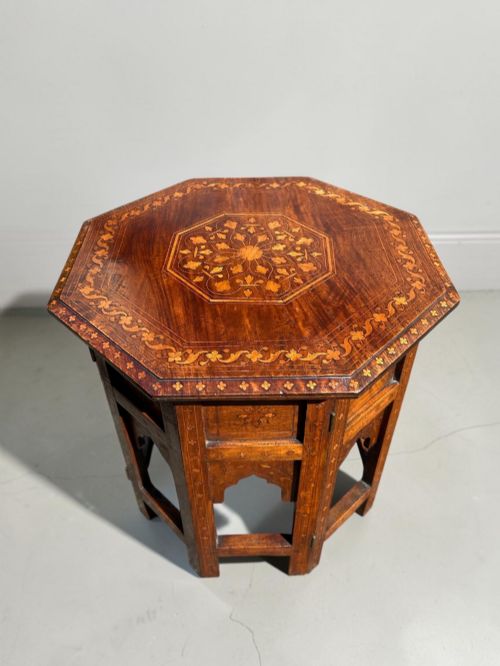
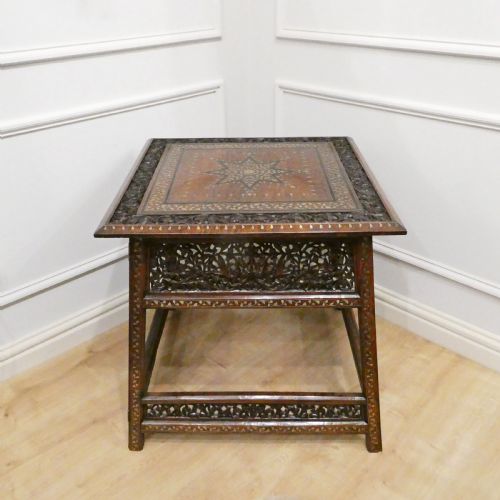
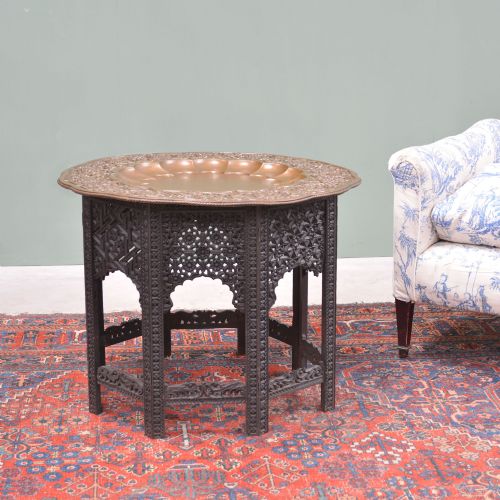
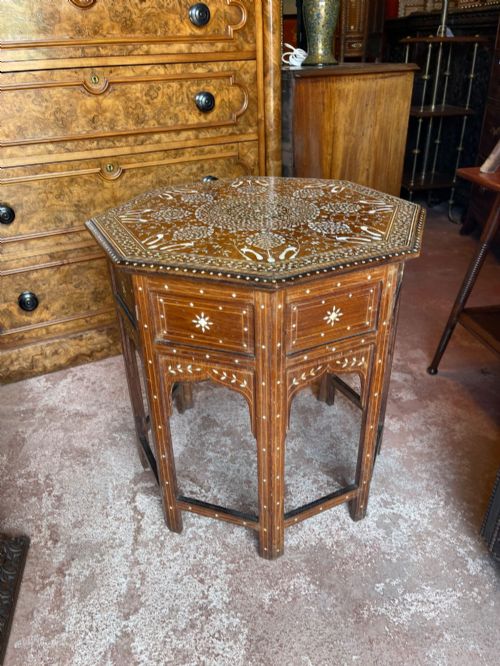
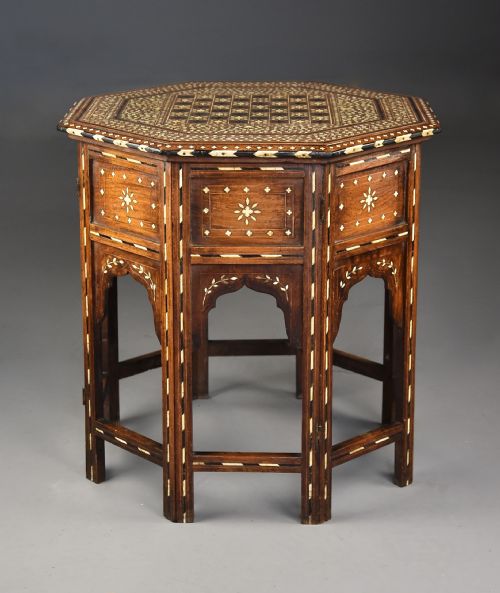
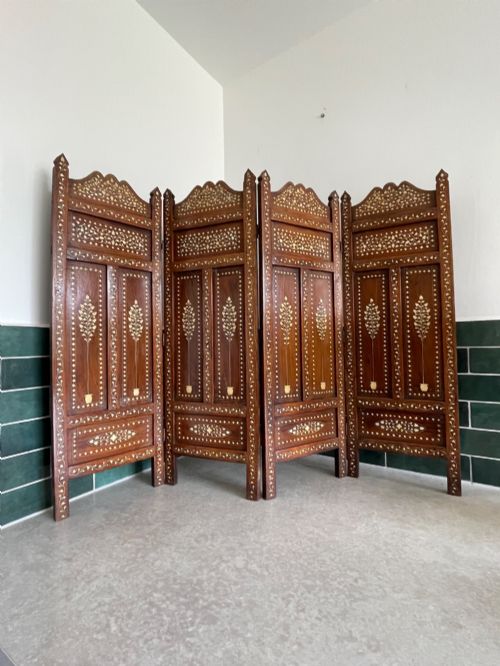
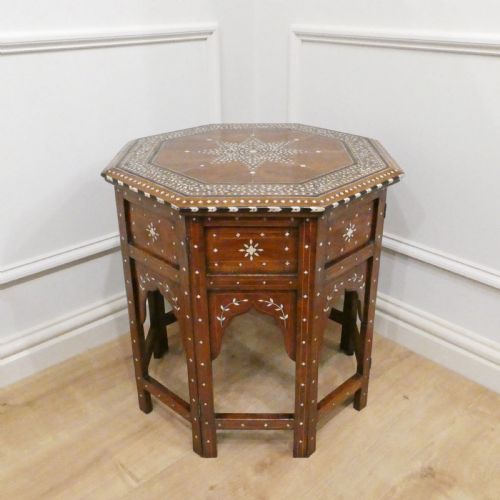
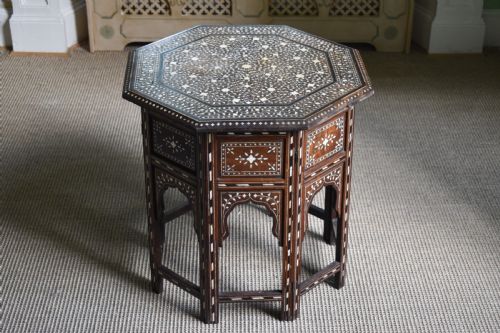
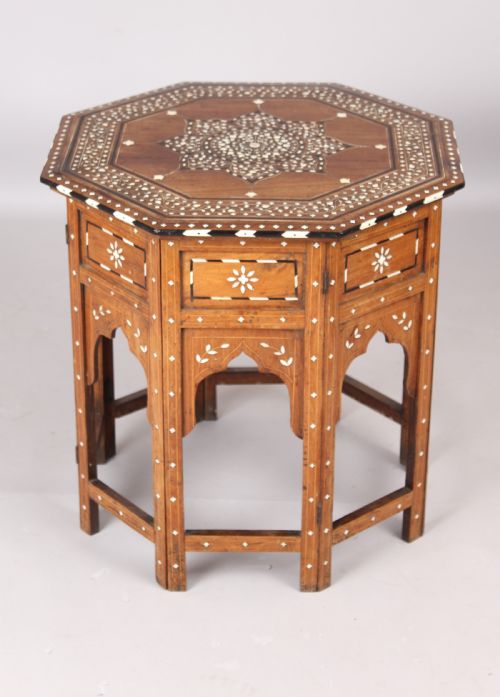
An Anglo Indian Hoshiarpur table is an intricately carved and inlaid piece of furniture originating from the Punjab region of India during the British colonial period. These tables frequently appear on this page as octagonal occasional tables, square side tables, and folding designs that demonstrate elaborate surface decoration.
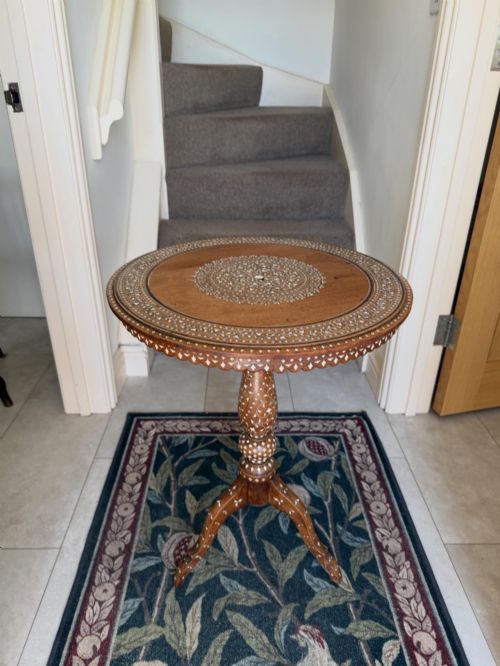
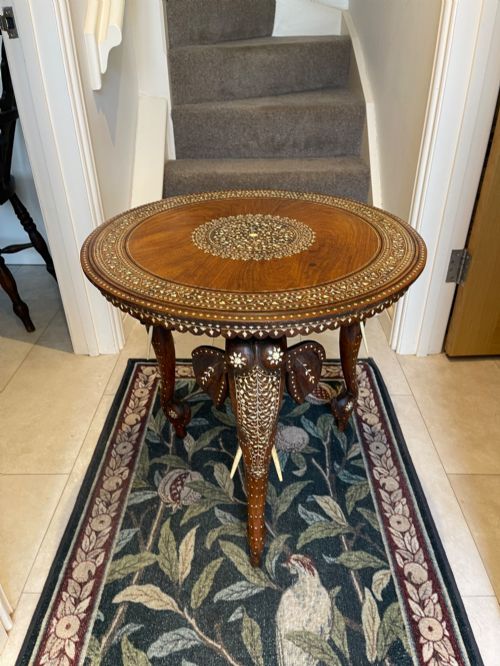
The form embraces both occasional tables and pedestal formats, alongside distinctive items such as table screens and elephant tripod tables. Most examples date from the late nineteenth century into the early twentieth century, reflecting the peak of export production for Western drawing rooms.
The defining characteristic remains the densely populated surface ornament, combining geometric patterns with organic motifs across collapsible and fixed frames. Buyers encounter these versatile objects serving as low coffee tables or display surfaces within traditional and eclectic interiors.
What Varies in Quality
The standard of an Anglo Indian Hoshiarpur table depends heavily on the crispness of the wood carving and the precision of the inlay work. Finer examples display tightly fitted bone or brass elements with minimal gaps, whereas lesser pieces show wider resin or adhesive lines around the inserts.
The choice of primary timber also dictates overall quality, with dense hardwoods like shisham and padauk providing superior weight and durability compared to softer secondary woods. Furthermore, the complexity of the geometric star patterns and the inclusion of figural elements, such as elephant supports, separate standard production items from masterworks.
Materials documented across these listings include rosewood, teak, bone inlay, brass, hardwood, sandalwood, and wood inlay.
The Anglo Indian Hoshiarpur Table Glossary
- Octagonal
- A geometric shape with eight sides, which forms the prevalent configuration for the top of these tables.
- Inlay
- A technique where contrasting materials such as bone, brass, or ivory are embedded flush into the wooden surface to create patterns.
- Shisham
- An Indian rosewood frequently utilised for the structural body of these elaborately decorated items.
- Padauk
- A heavy tropical hardwood valued for its rich reddish-brown colour and durability in colonial furniture.
- Tripod
- A three-legged support structure often employed on small occasional tables and specific figural forms.
Anglo Indian Hoshiarpur Table: Frequently Asked Questions
How do I date an Anglo Indian Hoshiarpur table?
Dating relies primarily on stylistic shifts and material choices documented across late nineteenth and early twentieth-century examples. Most pieces stem from the height of export manufacturing between eighteen eighty and nineteen twenty.
Examining the construction methods and the specific type of inlay materials, such as the transition from ivory to bone in later decades, helps narrow down the production era.
Were these tables designed to be folded?
Many octagonal variants feature ingenious collapsible bases designed to fold flat for transport and storage. These folding mechanisms utilise interlocking wooden slats held together without complex metal hinges.
Buyers should handle these folding frames with care to avoid stressing the delicate inlaid joints along the pivot points.
What woods were used to build them?
Craftsmen utilised native Indian timbers including shisham, teak, rosewood, sandalwood, and padauk. These dark woods provided an ideal contrast against pale bone and shining brass inlay.
The density of the chosen timber directly influenced the longevity and structural stability of the deeply carved surfaces.
How should I clean the intricate inlay?
Maintenance requires dry dusting with a soft brush to remove debris from deep recesses without dislodging fragile pieces of bone or brass. Moisture should remain strictly avoided to protect the historic adhesives holding the inlays in place.
Occasional application of appropriate microcrystalline wax helps nourish the exposed hardwood surfaces safely.