
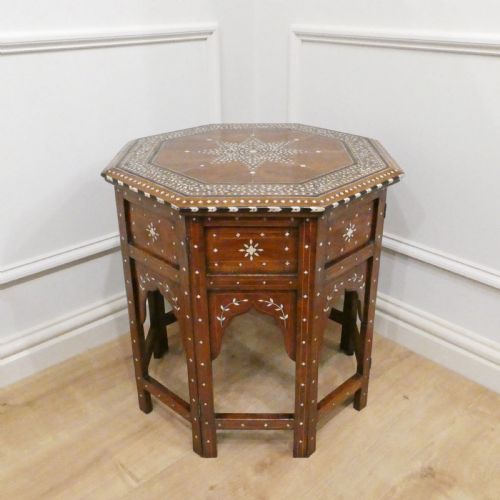


Teak Inlaid Side Table
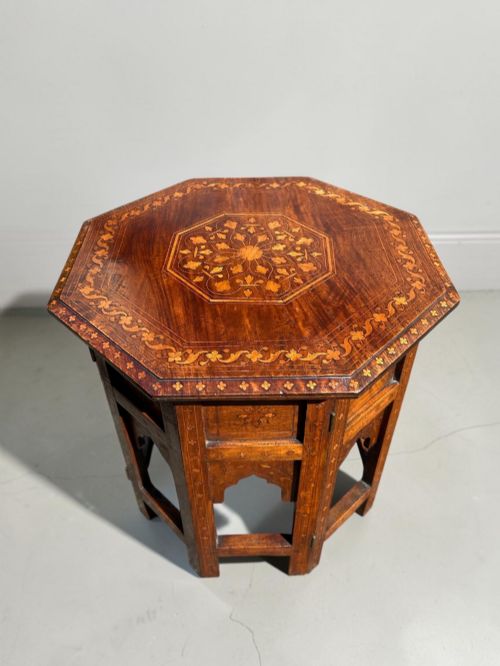
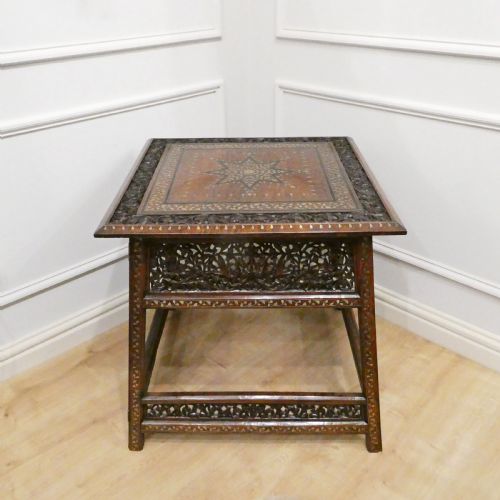
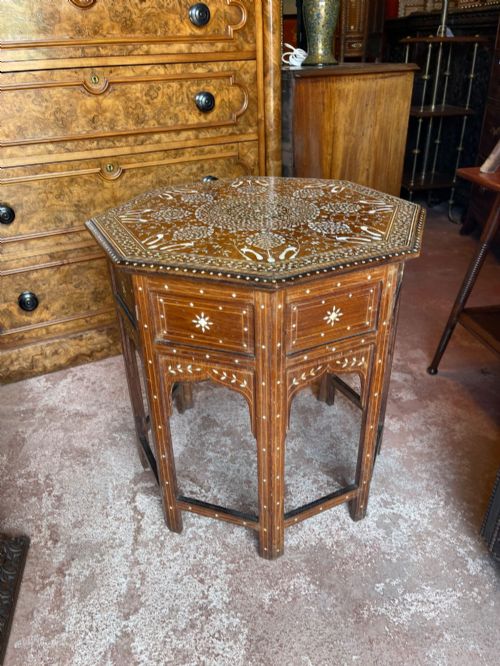
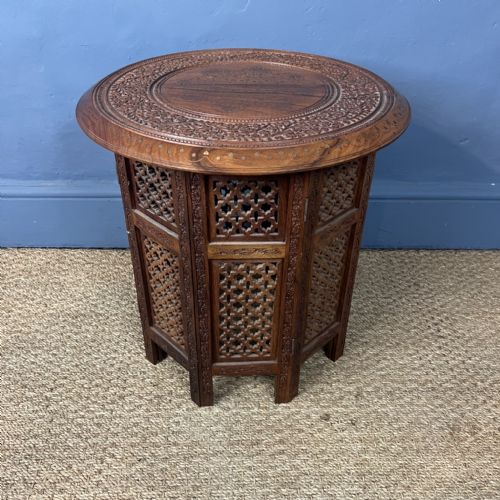
These teak inlaid side table examples bring intricate Anglo-Indian craftsmanship into a room.
Teak Inlaid Side Table
A teak inlaid side table is typically an Anglo-Indian occasional piece, often associated with the Hoshiarpur tradition from the late nineteenth century and early twentieth century. You will encounter various geometric and figural forms here, ranging from standard square and circular tops to distinct octagonal, oval, shield and tripod shapes.
The evidence shows these tables span from the nineteenth century through the 1930s, capturing decades of intricate woodworking and decorative inlay work. Most examples function as versatile occasional or side tables that suit sitting rooms and halls alike.
How they were made
Maker workshops utilised dense timber bases such as teak, occasionally combining rosewood or general hardwood, shaped through detailed carving and pierced fretwork. Artisans then set contrasting decorative elements directly into the wood grain.
Inlay work relied on materials like polished brass, bone inlay and ebony or general wood inlay to create dense botanical and geometric patterns across the surfaces. Some specialised forms incorporated folding mechanisms or complex tripod bases with carved figural elements such as elephants.
What varies in quality
Quality rests upon the density and precision of the carved surface detail alongside the complexity of the inlaid metals and bone. Finer examples display crisp, deeply carved fretwork that remains intact across folding frames and rigid joints alike.
The crispness of the brass and bone inlay work defines the upper tier of these tables. Simpler carved items without metal or bone decoration sit alongside richly embellished pieces featuring complex pictorial motifs like the Taj Mahal.
The Teak Inlaid Side Table Glossary
- Anglo-Indian
- A style describing furniture made in India during the British period, combining traditional local craftsmanship with forms suited to European tastes. These pieces often feature dense overall carving and intricate inlay.
- Hoshiarpur
- A historic centre in Punjab renowned for intricate woodwork and inlay. Tables from this region typically display dense geometric patterns formed from brass, bone and dark wood.
- Bone Inlay
- A decorative technique using shaped pieces of bone pressed into recesses carved into the timber. It provides a pale, luminous contrast against darker woods like teak.
- Fretted
- Woodwork pierced or cut through with decorative openwork patterns. This technique appears on folding tables and aprons to lighten the visual weight of the timber.
Teak Inlaid Side Table: Frequently Asked Questions
Where were these tables made?
These pieces originate from India, particularly associated with workshops in regions like Hoshiarpur during the late nineteenth and early twentieth centuries.
They were produced for both domestic use and export to Britain during the colonial period, blending traditional Indian carving techniques with forms that suited Western homes.
Are all these tables folding?
Not every table folds, though the selection includes fretted fold-up occasional tables designed for easy storage and movement.
Rigid models with fixed octagonal, square, circular or tripod bases also appear frequently across the periods represented.
What materials make up the inlay?
The inlay work relies primarily on sheet brass, bone and contrasting dark woods such as ebony.
Artisans set these materials flush into the teak ground to create elaborate geometric and floral compositions across the surface.
How do I date these tables?
Dating relies on the recorded periods spanning the late nineteenth century, the 1900s, 1910s, 1920s and 1930s.
Stylistic shifts, such as the evolution from dense overall carved frets to simpler forms, help distinguish the earlier nineteenth-century pieces from later twentieth-century examples.