

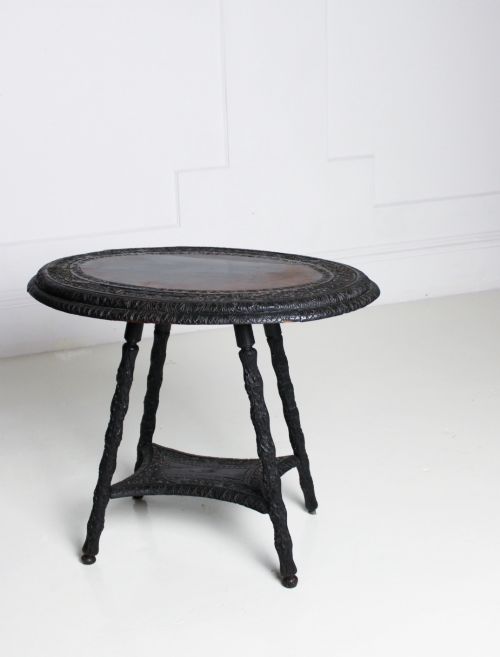
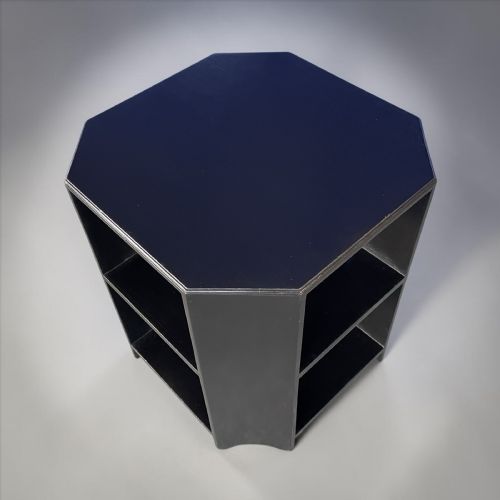


Ebonised Wooden Coffee Table
An ebonised wooden coffee table brings deep, dark elegance to a room, offering a sharp silhouette shaped by Victorian and Art Deco hands.
Ebonised Wooden Coffee Table
When you search for an ebonised wooden coffee table, you seek a surface finished to mimic expensive ebony through staining or painting. The pieces on offer range from low occasional tables to adapted side and centre tables originating across the nineteenth and twentieth centuries.
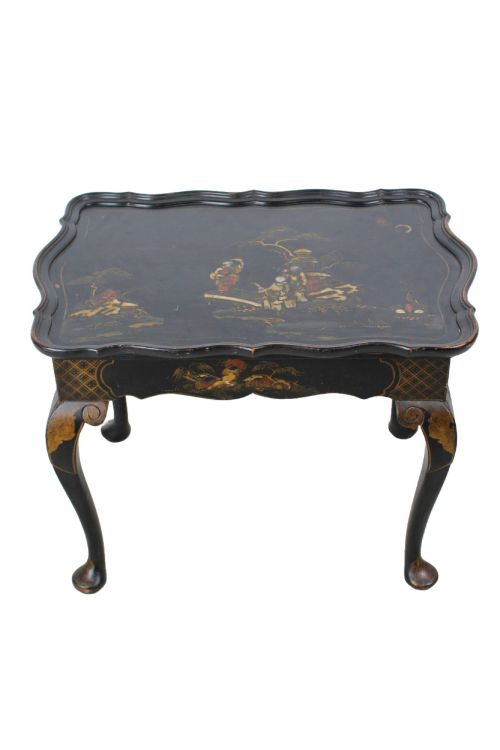
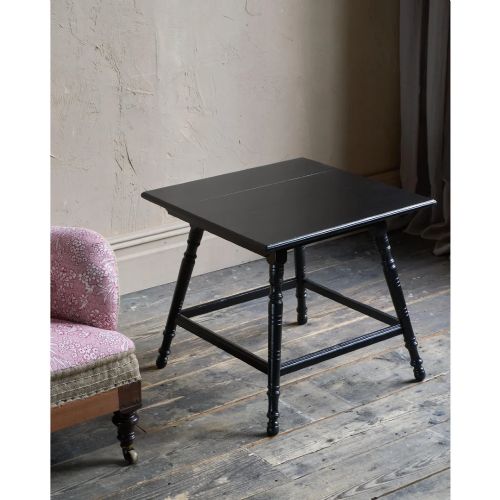
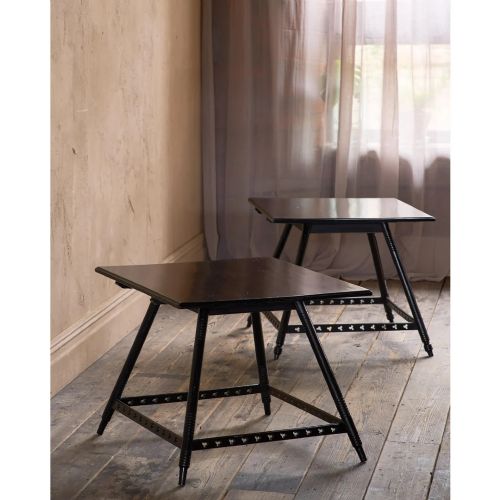
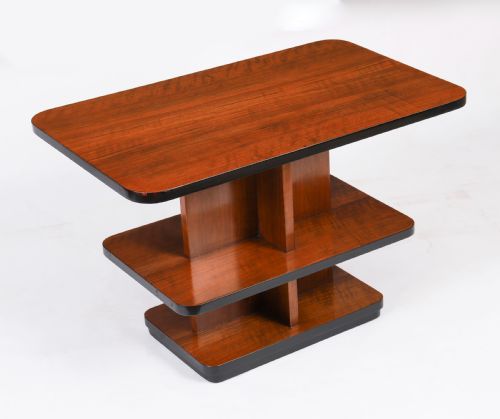
The styles span Aesthetic Movement and Edwardian Chinoiserie alongside Art Deco and Moorish Revival. You are likely to meet low tiers, octagonal occasional shapes, and tray tops sitting on dark timber frames.
Many items show diverse influences, from Anglo-Indian inlaid motifs to English cabinet-making traditions. These low tables adapt nineteenth-century forms to modern sitting habits while retaining their dark, polished character.
Materials and construction
Makers utilised hardwoods, walnut, rosewood, and stained birch to build the structural carcass before applying an ebonised finish. Surface decoration frequently involved intricate mother of pearl inlay, gilt accents, and lacquer work.
Detailing often included cast solid brass sabots on the feet and delicate inlaid patterns derived from Indian or Moorish traditions. The underlying timber dictated the weight and stability of each low table.
Materials recorded across the inventory include ebonised timber, walnut, rosewood, mother of pearl, and gilt.
Judging quality in dark timber tables
Quality rests upon the depth of the ebonised finish and the crispness of any applied gilt or inlaid mother of pearl. Superior examples display precise joinery and well-balanced proportions across tiered or octagonal designs.
Tables featuring documented maker craftsmanship or distinct stylistic direction from periods like the Aesthetic Movement hold greater visual and historical interest than generic commercial items.
Hindley and Sons·Liberty and Co·Daniel Cottier
The Ebonised Wooden Coffee Table Glossary
- Ebonised wood
- Timber stained, painted, or polished to resemble solid ebony. This dark finish was particularly popular during the nineteenth century for furniture mimicking exotic hardwoods.
- Occasional table
- A small, movable table designed for specific, intermittent use rather than central placement. These forms adapt easily to modern coffee table heights.
- Mother of pearl
- The iridescent inner layer of certain mollusc shells used for decorative inlay. Craftsmen cut thin pieces into geometric or floral motifs to embed in dark wood surfaces.
- Centre table
- A freestanding piece finished on all sides to stand in the middle of a room. Many nineteenth-century centre tables now function as spacious low coffee tables.
Ebonised Wooden Coffee Table: Frequently Asked Questions
Are these tables original?
The pieces originate from periods including the nineteenth century, the Edwardian era, and the 1930s. Many low coffee tables from this selection began life as taller occasional, side, or centre tables before being adapted to suit modern seating.
Makers built these items using traditional timbers like walnut, rosewood, and hardwood, applying dark ebonised finishes that reflect historical design movements.
How do I style an ebonised table?
The dark, reflective surface of an ebonised table provides a strong visual anchor in a sitting room. Pair it with lighter seating or neutral rugs to let the silhouette and any gilt or mother of pearl inlay stand out.
Keep surface decoration minimal to appreciate the rich grain and polished finish of the timber.
What is the difference between Art Deco and Victorian pieces?
Victorian and Aesthetic Movement examples often lean towards ornate details, geometric inlay, and Moorish or Anglo-Indian influences. They utilise rich materials like mother of pearl and gilt.
Art Deco items from the 1920s and 1930s favour streamlined silhouettes, tiered structures, and simpler planes of blonde oak or dark ebonised timber.
How do I care for ebonised wood?
Protect the dark finish by dusting regularly with a soft, dry cloth. Avoid placing the table in direct sunlight or near heat sources to prevent the timber from drying out.
Refrain from using harsh chemical polishes that can dull the historical lustre of the stained surface.