
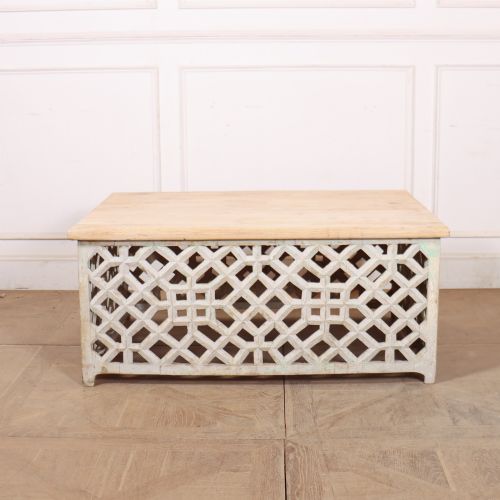


Vintage Indian Low Table
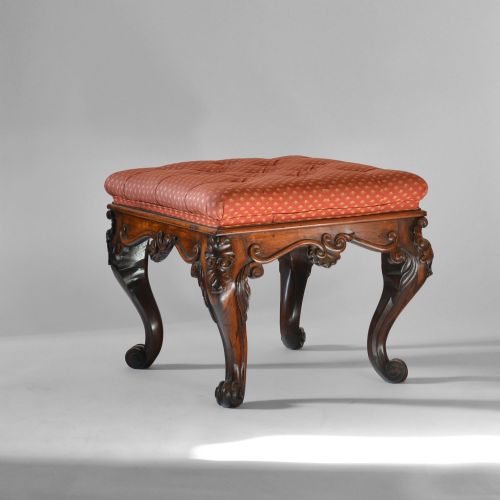
These vintage indian low table examples bring warmth and character into a room through rich timbers and detailed metalwork.
Vintage Indian Low Table
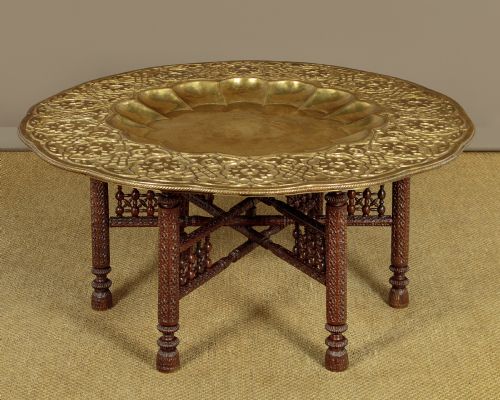
A vintage indian low table brings rich texture and history to a room, drawing on traditions of craftsmanship from the nineteenth and early twentieth centuries. These pieces function as coffee tables, centre tables, and occasional tables, sitting low to the ground to anchor a living space. Buyers searching for a vintage indian low table will encounter various forms, from brass-topped trays on folding bases to solid timber takhat tables designed for sitting cross-legged.
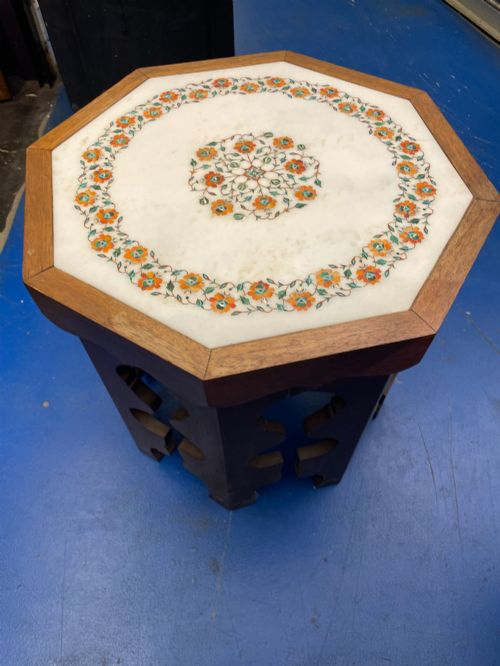
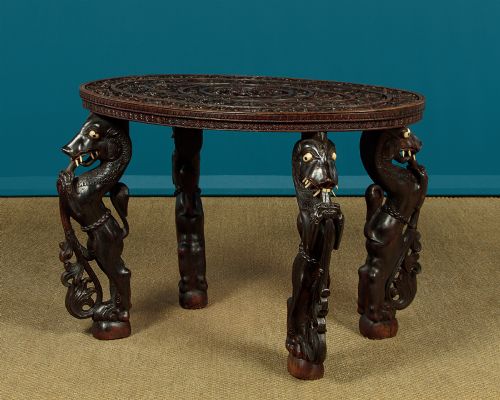
The materials and styles span Anglo-Indian, Colonial Indian, Indian Rustic, Kashmiri, and Persian influences. Surfaces often feature intricate carvings, inlaid bone, or chased metal work that reflects regional decorative arts. Proportions range from compact occasional pieces to very large coffee tables suited for central placement in a spacious room.
Materials and construction methods
Makers utilised dense timbers such as teak, rosewood, and general hardwoods to build durable frames that withstand decades of use. These woods provide a stable canvas for subsequent carving, ebonising, and inlay work.
Metal components, particularly brass, feature heavily across the surface designs, often etched or embossed with zodiac signs and traditional motifs. White marble tops and delicate bone inlay also appear, paired with wooden structures to create contrasting textures.
Listings feature items spanning the nineteenth century through to the 1930s, constructed from teak, rosewood, brass, and white marble.
Factors that separate the finest examples
Quality rests in the crispness of the hand-carving and the precision of any bone or metal inlay work. Pieces displaying deep, deliberate chisel marks and securely fitted table tops demonstrate a higher standard of workshop execution.
The integrity of the timber and the weight of the brass tray top indicate the original grade of materials selected. Finer examples maintain structural balance while exhibiting complex decorative programmes without loose joints or superficial assembly.
The Vintage Indian Low Table Glossary
- Takhat
- A low traditional Indian platform or table originally used for seating or resting. These sturdy tables form a centrepiece in many modern living rooms.
- Anglo-Indian
- A style describing furniture made in India during the British period, combining British furniture forms with traditional Indian decorative techniques. This hybrid aesthetic produced distinctive tables and seating.
- Kashmiri
- Pertaining to the Kashmir region, known for intricate surface decoration and painted or carved floral motifs. Items from this tradition display distinct regional artistry.
- Ebonised
- Wood finished with a dark stain or polish to resemble ebony. This technique highlights carved details by creating high-contrast shadows across the surface.
Vintage Indian Low Table: Frequently Asked Questions
What is a takhat table?
A takhat is a traditional low platform or table originating from India, built for sitting or domestic use. In contemporary interiors, they serve as substantial coffee tables with low profiles.
Their solid wood construction and low height make them practical for anchoring seating arrangements while offering significant surface area.
How do I clean a brass top?
Brass tops on these tables benefit from gentle dusting with a soft cloth to preserve the metal surface. Avoid harsh chemical cleaners that strip the aged patina.
Allowing the brass to retain its natural colour maintains the character developed over the decades since manufacture.
Are these tables sturdy enough daily?
These tables utilise dense hardwoods like teak and rosewood, ensuring robust frames capable of everyday use. Their sturdy construction supports standard living room items.
Regular care and avoiding excess moisture protect both the timber structure and any delicate inlay work.
How can I tell the period?
Dating relies on examining the timber species, joinery methods, and the style of carving or metalwork. Pieces from the nineteenth century often display hand-forged elements and dense rosewood.
Early twentieth-century examples incorporate brass trays, zodiac motifs, and ebonised finishes characteristic of the colonial era.