


William IV Tilt Table
A william iv tilt table combines functional pivoting mechanisms with the rich grain of rosewood or mahogany.
William IV Tilt Table
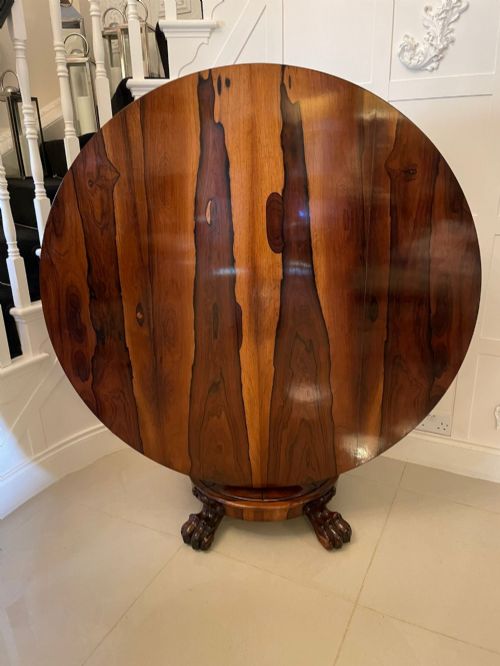
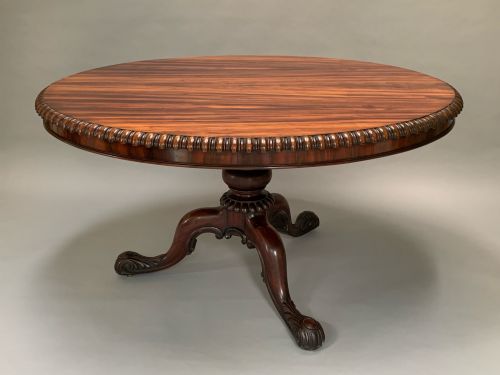
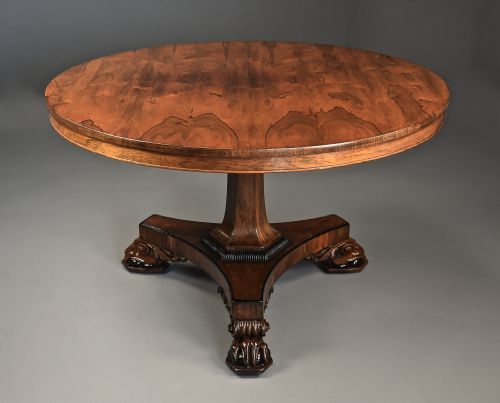
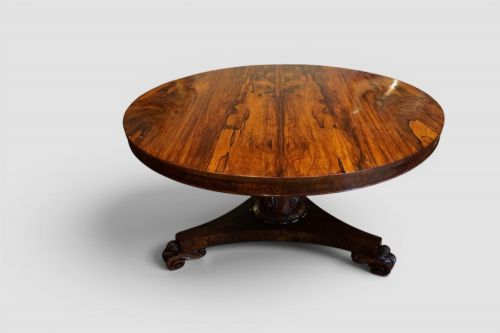
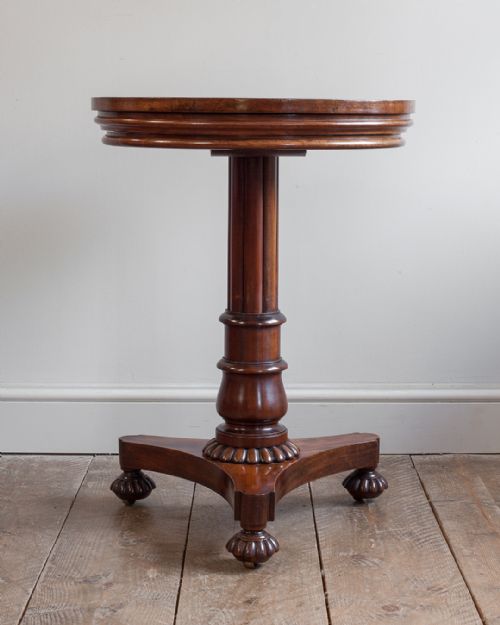
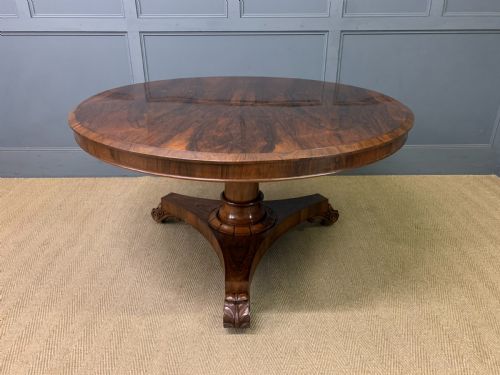
A william iv tilt table is a versatile piece of 19th-century furniture designed with a hinged top that pivots to a vertical position for storage against a wall. The most common version met on this page is the circular breakfast or centre table, supported by a central pillar and a sturdy triangular or triform base.
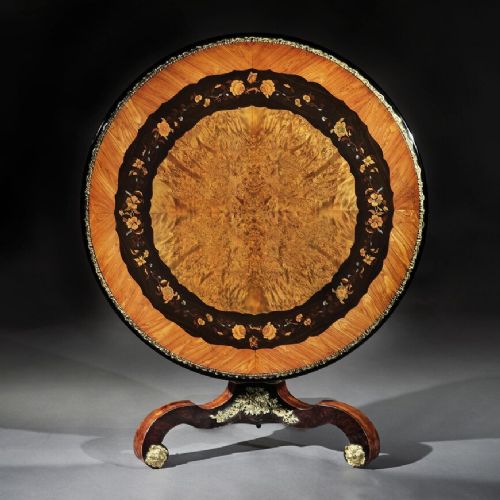
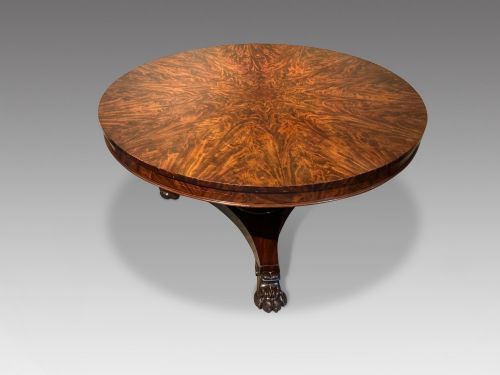
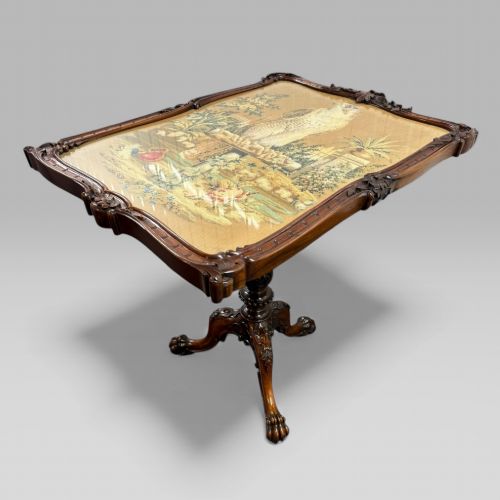
These tables originate predominantly from the 19th century, drawing stylistic influences from the Regency period and French Revival. Makers frequently utilised heavy timbers like rosewood and mahogany, often incorporating flame veneer or elaborate carving around the pedestal and feet.
How they were made
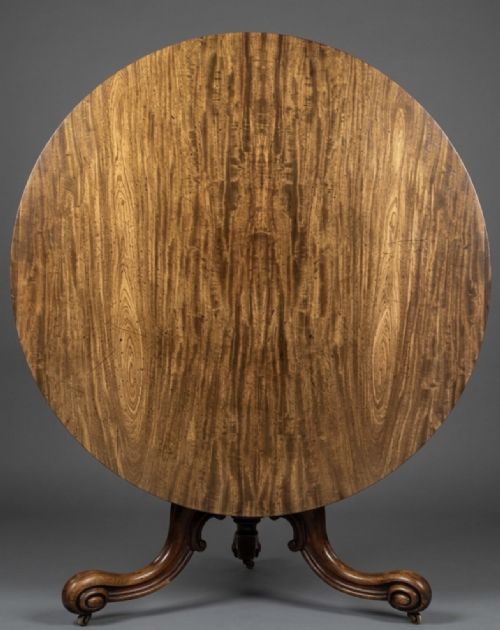
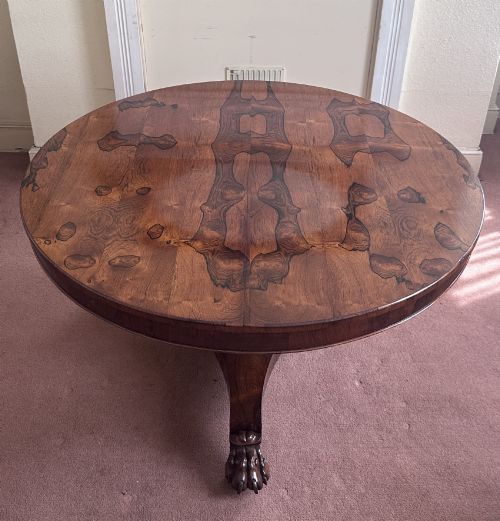
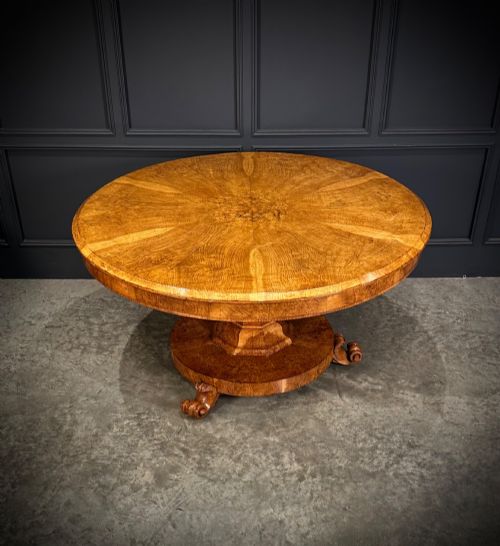
Cabinet makers constructed these pieces using dense hardwoods such as mahogany, rosewood, walnut, and pollard oak, often applying figured veneers to circular or segmented tops to highlight natural grain patterns. The central pillars were frequently turned with robust octagonal or faceted profiles, resting upon tripartite bases fitted with concealed castors.
The pivoting mechanism relied on a brass catch and block assembly beneath the top, allowing the heavy surface to tilt smoothly and lock securely into the horizontal position. Carved details on the knees and pedestals were executed by hand, marrying structural rigidity with the ornate aesthetic of the period.
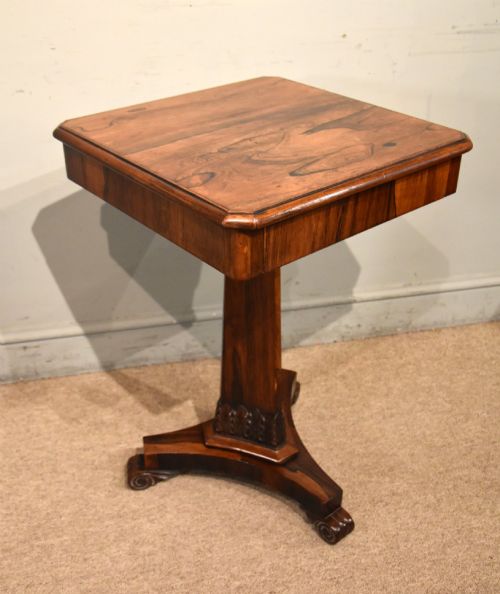
Recorded forms include breakfast tables, dining tables, wine tables, and occasional centre tables with segmented or starburst inlaid tops.
What varies in quality
Quality in a william iv tilt table is determined by the selection of timber and the ambition of the joinery, particularly in the choice of richly figured rosewood or flame mahogany veneers. Superior examples display seamless book-matching across circular tops and finely executed hand-carved ornament on the central pillar.
The integrity of the tilting mechanism and the stability of the triform base also distinguish finer workshops from standard production. Tables retaining a rich, faded patina and original brass fittings demonstrate better preservation and superior original craftsmanship.
Edward Holmes Baldock·Gillows
The William IV Tilt Table Glossary
- Tilt top
- A pivoting table surface attached to a central mechanism that allows the top to be stored vertically when not in use. This clever design saved valuable floor space in 19th-century drawing rooms.
- Triform base
- A three-sided pedestal foundation supporting the central pillar of the table. It frequently terminates in scrolled feet or concealed castors.
- Flame mahogany
- A veneer cut from the fork of the mahogany tree where the branch joins the trunk. The resulting wood grain displays a distinctive, flickering flame pattern.
- Centre table
- A freestanding piece designed to be viewed from all sides rather than pushed against a wall. These often served as focal points in large reception rooms.
- Patina
- The surface sheen and softening of colour developed by wood and polish over decades of exposure to light and handling. Collectors prize a mellow patina for its depth and visual warmth.
William IV Tilt Table: Frequently Asked Questions
What is a tilt top table used for?
These tables served primarily as breakfast or dining surfaces in 19th-century homes, easily accommodating multiple guests when locked flat. When pivoted vertically, the table occupied minimal floor space and stood against the perimeter of the room.
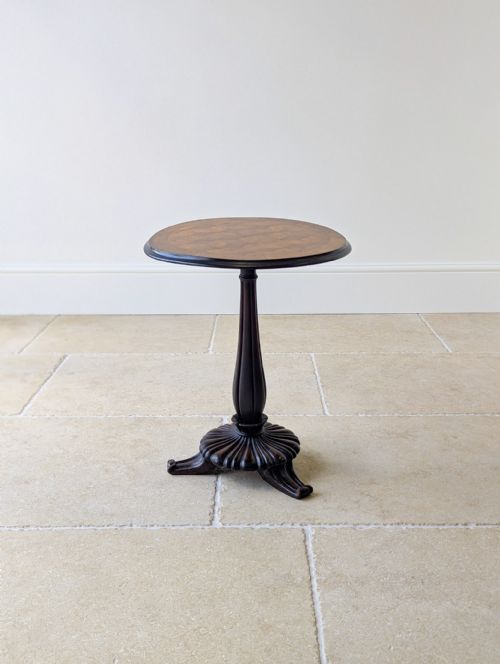
Beyond dining, smaller iterations functioned as occasional or wine tables in reception rooms. Their dual nature made them adaptable for changing household needs throughout the day.
How do you identify a William IV table?
William IV tables are characterised by heavy proportions, bold circular or ovoid tops, and substantial central pillars resting on triform platforms. The timber choice frequently leans towards dark rosewood or figured mahogany, sometimes accented with subtle brass mounts or carved foliate details.
Stylistically, they bridge the transition between Regency elegance and early Victorian mass, retaining classical architectural influences without excessive ornamentation. The presence of a sturdy tilt mechanism is standard across breakfast and centre table forms of this era.
Are these tables suitable for modern dining?
Their sturdy construction and generous circular top dimensions make them practical for everyday dining or as central kitchen surfaces. The central pedestal design also ensures that diners' legs do not encounter corner table legs.
Care should be taken to protect the polished wood surfaces from heat and moisture using appropriate placemats. The tilting feature remains fully functional for easy movement or storage when required.
What is the difference between a breakfast and centre table?
Breakfast tables traditionally feature a tilting mechanism to clear floor space after the morning meal, whereas centre tables were typically fixed freestanding pieces for display. In practice, cabinet makers of the period often applied both terms interchangeably to heavy round pedestal tables.
Both forms share similar proportions and heavy timber construction, acting as the main decorative anchor in a 19th-century interior.