

Carved Foot Centre Table
A carved foot centre table is a freestanding anchor for a reception room, designed to display objects or seat guests from every angle.
Carved Foot Centre Table
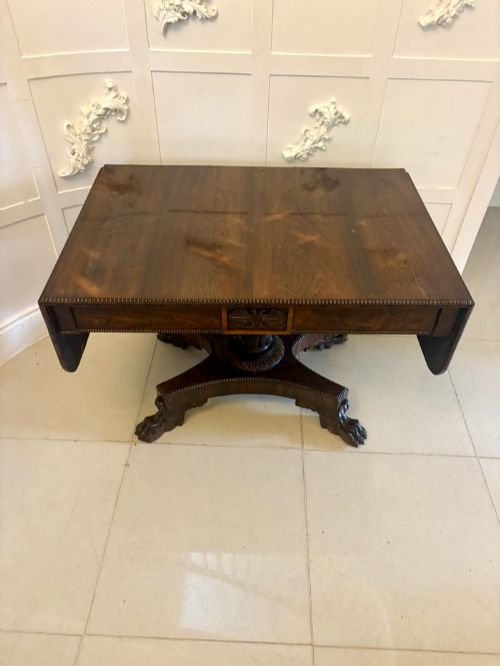
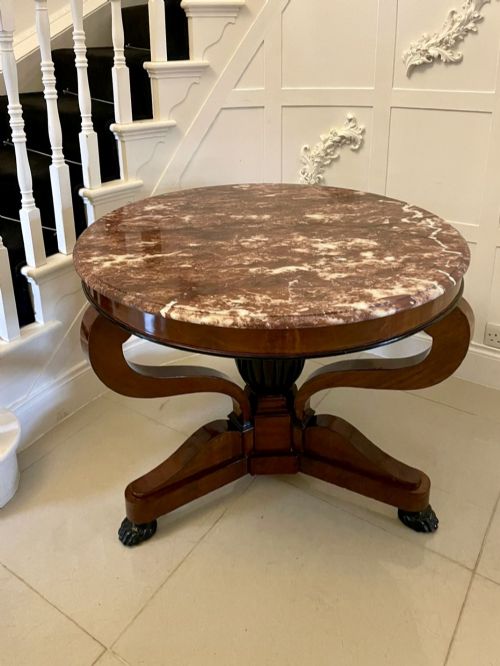
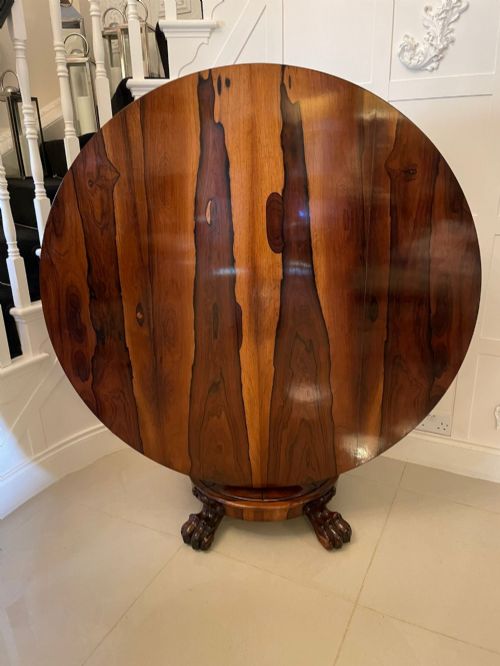
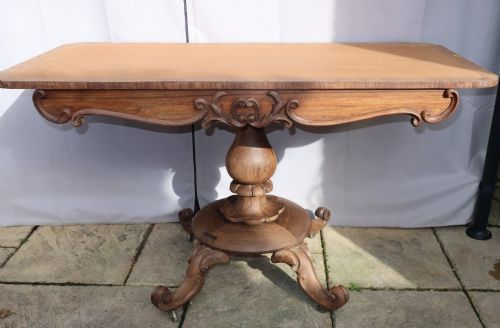
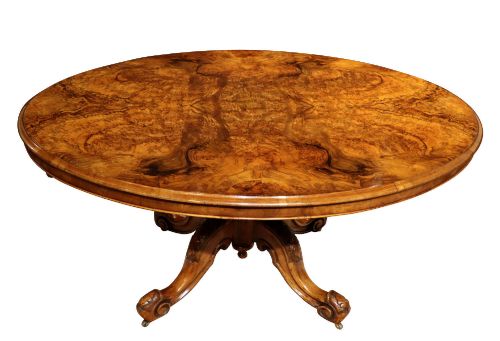
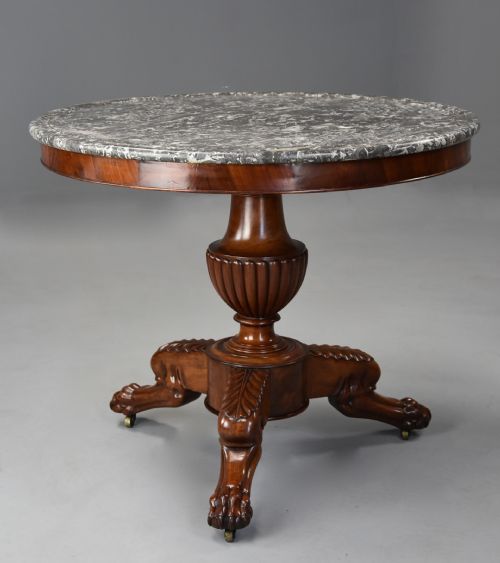
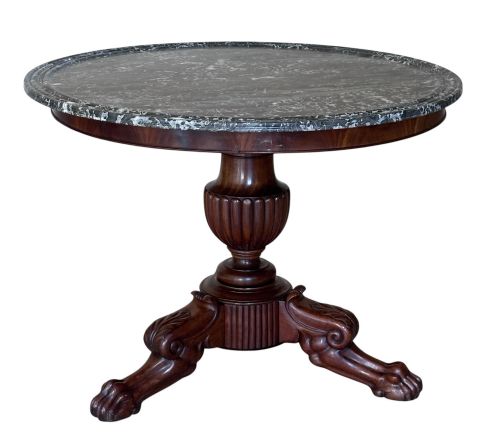
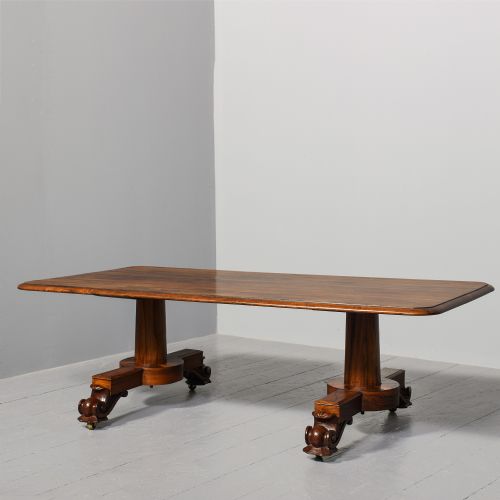
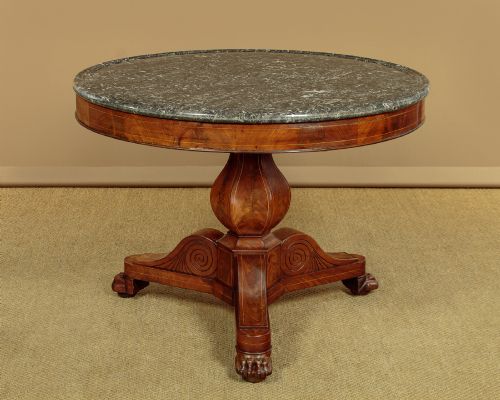
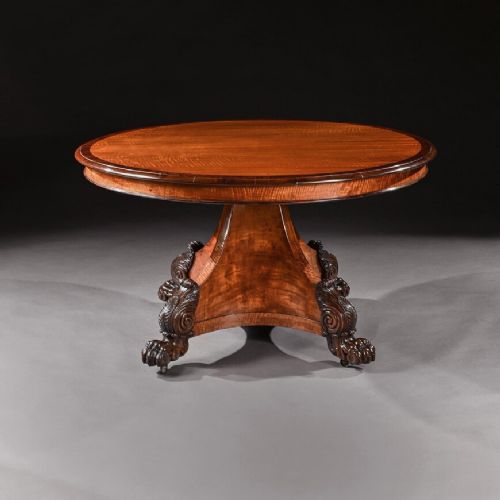
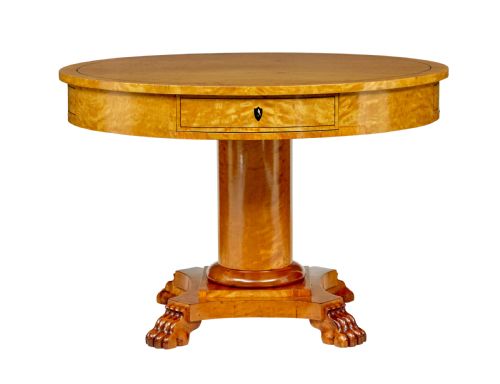
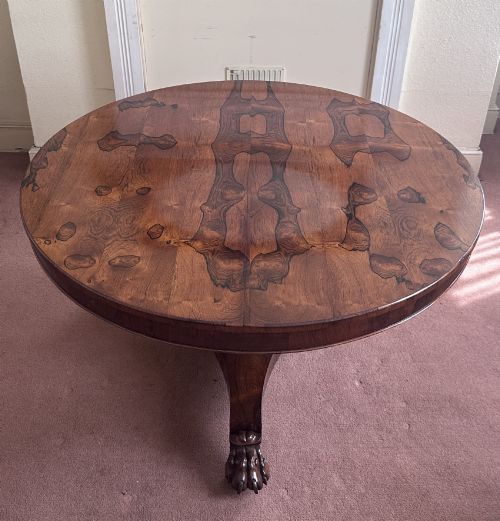
When you search for a carved foot centre table, you encounter freestanding furniture designed to occupy the middle of a room rather than sit against a wall. The pieces listed span the nineteenth century, including Regency, William IV, Victorian, and French periods, along with specific forms such as circular breakfast tables, gueridons, sofa tables, and occasional tables.
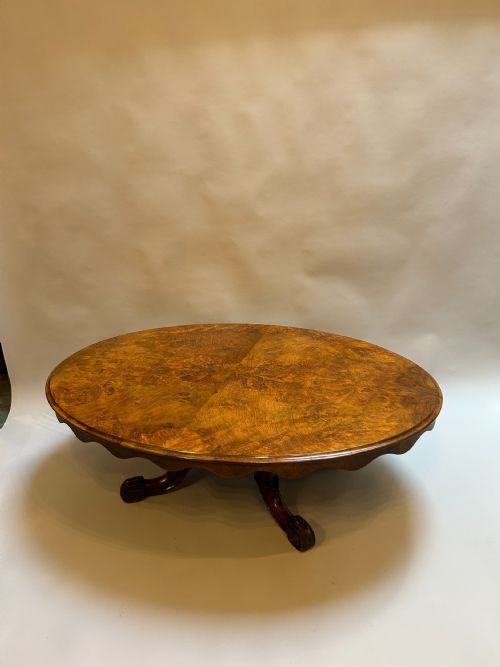
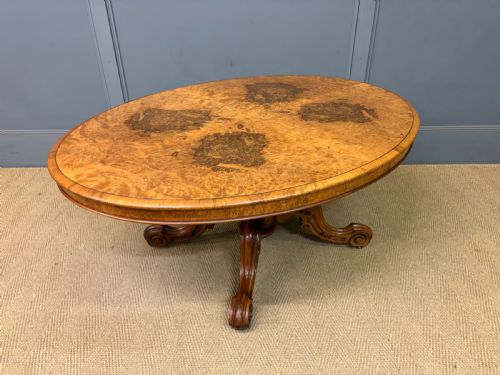
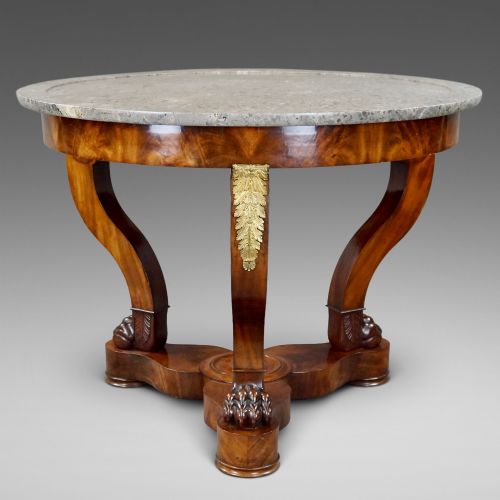
You meet variations in timber and base configuration, from circular dining tables on octagonal pillars to oval coffee tables on quadrapod bases and triform supports. Many examples combine rich timbers with marble tops, giltwood details, or pedestal supports that anchor the overall design.
How they were made
Cabinet makers utilised dense native and exotic hardwoods, applying mahogany, rosewood, walnut, and burr walnut as solid timber or as flame veneer over supportive bases. Oak and birch also appear in specific regional examples.
Surfaces frequently incorporate inset original veined marble, marquetry, or specimen wood patterns, while structural supports rely on turned pillars, carved pedestals, and fitted brass or gilt accents.
The listings show nineteenth-century pieces constructed from rosewood, mahogany, and burr walnut, alongside French marble-topped gueridons and Scandinavian empire revival designs.
What varies in quality
Quality rests on the depth and crispness of the carving on the feet and pillars, alongside the choice and grain matching of veneers such as burr walnut or flame mahogany. Superior examples maintain structural integrity in their pedestals and tilt mechanisms.
The integration of secondary materials, such as heavy original veined marble tops or finely cast brass mounts, separates standard production from exceptional work.
Peters of Genoa
The Carved Foot Centre Table Glossary
- Gueridon
- A small circular table on a central pillar, originating in France and frequently featuring a marble top. These pieces serve well as freestanding display surfaces.
- Triform base
- A three-sided pedestal or foot arrangement commonly found beneath circular breakfast and centre tables of the nineteenth century.
- Snap-top table
- A table equipped with a mechanism allowing the top to tilt into a vertical position when not in use. This design saved space in period interiors.
- Specimen wood
- Furniture decoration utilising a variety of different timbers arranged to display contrasting natural colours and grain patterns.
Carved Foot Centre Table: Frequently Asked Questions
Where do you place a centre table?
These tables belong in the middle of a room, functioning independently of surrounding walls to provide surface space and visual balance.
Because they are finished on all sides, they allow circulation around the piece and serve as a natural focal point for lighting or decorative objects.
What is a gueridon table?
A gueridon is a compact circular table supported by a central pillar, frequently imported from France during the nineteenth century.
They often feature heavy inset marble tops and were traditionally used for holding lamps, small sculptures, or drinks.
How do you date a nineteenth century table?
Dating relies on stylistic markers such as Regency pedestal turnings, William IV heavy rosewood construction, and Victorian burr walnut veneers.
Construction methods and timber selection also indicate the decade of production, tracking shifts from Georgian restraint to ornate Victorian proportions.
Can a centre table be used for dining?
Larger circular examples, particularly those from the Regency and William IV periods, were frequently built as breakfast or dining tables.
Their sturdy pedestal bases provide sufficient legroom around the perimeter while supporting a wide wooden top.