


Goncalo Alves Table
When you search for a goncalo alves table, you look for striking striped hardwood surfaces shaped during the Regency and Victorian eras.
Goncalo Alves Table
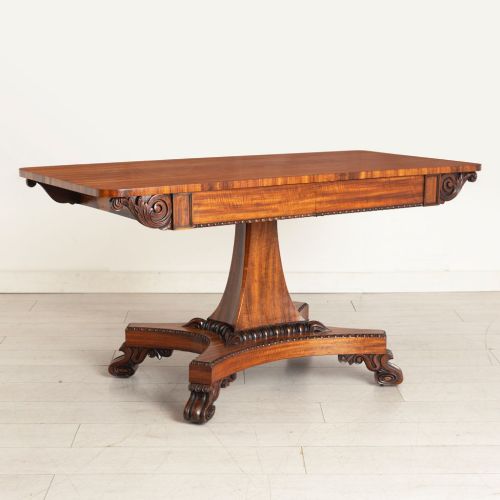
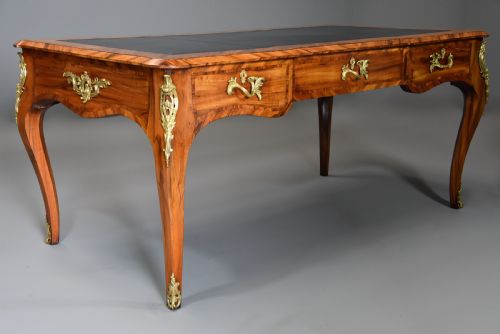
A goncalo alves table is a piece of antique furniture built from a dense, richly figured exotic hardwood often likened to zebrawood. When buyers search for a goncalo alves table, they most commonly encounter centre tables, writing tables, and library tables dating from the Regency, George IV, and William IV periods. These forms range from circular dining tables and pedestal sofa tables down to occasional tripod wine tables.
Makers of the period utilised this striking timber for formal rooms where rich figuring mattered, producing library desks, card tables, and occasional furniture. The surviving examples on this page span the nineteenth century, showing how cabinet makers selected this dense tropical wood for prominent surface areas.
How they were made
Cabinet makers constructed these pieces using solid goncalo alves or applied veneers over secondary timbers, often combining the richly striped wood with rosewood, brass mounts, and leather inserts. The natural density of goncalo alves allowed craftsmen to cut crisp mouldings, pie crust edges, and robust pillar supports that held firm through decades of daily use.
Secondary materials like holly inlay appear in specialist work, while turned pedestal bases and cabriole legs give structural support to heavier library and centre tables. Workshops shaped the timber to highlight the distinctive contrast of the grain across large table tops and fold-over card leaves.
Listings feature pieces spanning the 19th Century, Regency, William IV, and Victorian periods, constructed in goncalo alves, rosewood, brass, and leather.
What varies in quality
Quality in a goncalo alves table rests primarily on the character of the timber figuring and the crispness of the cabinet work. Superior pieces display a rich, well-matched grain across the primary surfaces without distracting patches, paired with precise joinery in drawers and pedestal mounts.
Attribution to prominent workshops elevates certain examples, particularly where turning, carving, and wood inlay demonstrate high technical skill. Lesser examples rely on simpler construction with plainer timber selection, though the underlying hardwood remains durable and heavy.
Gillows·George Oakley
The Goncalo Alves Table Glossary
- Goncalo alves
- A dense, durable tropical hardwood featuring distinctive contrasting dark brown and light golden stripes. It was frequently chosen by nineteenth-century cabinet makers for high-status tables.
- Centre table
- A freestanding table designed to be viewed from all sides, placed in the middle of a room rather than against a wall. These often feature circular or pedestal designs.
- Sofa table
- A rectangular occasional table traditionally placed in front of or beside a sofa, equipped with drop leaves and often twin pedestal supports or end frames.
- Pie crust edge
- A decorative raised border carved into the circumference of a round table top, resembling the fluted edge of a pastry crust.
- Bureau plat
- A flat-topped writing table fitted with one or more drawers along the frieze, popular in nineteenth-century interpretations of French styles.
Goncalo Alves Table: Frequently Asked Questions
What is goncalo alves wood?
Goncalo alves is a heavy tropical hardwood native to South America, known for its dramatic contrast of dark brown and light amber stripes. Cabinet makers valued it for its striking appearance and durability.
In nineteenth-century furniture, it was often used interchangeably with or alongside rosewood for high-end occasional and library tables.
How do I date a goncalo alves table?
Dating relies on stylistic markers from the Regency, George IV, William IV, and Victorian periods. Look at the form of the pedestal, the turning of the legs, and overall construction methods.
Tables from the early nineteenth century frequently feature robust pillar supports and precise brass or mahogany detailing typical of Gillows-influenced design.
Where were these tables placed?
These tables served various formal functions in nineteenth-century homes, from centre tables in entrance halls to writing desks in libraries. Card tables and sofa tables were kept in drawing rooms for evening entertainment.
Smaller tripod and wine tables were easily moved around seating areas for drinks or needlework.
Are these tables solid wood?
Many examples combine solid timber framing with fine veneers applied to stable secondary woods to prevent warping across large table tops. The distinctive figuring of goncalo alves made it ideal for book-matched veneering on fold-over surfaces.
Solid construction is more commonly found on turned elements like pedestal columns, pillar ends, and tripod legs.