


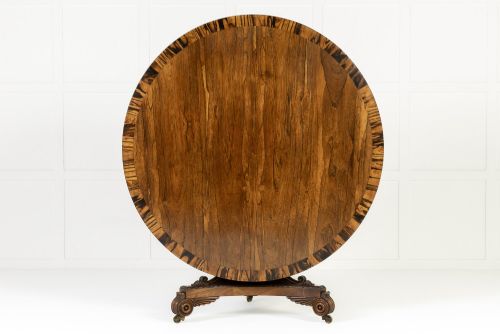


Crossbanded Centre Table
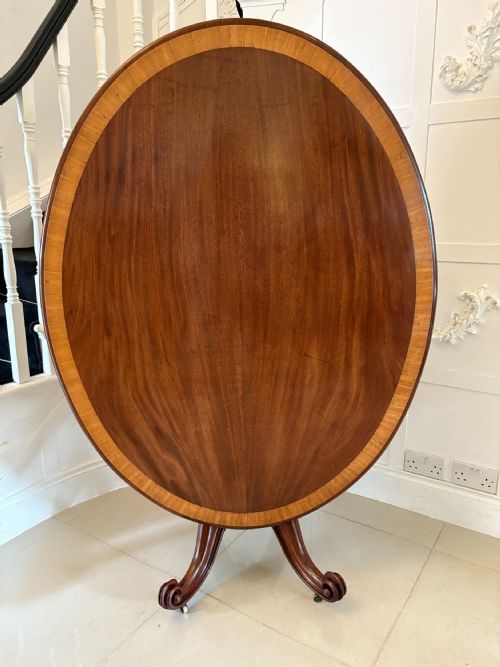
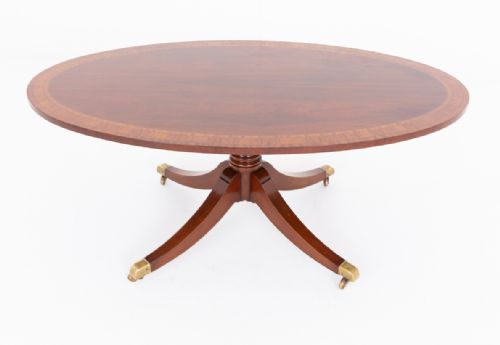
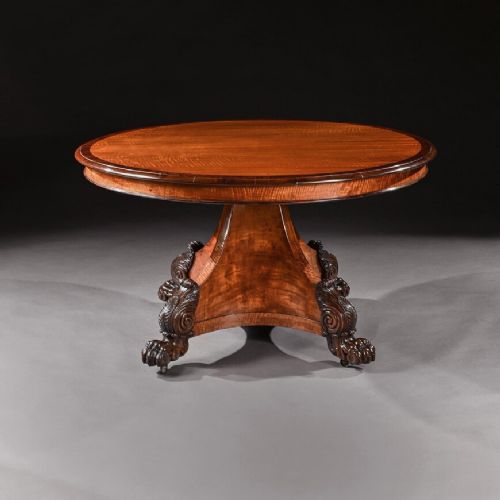
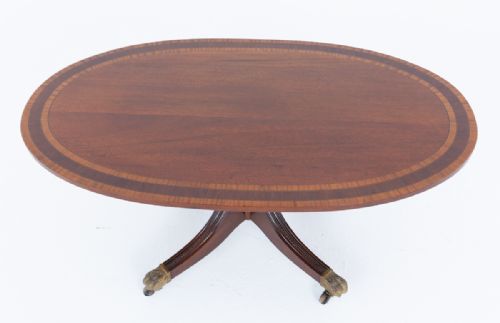
A crossbanded centre table grounds a room with figured timber borders and reliable proportions, spanning Georgian grace to Regency boldness.
Crossbanded Centre Table
A crossbanded centre table is a freestanding piece designed to sit in the middle of a room, showcasing decorative timber borders. The examples gathered here span from the Georgian and Regency periods through to later revival styles and the twentieth century.
Most entries take the form of breakfast tables, occasional tables, or dedicated centre tables in various geometric and oval shapes. These pieces served practical domestic roles in dining rooms, libraries, and parlours, functioning as dining surfaces or display points.
Originating largely from English workshops, alongside specific regional pieces such as Irish and Ceylonese examples, these tables display considerable variety in scale. Buyers encounter compact occasional pieces alongside large dining and library tables.
How They Were Made
Cabinet makers constructed these tables using solid timber frames overlaid with choice veneers, applying contrasting timbers to form distinctive borders. Mahogany and rosewood form the structural and surface foundation, enhanced by satinwood, coromandel, and pollard oak.
Inlay and banding techniques required precise joinery to lay narrow strips of contrasting wood grain perpendicular to the main top surface. Brass fittings, tilt-top mechanisms, and turned or pedestal bases provided stability and mobility for large dining and breakfast tables.
Several tables here fold their tops completely vertical, ready to tuck discreetly away after a Victorian card game.
What Varies in Quality
The distinction between standard production and exhibition grade rests upon the choice of timber and the precision of the grain matching. Highly figured flame mahogany, rich rosewood, and complex satinwood inlay elevate a piece beyond simple utilitarian construction.
Structural integrity of the tilt-top mechanisms and the crispness of the carved pedestal bases separate routine furniture from superior examples. The execution of the crossbanding itself reveals the maker's skill, showing seamless mitres and harmonious wood selection.
Peters of Genoa
The Crossbanded Centre Table Glossary
- Crossbanding
- A border veneer applied to the edge of a table top where the grain runs perpendicular to the central panel. This technique creates a distinct framing effect that highlights the primary timber.
- Tilt-top
- A hinged table top mechanism allowing the surface to fold vertical when not in use. This design saved space in period rooms.
- Satinwood
- A pale, lustrous timber native to India and Ceylon used extensively for contrasting inlay and banding. Its golden sheen reflects candlelight effectively.
- Coromandel
- A dense, heavily figured tropical hardwood featuring dark brown and black streaks. It appears on select Regency library and breakfast tables.
- Loo table
- A large round or oval centre table designed for nineteenth-century card games. These typically feature substantial pedestal supports.
Crossbanded Centre Table: Frequently Asked Questions
What is a crossbanded centre table?
A freestanding table featuring a decorative border of veneer laid with the grain running perpendicularly to the main surface. These pieces sit in the middle of a room rather than against a wall.
They appear in various forms including breakfast tables, library tables, and occasional tables dating from the Georgian period onwards.
How were these tables used originally?
Period tables served multiple functions in domestic interiors, acting as surfaces for dining, reading, or holding lamps. Tilt-top variants allowed the surface to be stored flat against a wall when space was needed.
Larger examples anchored grand reception rooms and libraries, while smaller occasional versions populated drawing rooms.
How do I identify a Regency period table?
Regency tables frequently utilise dark exotic timbers like rosewood and coromandel, often accented with brass mounts and bold pedestal bases. The proportions tend to reflect classical architectural influences.
Craftsmen during this era favoured dramatic grain patterns and precise geometric banding.
How do I care for antique veneered furniture?
Keep wooden tables away from direct heat sources and strong sunlight to prevent the timber and underlying glue from drying out. Regular dusting with a dry, soft cloth maintains the finish.
Avoid excessive polishing and moisture, which can damage historic polish and lift delicate veneer edges.