


Ebony Centre Table
An ebony centre table commands a room with dark, striking wood and fine craftsmanship spanning the Regency, Victorian, and Art Deco periods.
Ebony Centre Table
An ebony centre table stands freely in a room rather than against a wall, designed to be viewed from all sides. These pieces serve practical functions as occasional, dining, or library tables while acting as focal points through their dense, dark timbers.
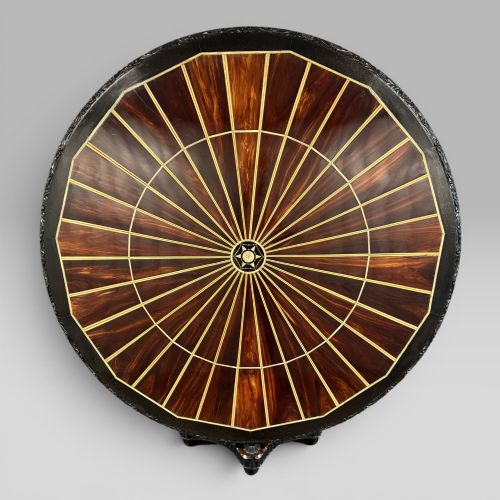
The ebony centre table appears most frequently in forms dating from the nineteenth century, including Regency, Victorian, and Edwardian eras. Makers utilised solid ebony or applied rich veneers over secondary woods like mahogany, amboyna, and satinwood.
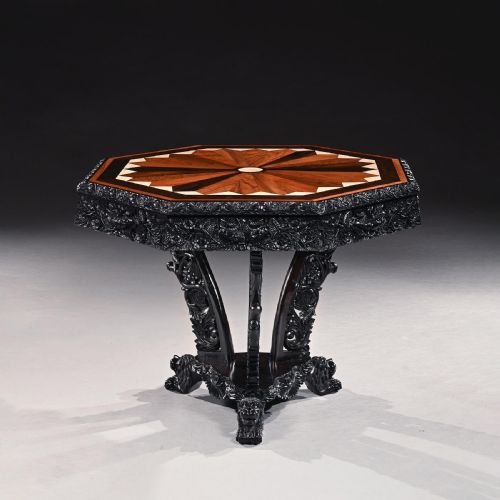
Regional variations span British Regency workshops, French cabinet makers working in the Louis XVI and Art Deco styles, and Ceylonese or Anglo-Indian colonial productions. These geographic origins bring distinctive carving traditions, specimen wood inlays, and varied pedestal or leg configurations.
How they were made
Cabinet makers constructed these tables using heavy tropical hardwoods such as macassar ebony, calamander, and solid ebony, often supported by mahogany or oak carcases. Surface enrichment relied on contrasting inlay materials including brass, satinwood, bone, and maple to define geometric and floral motifs.
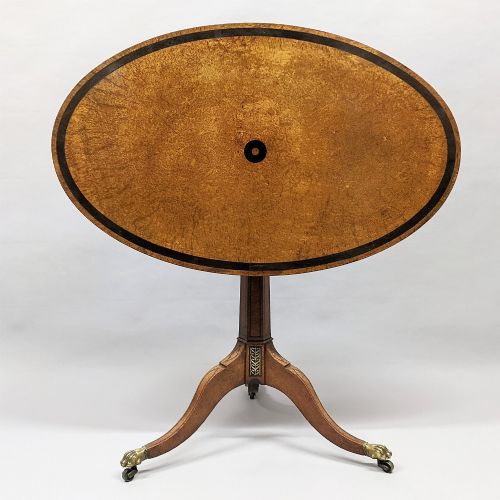
Construction techniques combined traditional joinery with intricate parquetry and marquetry, particularly in French and Dutch examples. Tilt-top mechanisms, brass mounts, and hand-carved pedestals required specialised carpentry skills that defined nineteenth and early twentieth century workshop production.
Listings feature nineteen-century Regency, Victorian, and Edwardian periods alongside Art Deco pieces.
What varies in quality
The structural integrity of pedestals, tilt-top mechanisms, and hand-carved detailing separates standard production from exceptional pieces. Attribution to known makers such as Paul Sormani or specific regional workshops elevates the standing of a table.
Paul Sormani
The Ebony Centre Table Glossary
- Macassar ebony
- A heavily figured tropical timber featuring distinct dark brown and warm golden stripes. This material gained particular favour during the Art Deco period.
- Tilt top
- A table construction allowing the top to hinge into a vertical position when not in use. This mechanism saved space in nineteenth century interiors.
- Parquetry
- A geometric mosaic of wood pieces used for decorative surfaces on tables. Craftsmen arranged contrasting timbers like oak and ebony to create patterns.
- Marquetry
- The art of applying pieces of veneer to a structure to form decorative designs. Makers utilised bone, satinwood, and various exotic woods for pictorial effects.
Ebony Centre Table: Frequently Asked Questions
Where did these tables stand?
An ebony centre table traditionally stood in the middle of a principal room, library, or entrance hall. Because they are finished on all sides, they did not require placement against a wall.
In period homes, owners used them for displaying decorative objects, holding lamps, or serving as writing and occasional dining surfaces.
How do I date a table?
Dating relies on stylistic clues, construction methods, and the specific combinations of woods used by makers. Regency pieces often feature brass inlay and formal classical proportions, while Victorian examples lean toward heavier carving and varied veneers.
Art Deco tables from the nineteen thirties display sleek modernist lines and distinct macassar ebony figuring that separates them from nineteenth century work.
Can I use one for dining?
Many nineteenth century examples, including specific pedestal and occasional tables, adapt well to modern dining use. Their sturdy construction and generous proportions accommodate everyday practicality.
Care should be taken with polished surfaces to protect the wood and delicate inlays from heat and moisture during meals.