


Starburst Inlay Table
A starburst inlay table brings geometry and grain together, offering a striking focal point for any room.
Starburst Inlay Table
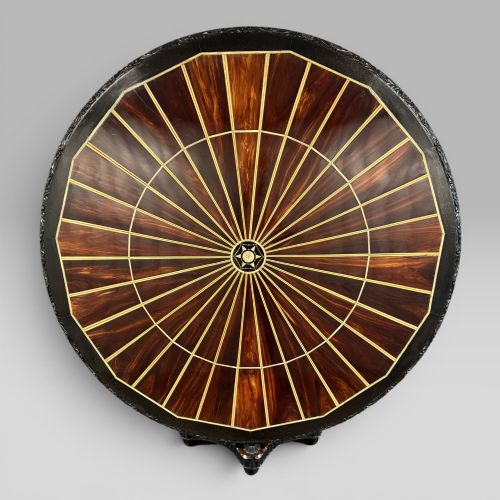
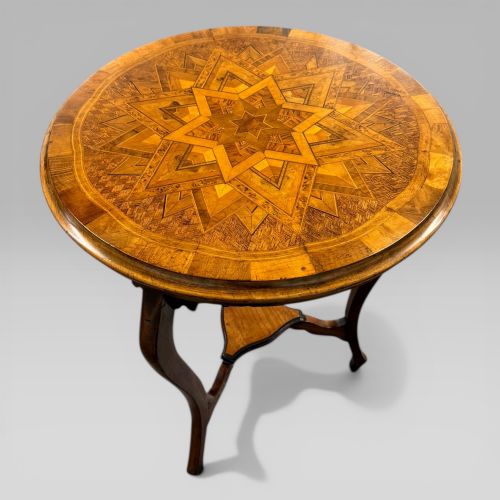
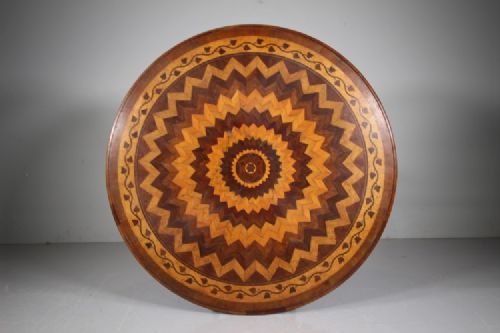
When you search for a starburst inlay table, you enter a diverse field of occasional, centre, and wine tables spanning the eighteenth and nineteenth centuries. These pieces display intricate geometric patterns radiating from a central point on the surface.
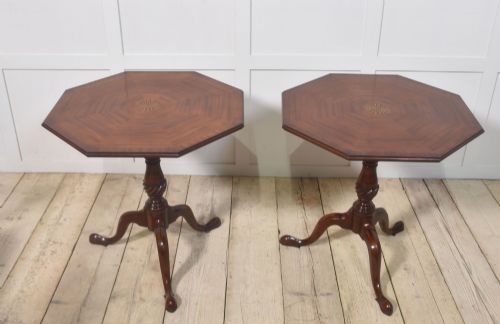
You are most likely to meet nineteenth century examples on this page, particularly Victorian and colonial variations. Walnut, mahogany, and diverse specimen woods dominate the forms, frequently resting on tripod or pedestal bases.
Materials and construction
Cabinet makers utilised contrasting timbers such as walnut, ebony, calamander, and mahogany to build the structural forms and tabletops. These were often enhanced with specialised specimen wood veneers laid down in precise geometric arrangements.
Techniques range from traditional Georgian joinery to intricate marquetry and parquetry. Italian Sorrento and Irish Killarney traditions applied distinctive regional styles of decorative wood mosaic directly to the surfaces.
Several tables here feature elephant motifs or heavy colonial timbers, proving that nineteenth-century domestic furniture loved a touch of global adventure.
Judging quality
Quality rests upon the precision of the geometric layout and the visual harmony of the contrasting timbers. Finer examples display tight alignment where individual segments meet at the absolute centre of the starburst.
Anton Seuffert·William Norrie
The Starburst Inlay Table Glossary
- Specimen wood
- Timber chosen for its distinctive grain, colour, or rarity rather than general structural utility. These woods are often gathered from various regions to create multicolored geometric designs.
- Marquetry
- The art of applying pieces of veneer to a structure to form decorative patterns and pictures. Makers carefully cut and fit these thin sections together before gluing them to the tabletop.
- Parquetry
- A geometric mosaic of wood pieces used for surface decoration. This technique creates regular patterns like squares, triangles, and lozenges across the top.
- Tripod table
- A small freestanding table supported by a pillar above three legs. This form gained immense popularity during the eighteenth and nineteenth centuries for occasional use.
- Snap top
- A tabletop hinged to tilt vertically when not in use. This clever mechanism allowed tables to be stored flat against a wall to save floor space.
Starburst Inlay Table: Frequently Asked Questions
How were these tables used originally?
These tables served flexible roles in period interiors as lamp stands, wine tables, or central display pieces for drawing rooms. Smaller occasional formats could be easily moved around the room as needed.
Tripod and tilt-top designs offered additional convenience, allowing servants to store the tables neatly against perimeter walls when floor space was required.
How do I date a starburst inlay table?
Dating relies on observing the underlying furniture style, leg construction, and timber choices. Eighteenth-century examples often feature simpler mahogany tripod frames, while Victorian pieces lean towards elaborate specimen woods and pedestal bases.
Regional characteristics also provide clues, such as the specific marquetry traditions associated with Sorrento, Killarney, or colonial workshops.
How do I care for inlaid wood tables?
Inlaid wooden surfaces require stable indoor humidity levels and protection from direct sunlight to prevent the veneers from drying out or lifting. Regular dusting with a soft, dry cloth maintains the finish without harsh chemical polishes.
Using coasters and avoiding placement near direct heat sources will protect the delicate mosaic patterns and the underlying timber joints.