

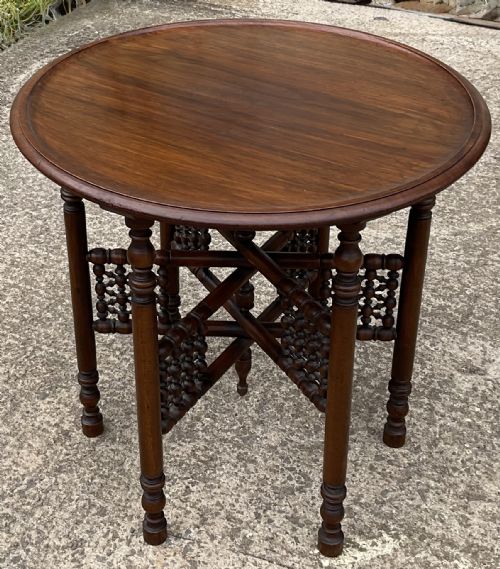


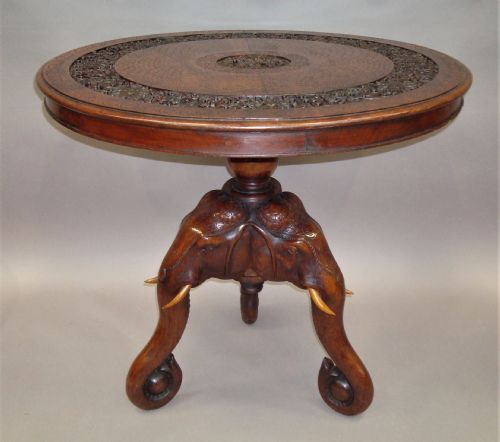


Colonial Centre Table
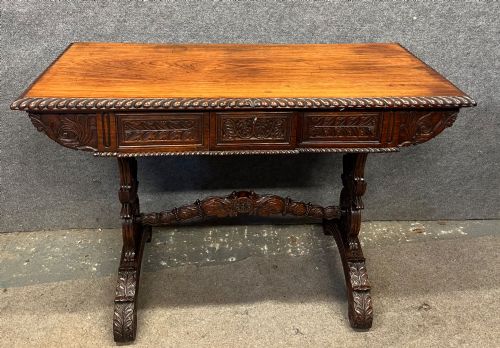
A colonial centre table brings dramatic carved hardwoods and regional craftsmanship into a room.
Colonial Centre Table
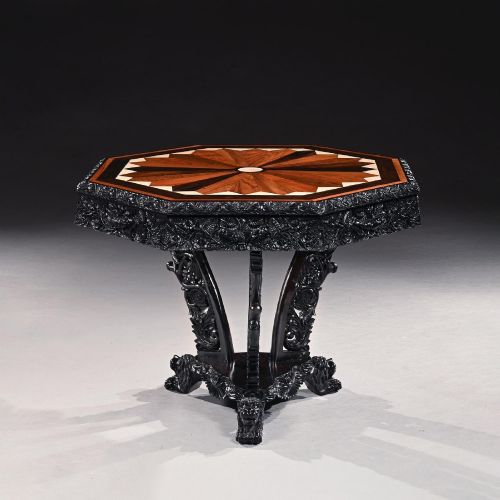
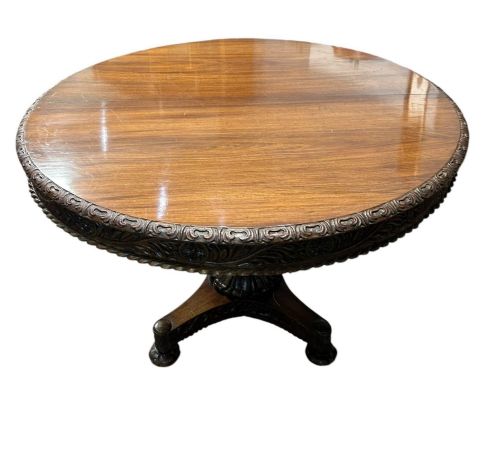
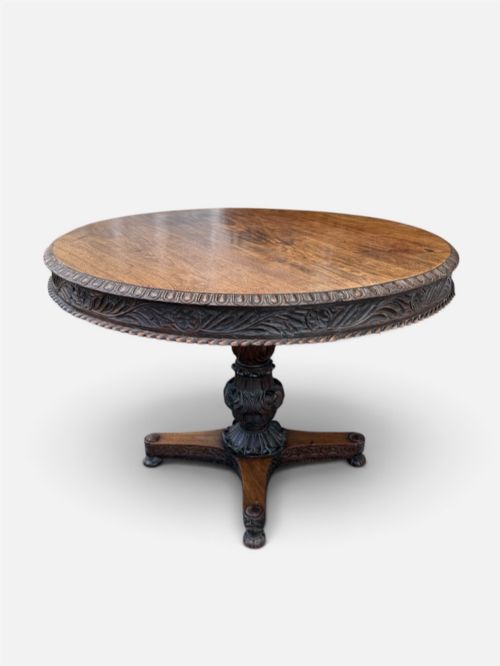
A colonial centre table serves as a striking freestanding focal point in a room, designed to be viewed from all sides. When you search for a colonial centre table, you encounter diverse regional expressions spanning Anglo-Indian, Burmese, Ceylonese, and Spanish colonial traditions.
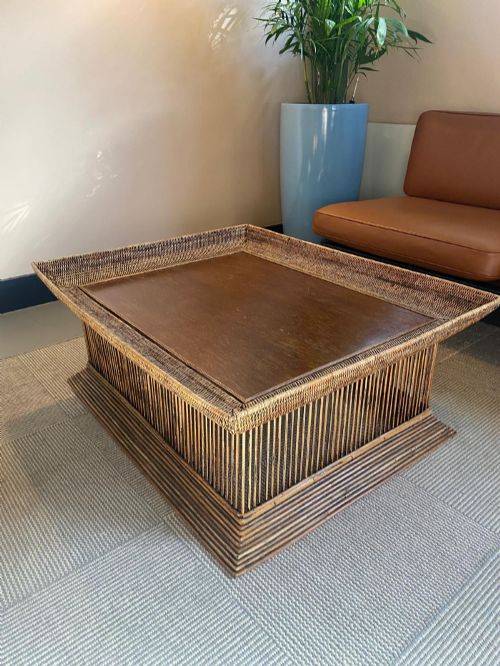
The pieces listed here predominantly date from the nineteenth century, including Victorian examples and earlier iterations. Forms range from tilt-top occasional tables and pedestal designs to large dining tables and low coffee tables.
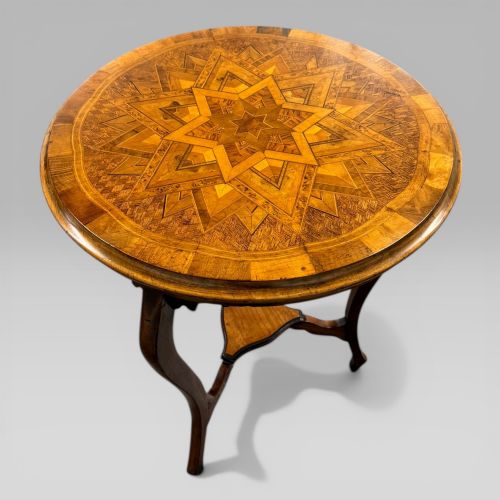
Makers utilised native timbers and European forms, producing hybrids that reflect global trade and local skill. Buyers find intricate relief carvings, specimen wood tops, and mother-of-pearl inlay among these offerings.
How they were made
Artisans constructed these tables using dense tropical hardwoods such as teak, padouk, rosewood, ebony, mahogany, and satinwood, alongside European walnuts and fruitwoods. These durable timbers provided stable foundations for deeply carved borders, pedestals, and figural supports.
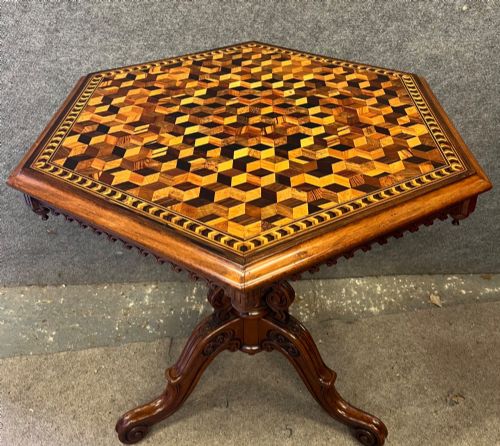
Construction techniques combined traditional joinery with elaborate surface embellishments, including specimen marquetry, mother-of-pearl inlay, and copper warming inserts. Tilt-top mechanisms and pedestal bases required precise carpentry to balance heavy hardwood tops.
Colonial Centre Table Retail Price Guide 2026
Typical asking prices for colonial centre table among the pieces listed under this phrase on Sellingantiques today, from the lower quarter to the upper quarter. They describe what is for sale here now, not the wider market.
What varies in quality
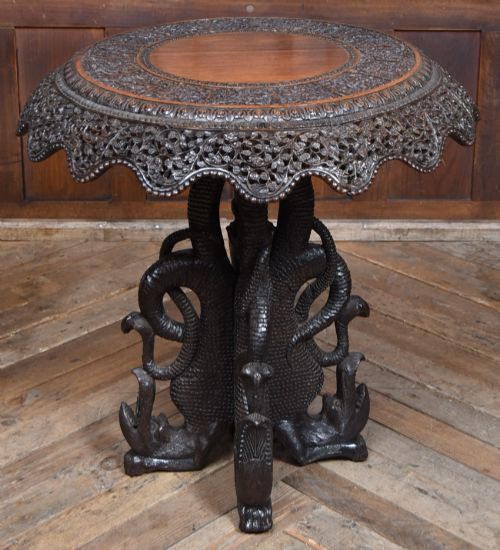
The depth, crispness, and complexity of the carving separate standard regional work from exceptional pieces. Tables featuring dense figural carving, such as elephants or mythological motifs, demand superior technical mastery.
Anton Seuffert·Currie And Co
The Colonial Centre Table Glossary
- Anglo-Indian
- Pertaining to furniture made in India during British rule, often combining European neoclassical forms with native Indian carving styles. These pieces frequently utilise padouk, rosewood, or teak.
- Tilt-top table
- A table with a hinged top that pivots to a vertical position when not in use, saving space in a room. This mechanism is common in nineteenth-century occasional tables.
- Specimen wood
- Furniture constructed from various contrasting native or exotic timbers arranged to display natural colour variations. Ceylonese workshops often employed this technique for decorative table tops.
- Padouk
- A heavy, durable reddish-brown tropical hardwood native to Asia and Africa, favoured for colonial tables. It darkens to a rich deep brown with age.
- Marquetry
- The art of applying decorative pieces of veneer to a structure to form intricate patterns or pictures. Specimen marquetry incorporates multiple timber species.
Colonial Centre Table: Frequently Asked Questions
Where should I place a centre table?
A centre table belongs in the middle of a room, vestibule, or library where it can be admired from every angle as a freestanding object.
Ensure there is adequate clearance around the piece for movement, as these tables often feature prominent pedestal bases or wide carved aprons.
How do I care for antique hardwood tables?
Maintain the timber by applying appropriate natural waxes sparingly and keeping the surface away from direct heat sources or strong sunlight.
Avoid excessive moisture, using coasters or protective pads beneath any objects placed on the polished wood surface.
What is an Anglo-Indian table?
An Anglo-Indian table is furniture produced in the Indian subcontinent during the colonial period, blending European furniture shapes with traditional local craftsmanship.
These pieces typically showcase dense floral relief carvings or animal motifs executed in heavy tropical timbers like teak or padouk.