



Black Ebony Table
A black ebony table brings a dense, dark grain and a heavy presence into a room, offering centuries of cabinet-making craft in solid wood, ebonised surfaces, and fine veneers.
Black Ebony Table
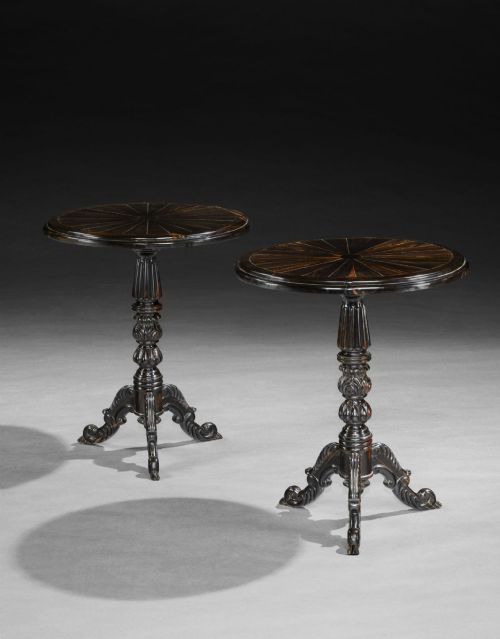
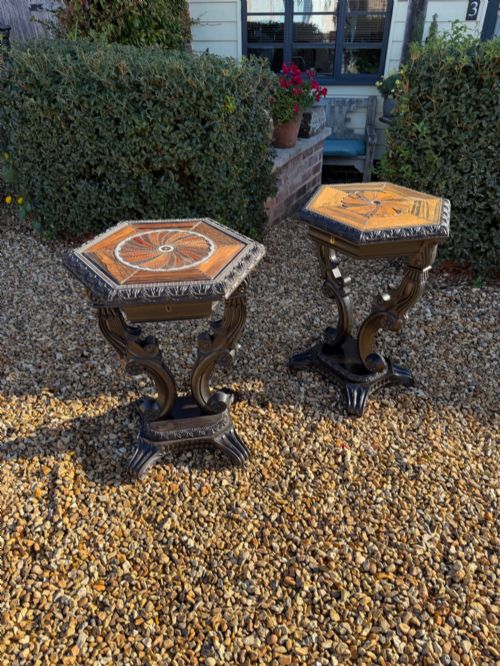
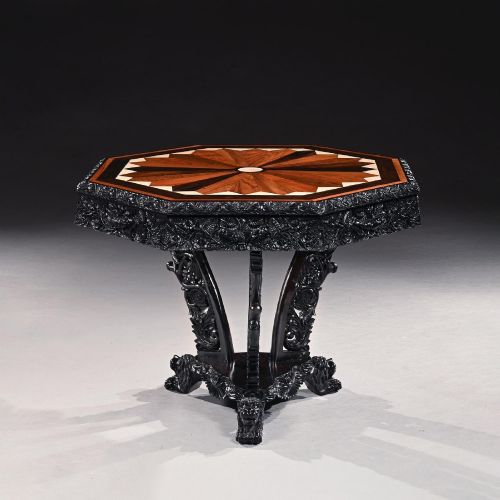
A black ebony table encompasses several forms suited to display and utility, principally centre tables, side tables, and occasional tripod tables found across multiple periods from the seventeenth century through to the interwar years.
The material identity shifts between genuine solid ebony or heavy ebony veneer and ebonised wood, capturing styles ranging from Regency and William and Mary to Flemish Baroque and Anglo-Ceylonese colonial work.
Buyers seeking a black ebony table will encounter nineteenth-century pieces alongside older seventeenth-century and eighteenth-century examples, each displaying distinct regional joinery and secondary timbers such as satinwood, walnut, or kingwood.
How they were made
Makers constructed these pieces using dense tropical hardwoods, applying solid ebony or thin veneers over secondary carcasing, and frequently incorporating brass mounts, gilded highlights, or parquetry geometric patterns.
Colonial workshops in Ceylon utilised native ebony alongside specimen woods for turned tripod bases and centre tables, while European cabinet-makers combined ebony with walnut, kingwood, or ebonised finishes to achieve deep contrast.
Intricate surface detailing involved brass inlay, penwork, or parcel-gilt highlights, securing heavy tops to pedestals or side frames through traditional pegged mortise and tenon joinery.
Black Ebony Table Retail Price Guide 2026
Typical asking prices for black ebony table among the pieces listed under this phrase on Sellingantiques today, from the lower quarter to the upper quarter. They describe what is for sale here now, not the wider market.
Listings span periods from the seventeenth century through to the interwar era, incorporating materials such as brass, glass, marble, and paper alongside ebony and ebonised wood.
What varies in quality
Quality rests upon the integrity of the timber and veneer work, distinguishing solid ebony construction or precise early veneering from later ebonised substitutes that rely on surface paint rather than dense grain.
The refinement of secondary woods, such as satinwood or kingwood used in banding and parquetry, dictates the sophistication of the piece, alongside the crispness of brass mounts and carved tripod feet.
Provenance and regional craftsmanship separate standard production from exceptional colonial or seventeenth-century examples, where the depth of the polish and the stability of the heavy timber frame demonstrate superior workshop standards.
William Speakman·Henry Jones·Louis Recordon·Paul Sormani·Henry Clay
The Black Ebony Table Glossary
- Ebonised wood
- Timber treated with a dark stain or finish to imitate true ebony. This technique was widely utilised across various periods when solid exotic hardwoods were scarce or expensive.
- Parquetry
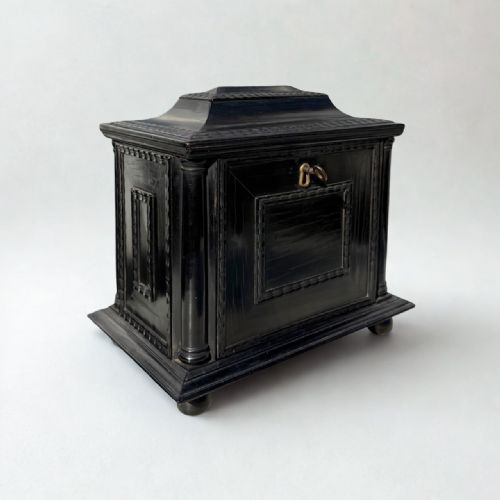
- Geometric wood inlay forming a mosaic pattern on furniture surfaces. It appears on seventeenth-century and eighteenth-century tabletops and cabinet caskets to create subtle tonal contrast.
- Centre table
- A freestanding table designed to be viewed from all sides rather than pushed against a wall. These frequently feature circular or octagonal tops supported by central pedestals or tripod legs.
- Tripod table
- A small table standing on three legs connected to a central pillar. Nineteenth-century Ceylonese workshops produced notable examples carved from dense tropical ebony.
Black Ebony Table: Frequently Asked Questions
Are these tables made of solid ebony?
Some pieces utilise solid ebony or heavy veneers, particularly those originating from colonial workshops where the timber was locally abundant. Other examples employ ebonised wood over secondary timbers to achieve a similar dark finish.
Examination of the underside and grain patterns helps reveal whether a piece is solid exotic hardwood or a secondary timber given an ebonised surface treatment.
How do I care for an ebony table?
Maintenance requires keeping the piece away from direct heat sources and strong sunlight, which can dry out dense tropical hardwoods and cause splitting in historical veneers. Regular dusting with a soft, dry cloth preserves the natural sheen of the dark polished surface.
Harsh chemical polishes should be avoided in favour of traditional waxes suited to antique furniture, applied sparingly to maintain the integrity of the wood and any brass or parcel-gilt details.
What is the difference between a centre table and a side table?
A centre table is finished on all sides to stand freely in the middle of a room, functioning as a primary decorative and utilitarian surface. Side tables are generally constructed to sit flush against a wall or within a specific interior alcove.
Historical examples of both types appear in various periods, with centre tables often featuring elaborate tripod bases or central pedestals designed for all-angle viewing.
How can I tell a seventeenth-century table from a nineteenth-century one?
Seventeenth-century pieces often display Flemish Baroque or William and Mary characteristics, such as basket tops, heavy structural mouldings, and intricate parquetry work. Nineteenth-century interpretations frequently lean towards Regency, Aesthetic Movement, or Anglo-Ceylonese colonial styles with distinct turning and specimen wood accents.
Joinery techniques, tool marks, and the choice of secondary woods inside drawers or beneath tabletops provide further physical evidence for dating an antique piece accurately.