





Marquetry Specimen Table
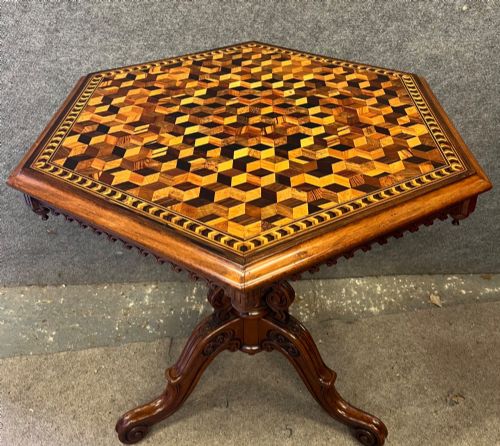
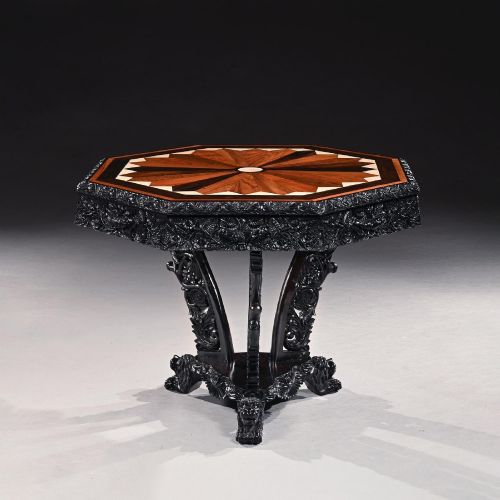
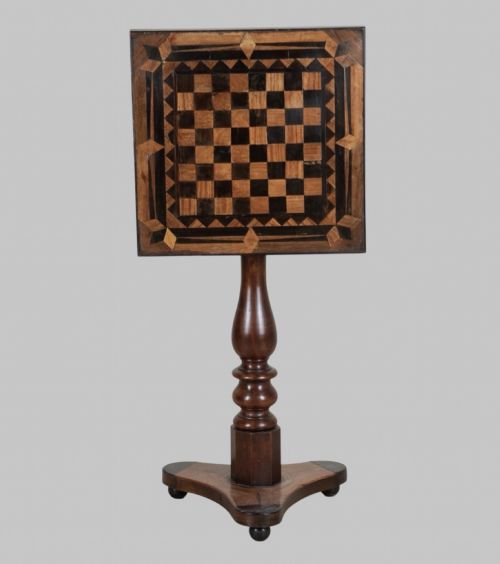
These marquetry specimen tables assemble diverse timbers into intricate geometric or pictorial tabletops.
Marquetry Specimen Table
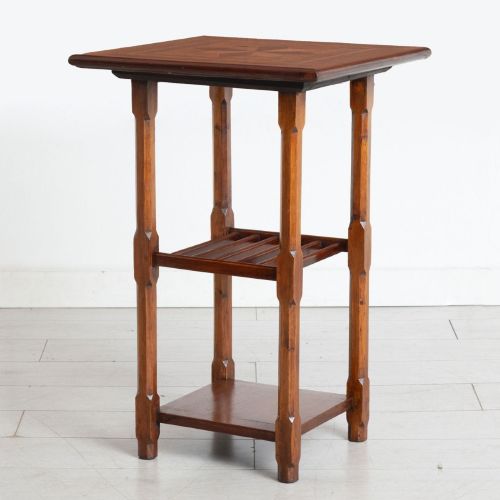
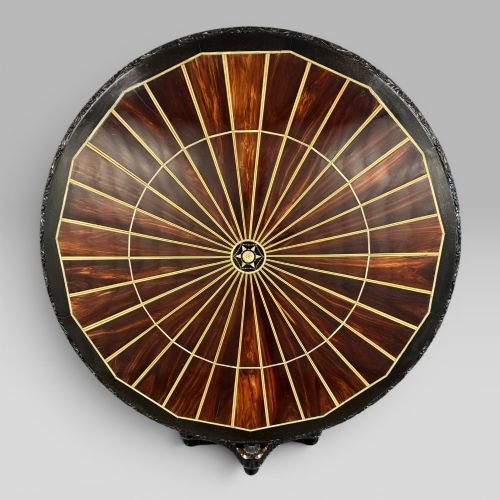
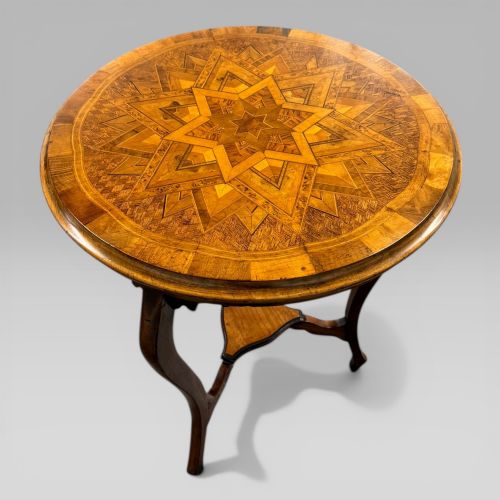
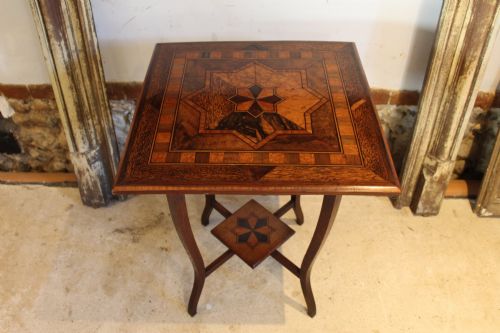
A marquetry specimen table displays a top composed of numerous contrasting woods arranged in geometric patterns, sunbursts, or elaborate pictorial compositions. When searching for a marquetry specimen table, expect to encounter forms ranging from occasional and side tables to centre tables, games tables, and lamp tables.
The material palette spans native European hardwoods alongside exotic timbers imported from colonial regions. Pieces emerge across the Georgian, Regency, William IV, Victorian, and Arts and Crafts periods, reflecting shifting tastes in domestic display and botanical collection.
Origin points vary widely, encompassing English workshops, French ateliers, colonial centres in Ceylon and India, and New Zealand cabinets. Circular pedestal designs and tilt-top occasional tables appear frequently alongside rectangular lamp tables.
Materials and construction
Craftsmen built these tables using solid structural carcases of mahogany, walnut, rosewood, or oak to support the decorative surfaces. Tabletops utilise thin specimen wood veneers and marquetry panels, carefully cut and fitted together to form complex patterns.
Inlaid geometric borders and central medallions often incorporate contrasting materials such as ebony, satinwood, calamander, burr-elm, and brass. Colonial makers utilised indigenous native timbers, while European makers worked with both local and imported exotic woods.
Marquetry Specimen Table Retail Price Guide 2026
Typical asking prices for marquetry specimen table among the pieces listed under this phrase on Sellingantiques today, from the lower quarter to the upper quarter. They describe what is for sale here now, not the wider market.
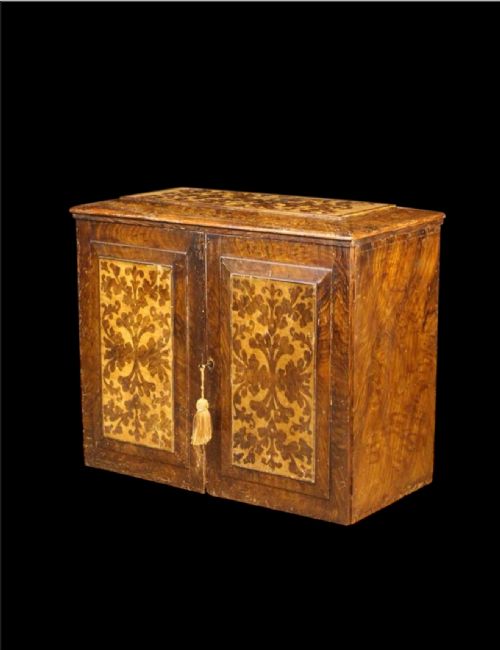
Object forms include side tables, occasional tables, centre tables, games tables, collectors cabinets, and nesting tables originating from English, French, and colonial makers.
Assessing quality
Quality rests upon the precision of the veneer cutting and the tightness of the joinery across the intricate tabletop. Finer examples display a seamless integration of diverse timber grains without visible gaps or excessive filler.
The choice of secondary woods and the complexity of the pedestal or leg construction further distinguish standard production from exceptional craftsmanship. Tables retaining their original French polished surfaces or firm tilt-top mechanisms demonstrate superior preservation.
Anton Seuffert·Emile Galle·William Norrie
The Marquetry Specimen Table Glossary
- Marquetry
- The art of applying small pieces of veneer to a structure to form decorative patterns or pictures. This technique creates the pictorial or geometric tabletop surface.
- Specimen wood
- Timbers gathered from various distinct tree species, often chosen for contrasting colours and grain patterns. Makers arranged these samples to showcase botanical diversity.
- Tilt-top
- A tabletop mechanism allowing the surface to pivot upright on its pedestal when not in use. This design saved floor space in period drawing rooms.
- Veneer
- A thin slice of decorative wood applied over a sturdier secondary timber base. This method allowed makers to utilise costly exotic species efficiently.
- Sunburst top
- A marquetry design radiating outwards from a central point like solar rays. Makers utilised contrasting grain directions to enhance the optical depth.
Marquetry Specimen Table: Frequently Asked Questions
What is a marquetry specimen table?
A marquetry specimen table is a piece of furniture featuring a decorative surface composed of many small, contrasting wood veneers arranged in geometric or pictorial designs. These tabletops serve to display the variety and natural colour of different timber species.
Such tables typically function as occasional, lamp, or centre tables within a room. Their distinctive tops set them apart from standard timber furniture of the same periods.
How do I date a specimen table?
Dating relies on the combination of the table form, the framing structure, and the secondary woods employed beneath the veneers. Georgian and Regency examples tend to feature classical proportions and simpler pedestal bases.
Victorian and later examples often incorporate bolder pedestal turns, elaborate marquetry borders, or exotic colonial timbers. Comparing the leg architecture and joinery methods to known period styles confirms the manufacturing era.
Where were these tables made?
Production occurred across European workshops in England and France alongside colonial manufacturing hubs. Makers in Ceylon, India, and New Zealand utilised rich indigenous timbers native to their respective regions.
European cabinetmakers imported these exotic woods to satisfy domestic demand for novelty and botanical display. Consequently, regional woodworking traditions strongly influence the structural build of each piece.
How should I care for the top?
Preserving the delicate wood veneers requires placing the table away from direct sunlight and extreme temperature fluctuations. Consistent environmental conditions prevent the timber from drying out and lifting.
Routine maintenance involves gentle dusting with a soft, dry cloth without harsh chemical polishes. Maintaining stable indoor humidity protects the intricate marquetry from splitting over time.