



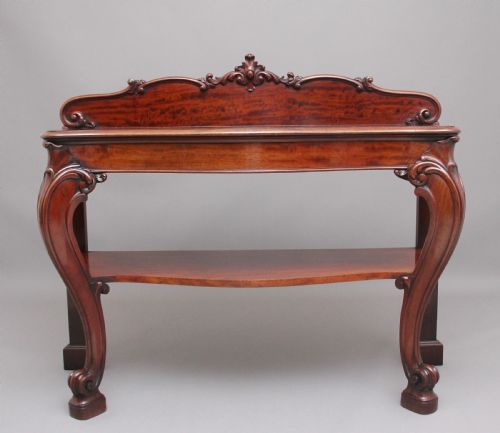


William IV Server
These pieces for a william iv server span robust sideboards, tiered buffets and sterling silver blades designed for serious dining.
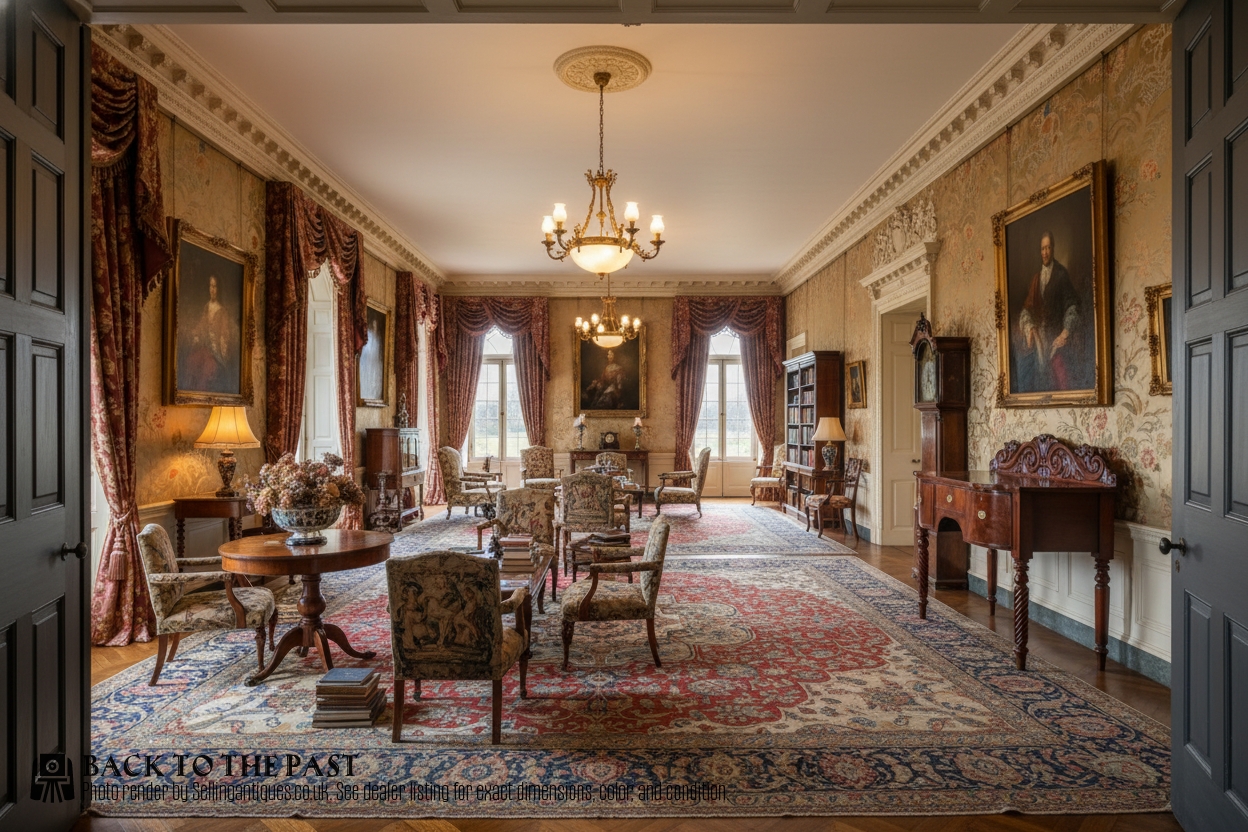
William IV Server
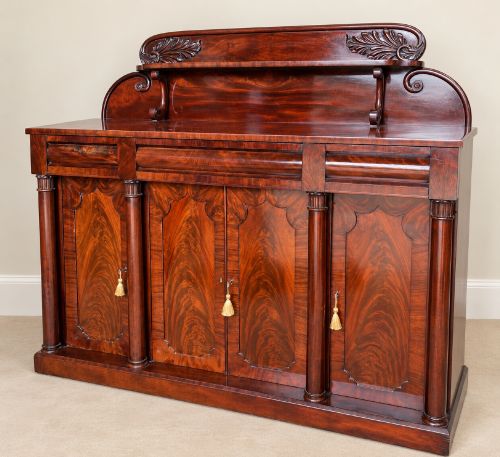
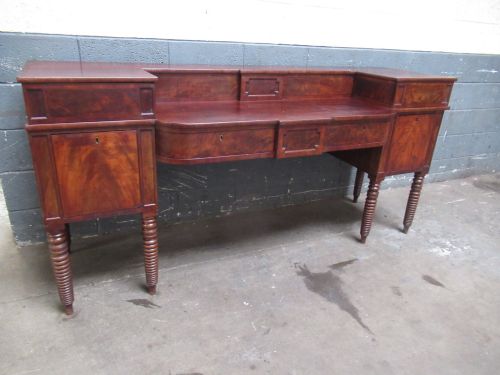
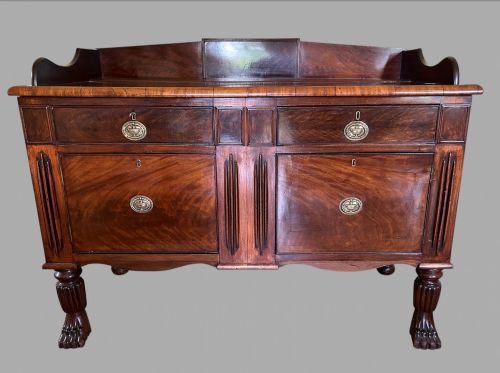
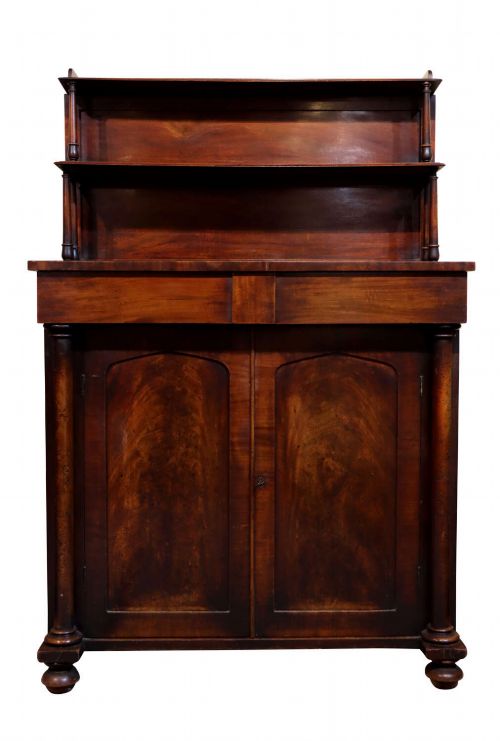
A william iv server covers large dining room furniture like pedestal sideboards, chiffoniers and serving tables alongside smaller items such as silver fish slices and ice cream servers. Most items seen here belong to the nineteenth century, with mahogany and flame mahogany dominating the larger case pieces.
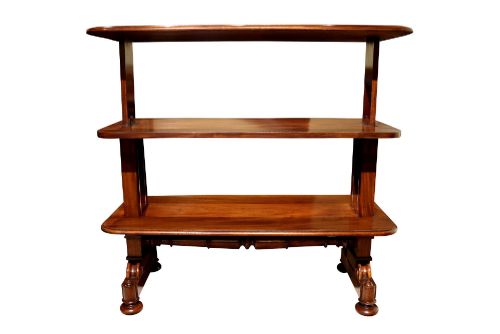
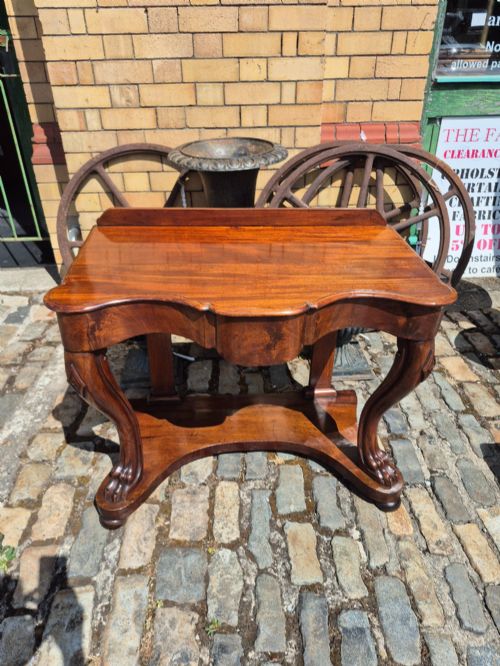
Buyers meet sturdy sideboards and tiered buffets built for heavy domestic use in grand nineteenth-century dining rooms. These forms sit alongside rosewood console tables and sterling silver servers bearing hallmarks from the eighteen-thirties.
How they were made
Cabinet makers utilised solid mahogany and applied flame mahogany veneers to carcases to create striking figured surfaces on doors and pedestals. Secondary timbers provided internal structure while brass fittings and marble tops completed high-status console tables and serving pieces.
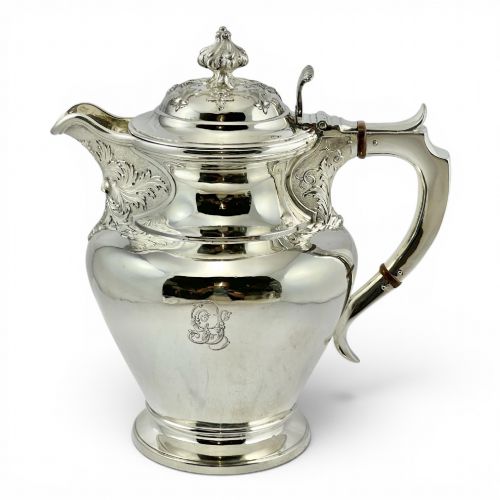
Silver servers relied on traditional silversmithing techniques involving sterling silver casting, piercing and engraving. Workshops shaped these handles and blades to match the ornate motifs popular during the period.
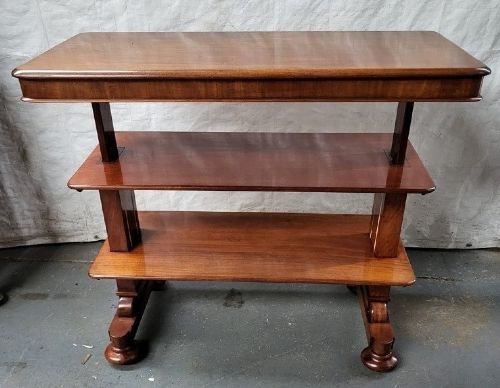
Some dining servers hid metamorphic mechanisms inside their timber frames, allowing shelves to rise and fall quietly during long Victorian courses.
What varies in quality
The selection of timber grain separates standard items from the finest examples, particularly where symmetrical flame mahogany veneers wrap across pedestals and sideboard doors. Carved details such as scrolling foliage and applied moulding demonstrate the hand of a skilled artisan rather than routine factory production.
Proportion and scale dictate the desirability of larger case pieces, where exceptionally small proportions or large breakfront formats command attention. On silver servers, the crispness of the hallmarking and the weight of the metal indicate the standard of craftsmanship.
Paul Storr·Gillows of Lancaster and London·Freeman
The William IV Server Glossary
- Flame mahogany
- A veneer cut from timber fork where branches join the trunk, producing a distinctive fire-like pattern. Cabinet makers prized this figure for prominent display surfaces.
- Chiffonier
- A low sideboard or cabinet featuring enclosed cupboards beneath shelves or a raised back. These pieces served to hold china and glassware in nineteenth-century dining rooms.
- Buffet
- A tiered piece of dining room furniture designed for holding food or serving dishes. Rise and fall mechanisms occasionally allowed shelves to adjust in height.
- Console table
- A table designed to stand against a wall, frequently supported by ornate brackets or front pillars. Many examples paired mahogany woodwork with marble tops.
- Fish slice
- A flat sterling silver serving implement with a pierced blade used for serving fish at formal meals. Examples from the eighteen-thirties often display detailed embossing.
William IV Server: Frequently Asked Questions
What is a william iv server?
A william iv server refers to large dining room furniture such as sideboards, buffets and serving tables, as well as sterling silver serving utensils. These objects date primarily to the eighteen-thirties.
They reflect the heavy architectural styling of the period, utilising dark timbers and classical motifs.
How do I spot flame mahogany?
Flame mahogany displays a rolling, wave-like grain pattern resembling flickering flames. It was sliced thinly as a veneer and applied to carcases.
Craftsmen matched these patterns symmetrically across cabinet doors to create decorative panels.
Where were these pieces used?
These pieces belonged in nineteenth-century dining rooms, halls and drawing rooms. Sideboards and buffets held heavy silver and dining porcelain.
Smaller servers and fish slices assisted guests and hosts during formal meals.
How do I care for mahogany?
Protect mahogany surfaces from direct sunlight and extreme temperature changes to prevent veneer cracking. Regular dusting with a soft cloth maintains the timber polish.
Avoid commercial silicone sprays and use traditional beeswax sparingly.