

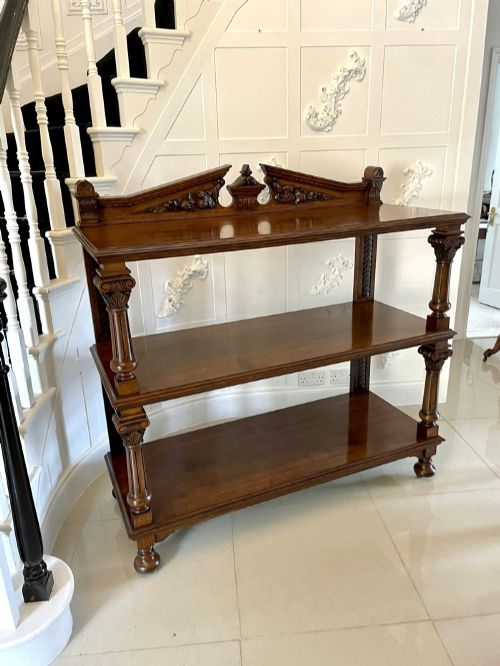
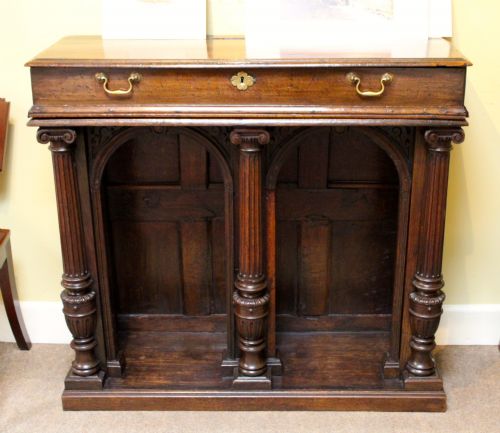


Carved Column Server
These carved column servers are robust serving tables and dumbwaiters shaped by centuries of dining traditions, offering both display space and sturdy utility.
Carved Column Server
When you search for a carved column server, you encounter a variety of heavy serving furniture designed for dining rooms and libraries. These pieces range from Georgian side tables and William IV mahogany serving tables to 17th-century French Renaissance serving tables and Victorian oak dumbwaiters.
You are most likely to meet 19th-century examples in oak, mahogany, or walnut on this page. These sturdy forms include console tables, sideboards, chiffoniers, and two-tier serving structures equipped with carved columns.
The historical scope spans from the 17th century through the Georgian and Regency periods up to the late 19th century. Each era brings its own proportion and architectural detailing to the column server form.
How they were made
Cabinet makers built these carved column servers primarily using solid timbers like oak, mahogany, and walnut, alongside exotic veneers such as palisander and rosewood. These dense woods provided the structural integrity required to support heavy tableware and multi-tiered shelving.
Constructors integrated brass hardware and occasional glass elements to complement the dark timber surfaces. Skilled hands shaped the wood into structural columns and applied intricate carving directly to the main body and supports.
Carved Column Server Retail Price Guide 2026
Typical asking prices for carved column server among the pieces listed under this phrase on Sellingantiques today, from the lower quarter to the upper quarter. They describe what is for sale here now, not the wider market.
Some antique dumbwaiters were built with multiple rotating tiers so guests could spin the mustard pot without stretching.
What varies in quality
The distinction between standard domestic items and exhibition pieces lies in the crispness and depth of the timber carving. Superior examples display deeply undercut foliage and balanced architectural proportions on their columns.
Material selection and timber figuring also dictate the grade of the piece, with carefully matched mahogany veneers and dense, old-growth oak commanding attention. The integration of secondary woods and the stability of the tiered construction further separate ordinary items from finer creations.
The Carved Column Server Glossary
- Dumbwaiter
- A multi-tiered serving stand designed to hold dishes without the need for attending servants. These tiered structures often incorporate central carved columns to support rotating or fixed trays.
- Chiffonier
- A small sideboard or cabinet featuring shelves and doors for storing dining accessories. This form gained popularity during the 19th century.
- Palisander
- A dense, dark timber resembling rosewood utilised for high-end Victorian cabinet making. Its distinct grain patterns add visual weight to console tables and chiffoniers.
- Console table
- A table designed to stand against a wall, frequently supported by wall brackets or distinct vertical pillars. These tables serve as decorative and functional surfaces in formal rooms.
- Buffet
- A large piece of dining room furniture used for food preparation and serving. These heavy timber forms often feature substantial carved supports.
Carved Column Server: Frequently Asked Questions
What is a carved column server?
A carved column server is a heavy serving table, dumbwaiter, or sideboard supported by distinct architectural pillars. These pieces emerged from various European and British dining traditions to hold food and utensils.
They combine robust timber construction with decorative carving, acting as both functional dining room furniture and display surfaces.
How do I date a carved column server?
Dating these items involves examining the primary timber, joinery methods, and the style of the carved columns. Georgian and Regency pieces show different proportions compared to 17th-century French Renaissance examples or Victorian adaptations.
Reviewing the specific turning styles on the columns and the presence of secondary woods provides further clues to the manufacturing period.
Where were these servers used?
These servers stood in formal dining rooms, grand hallways, and libraries to assist with large meals. They held serving dishes, silver, and glassware close to the dining table.
In domestic spaces, multi-tiered dumbwaiters allowed diners to access extra plates and courses independently.
How do I care for antique timber?
Maintaining antique oak, mahogany, and walnut requires stable room humidity and protection from direct sunlight. Regular dusting with a dry cloth keeps the surface clean without stripping the finish.
Occasional application of appropriate wax preserves the sheen of dense woods like palisander and rosewood.