

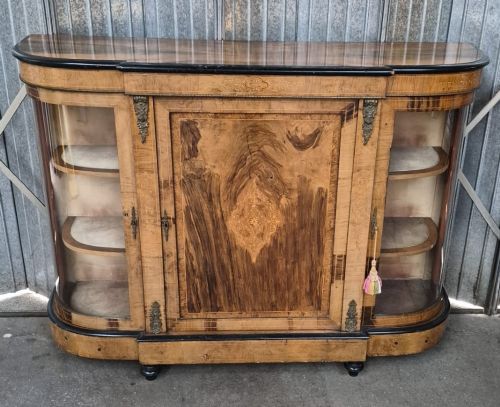
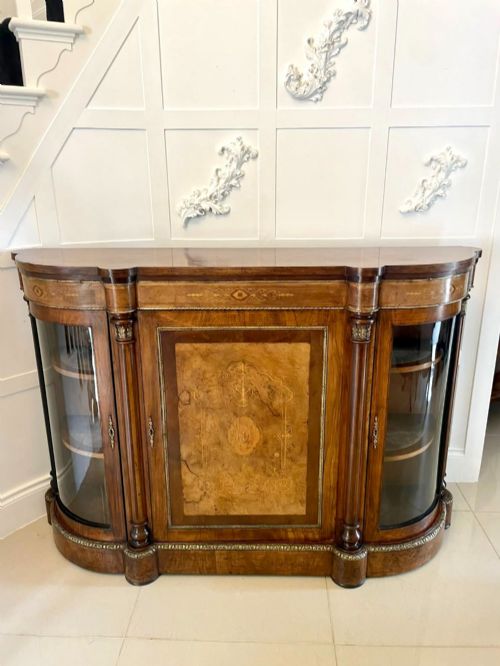


Victorian Bow Front Sideboard
These nineteenth-century pieces bring curving fronts and rich timber grains to dining rooms and living spaces, offering practical storage with distinct architectural presence.
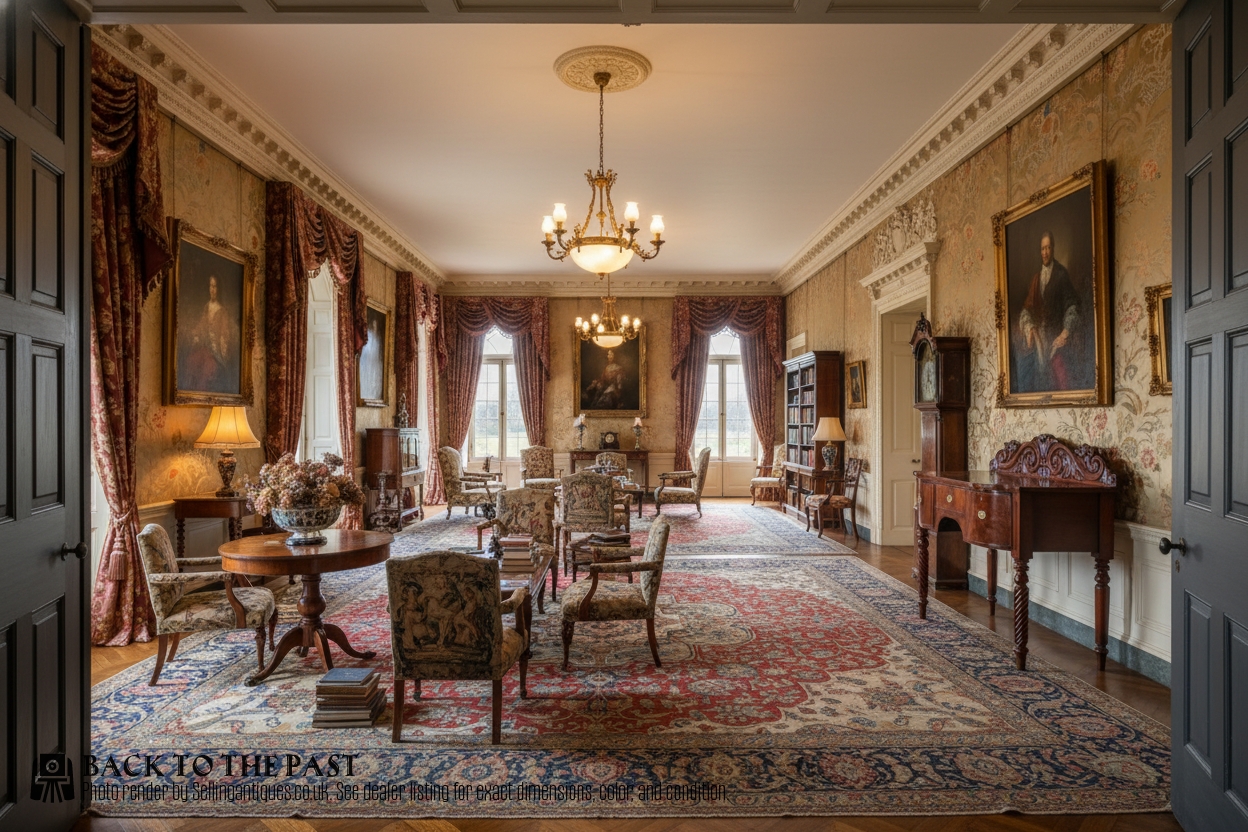
Victorian Bow Front Sideboard
A victorian bow front sideboard combines a forward-projecting curved central profile with deep storage capacity, evolving from earlier Georgian and Regency designs into robust nineteenth-century forms. The pieces span from the mid-nineteenth century through to revival styles around the turn of the twentieth century.
Mahogany remains the foundational timber across these forms, frequently accompanied by burr walnut, painted satinwood, and flamed veneers. Cabinetmakers shaped these credenzas, side cabinets, and chiffoniers with glazed doors, brass mounts, and detailed boxwood inlay.
How they were made
Cabinetmakers constructed the curved carcasses using layered or bent timbers to achieve the characteristic sweeping front without compromising structural integrity. Fine veneers such as burr walnut and mahogany were then applied to the primary surfaces.
Decoration relied on contrasting boxwood inlay, hand-painted motifs on satinwood, and cast brass or ormolu mounts. Glazed panels and polished glass completed the display sections of credenzas and side cabinets.
Victorian Bow Front Sideboard Retail Price Guide 2026
Typical asking prices for victorian bow front sideboard among the pieces listed under this phrase on Sellingantiques today, from the lower quarter to the upper quarter. They describe what is for sale here now, not the wider market.
Listings feature mahogany, burr walnut, and satinwood across side cabinets, credenzas, and chiffoniers spanning the nineteenth and early twentieth centuries.
What varies in quality
The refinement of the timber selection dictates much of the visual distinction, with richly figured burr walnut and flamed mahogany holding greater presence than plain stock. The precision of the boxwood stringing and the crispness of any inlaid marquetry show the maker's hand.
Hardware quality separates standard production from superior workshops, visible in heavy cast brass mounts and well-fitted locking mechanisms. Joinery execution around the complex curves reveals the underlying skill invested in the piece.
Edwards and Roberts
The Victorian Bow Front Sideboard Glossary
- Bow front
- A cabinet front that curves outward in a convex arc, softening the linear geometry of a room. This shape required advanced joinery to bend and veneer the timber accurately.
- Credenza
- A low cabinet, frequently featuring glazed side doors and central shelving, used for display and storage. Nineteenth-century examples often incorporate elaborate inlay and ormolu mounts.
- Chiffonier
- A compact sideboard variant equipped with drawers and lower cupboards, popular during the Victorian period. These pieces served dining and reception rooms where space was constrained.
- Ormolu
- Gilded bronze mounts applied to cabinet doors and friezes for decorative contrast. The technique provides a metallic highlight against dark walnut and mahogany surfaces.
- Inlay
- The technique of embedding contrasting woods or materials into the primary surface to create geometric or floral patterns. Boxwood is frequently utilised for fine stringing lines.
Victorian Bow Front Sideboard: Frequently Asked Questions
Where should a bow front sideboard go?
These cabinets suit dining rooms, large hallways, or living spaces where the curved profile breaks up long flat walls. Their depth requires adequate clearance from opposing furniture.
Positioning them away from direct heat sources protects the timber veneers and maintains the stability of the boxwood inlay.
How do I clean nineteenth-century timber?
Dust regularly with a dry, soft cloth to prevent particulate buildup on the polished mahogany or walnut surfaces. Avoid modern silicone sprays that can penetrate the historic finish.
Apply a traditional beeswax sparingly once or twice a year to nourish the grain and preserve the deep lustre of the polish.
What is the difference between a sideboard and a credenza?
Sideboards traditionally served the dining room for storing silver, linen, and serving dishes with enclosed cupboards and drawers. Credenzas originated as low display cabinets with glass panels for showing ceramics and decorative objects.
Over the nineteenth century, these forms often overlapped in domestic interiors, blending storage cupboards with central display space.
How can I tell a Victorian piece from a revival piece?
Original Victorian pieces typically display construction methods, timber patination, and wear consistent with production between the mid-nineteenth century and 1901. Revival pieces, such as Sheraton revival items from the late nineteenth or early twentieth century, often show specific stylistic nods to earlier Georgian aesthetics.
Examining the secondary timbers inside drawers and behind backboards helps clarify the period of manufacture.