
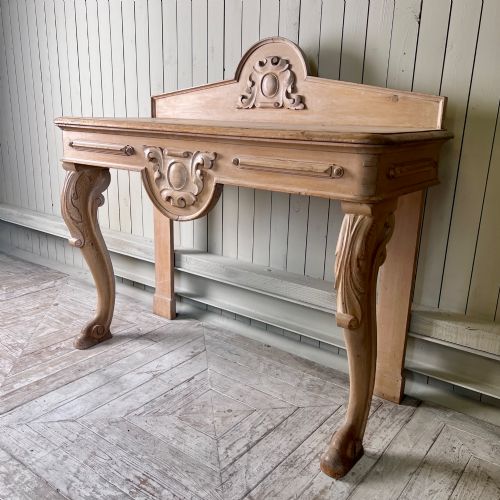
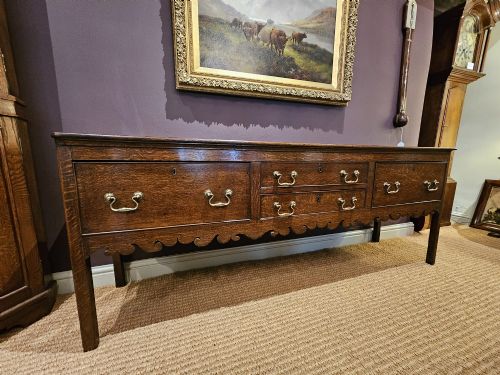
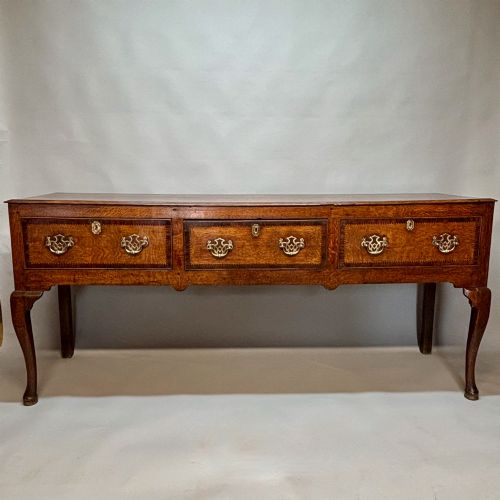
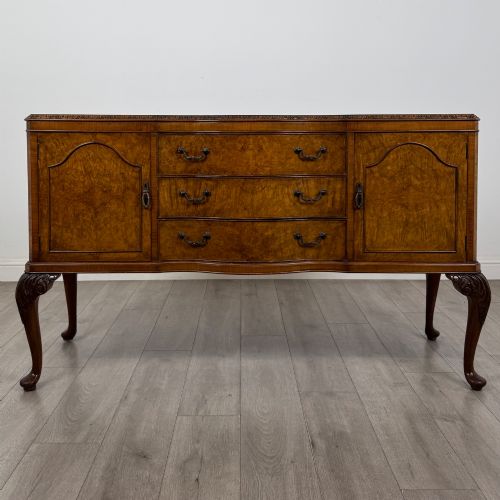

Antique Carved Server Table
An antique carved server table anchors a dining room or hallway with substantial timber and period presence.
Antique Carved Server Table
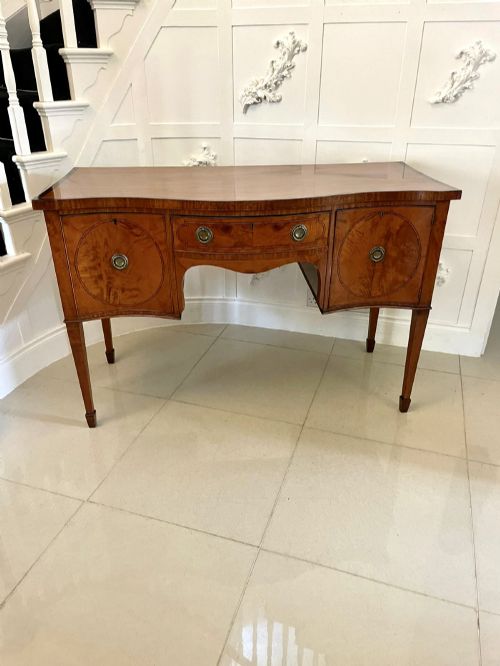
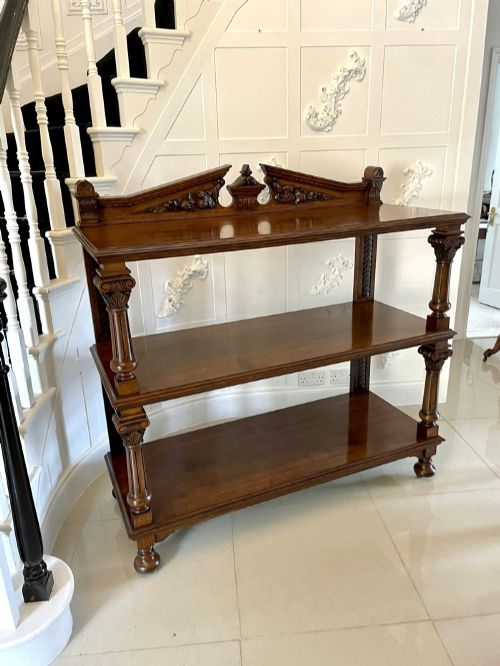
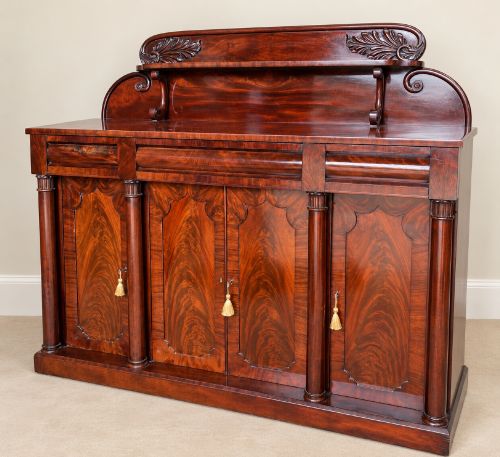
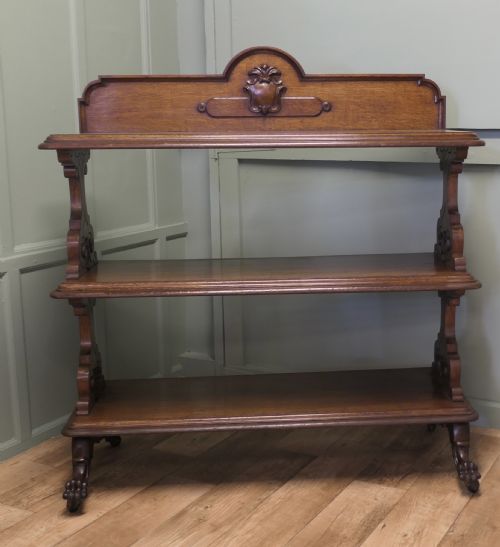
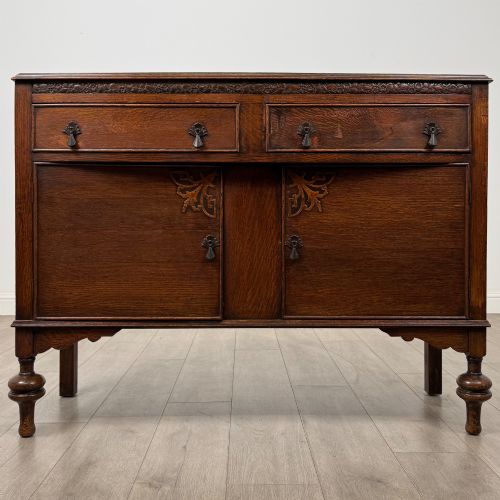
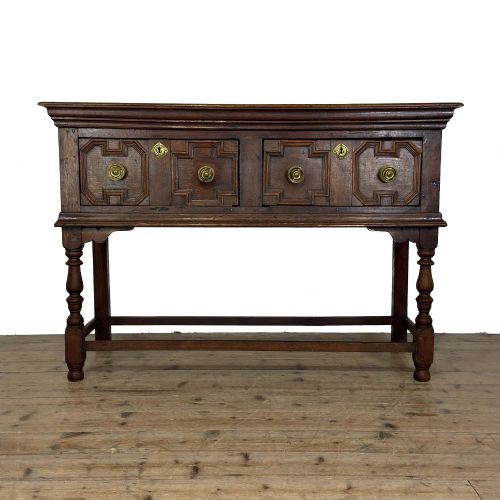
An antique carved server table encompasses diverse forms such as serving tables, side tables, console tables, sideboards, and dresser bases. These pieces emerge from periods spanning the 18th century, Georgian, Regency, Victorian, Edwardian, and the early 20th century.
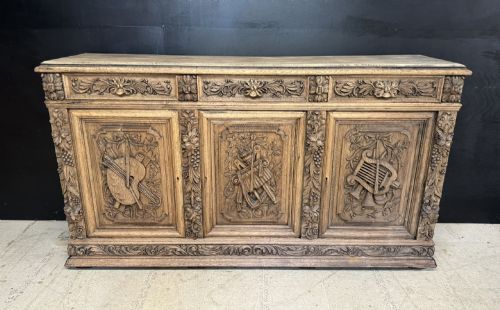
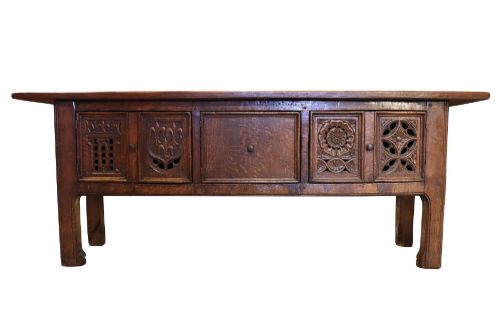
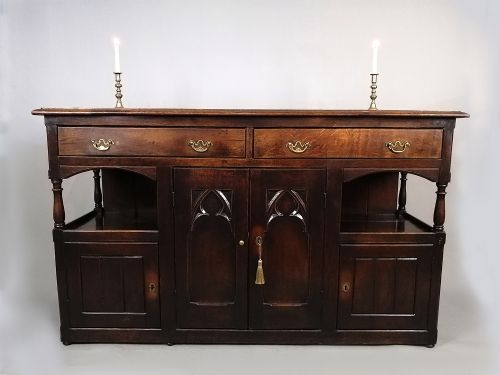
The version most frequently met on this page is constructed from oak, often featuring carved details aligned with Jacobean Revival, Gothic Revival, or Georgian styles. Formats range from lowboys and narrow dresser bases to large console tables and serving buffets.
How they were made
Construction relies heavily on timbers such as oak, mahogany, walnut, and burr walnut, shaped by hand woodworking techniques. Secondary elements incorporate brass hardware, iron, and occasional marble tops or glass.
Carving serves as the primary decorative method across the periods, appearing on friezes, legs, and cabinet panels. Surface finishes include polished wood, paint, and plate metal details like Old Sheffield Plate.
Listings feature oak, mahogany, walnut, burr walnut, brass, iron, marble, and glass across Georgian, Victorian, and Edwardian periods.
What varies in quality
Quality rests in the crispness of the timber carving and the integrity of the structural joins. Pieces executed in solid mahogany, walnut, or figured oak show greater depth of material execution than simpler painted or light secondary woods.
Proportion and stylistic coherence define the upper tier of these tables. Items retaining original hardware, balanced narrow proportions, or distinct period revival details demonstrate superior craftsmanship compared to altered or heavily restored examples.
Roberts Cadman·Beresford & Hicks London
The Antique Carved Server Table Glossary
- Lowboy
- A small oak or walnut table with drawers, typically originating from the Georgian period. It functions as a side table or dressing surface.
- Dresser base
- A lower cabinet structure featuring drawers and sometimes cupboards, frequently constructed in oak during the 18th and 19th centuries. It serves as a utilitarian serving surface.
- Console table
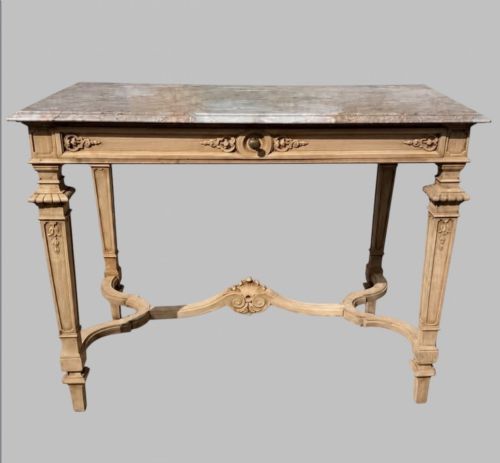
- A table designed to stand against a wall, often supported by brackets or legs. Examples appear in Regency, Victorian, and Edwardian styles.
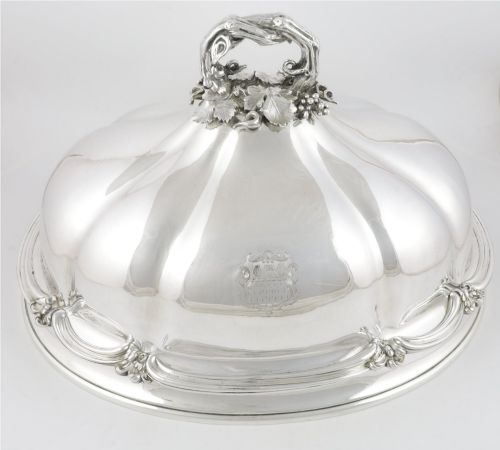
- Meat dome
- A metal cover, such as Old Sheffield Plate, placed over joints of meat on serving tables. It protects food and retains heat.
- Burr walnut
- A figured veneer derived from the growth excrescences of walnut trees. It provides intricate grain patterns on console tables.
Antique Carved Server Table: Frequently Asked Questions
What is an antique carved server table used for?
These pieces serve as functional surface furniture in dining rooms, halls, and reception spaces. They accommodate serving dishes, display items, or hold everyday household objects.
Historically, larger versions supported food preparation and service during formal meals. Today, they function equally well as console tables or sideboards in domestic interiors.
How do I identify a Georgian server table?
Georgian tables often display timber such as oak or mahogany, featuring clean lines, lowboy formats, or cabriole legs. Construction details reflect 18th-century cabinet making standards.
Stylistic markers include George II proportions and simpler regional British designs. They lack the heavier ornamentation seen in later Victorian revival pieces.
Where should I place a console table?
Console tables suit entrance halls, living rooms, and dining spaces where floor space is limited. Their narrow proportions allow them to sit flat against a wall without obstructing pathways.
They pair well with mirrors or paintings hung above them. Placing one in a hallway provides a surface for incoming post and keys.
What is the difference between oak and mahogany tables?
Oak tables generally carry an earlier association with 18th-century, Georgian, and Jacobean Revival styles. They exhibit visible grain patterns and lend a robust character to country house interiors.
Mahogany and walnut tables often point towards later Georgian, Regency, or Edwardian aesthetics. These timbers offer smoother surfaces and darker tones suited to formal reception rooms.