

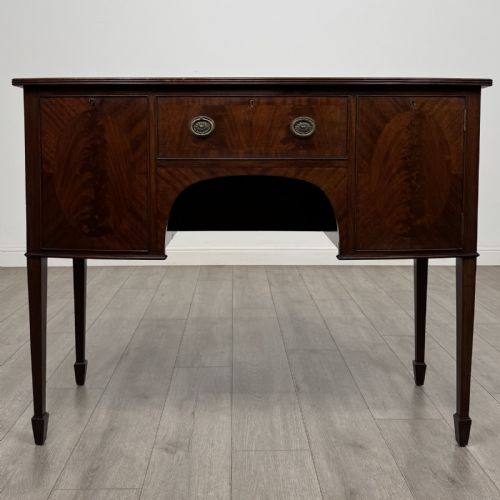
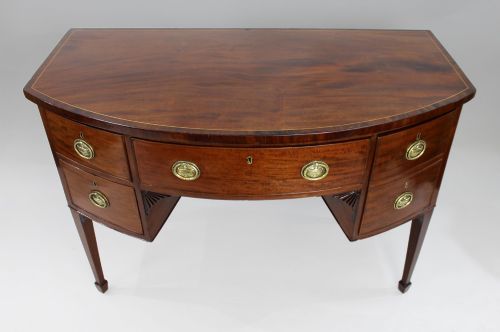
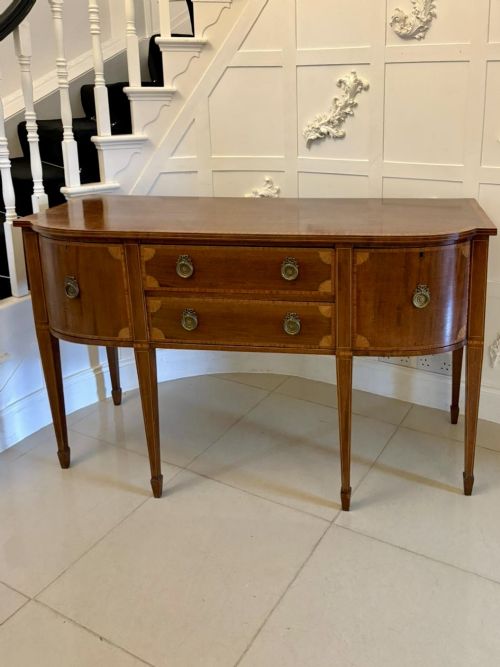
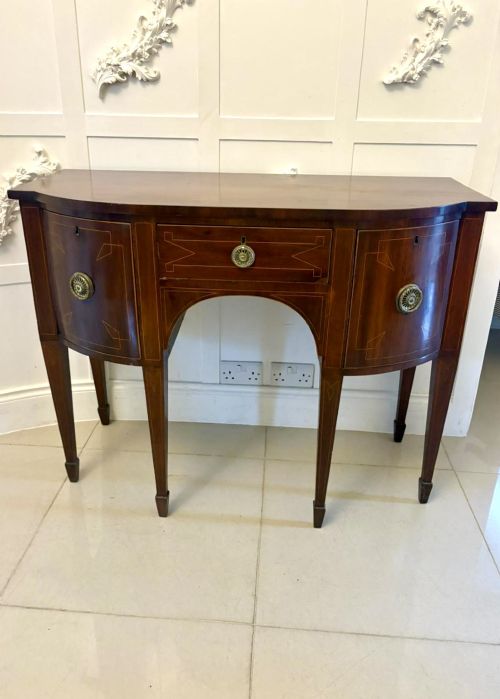
Antique Bowfront Server
An antique bowfront server offers generous storage and a curved profile that softens a dining room.
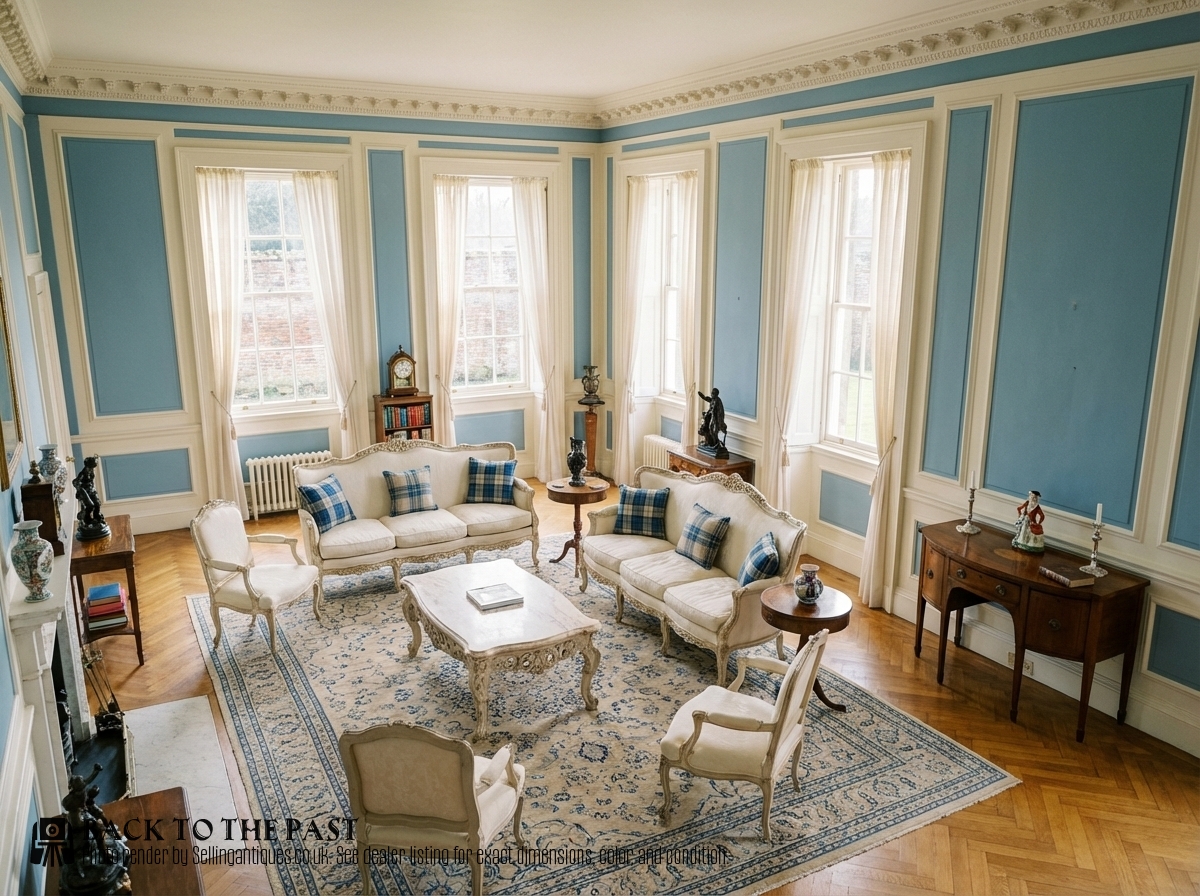
Antique Bowfront Server
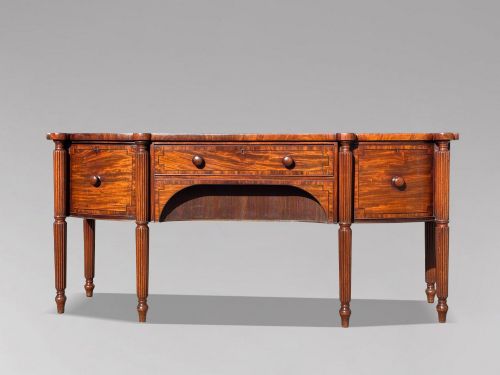
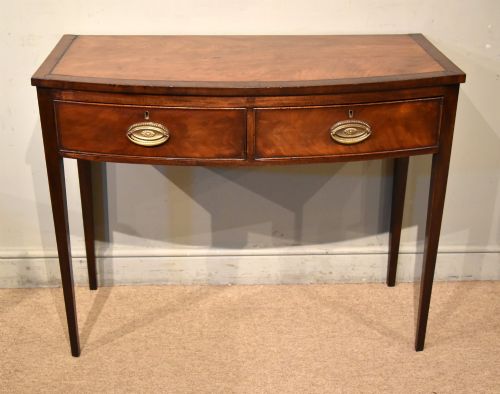
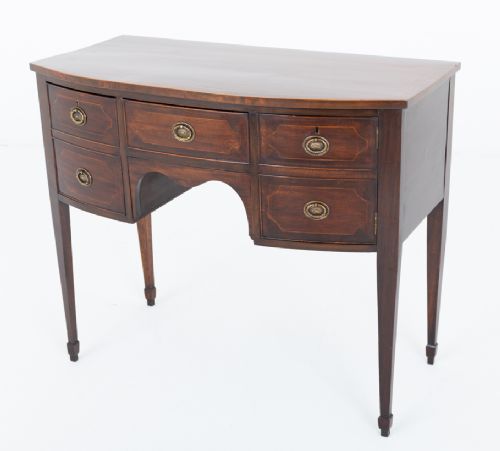
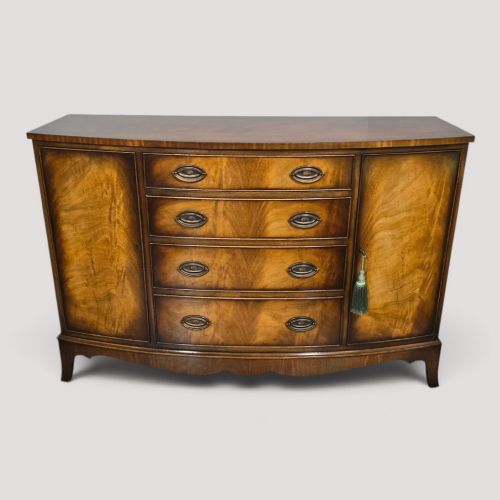
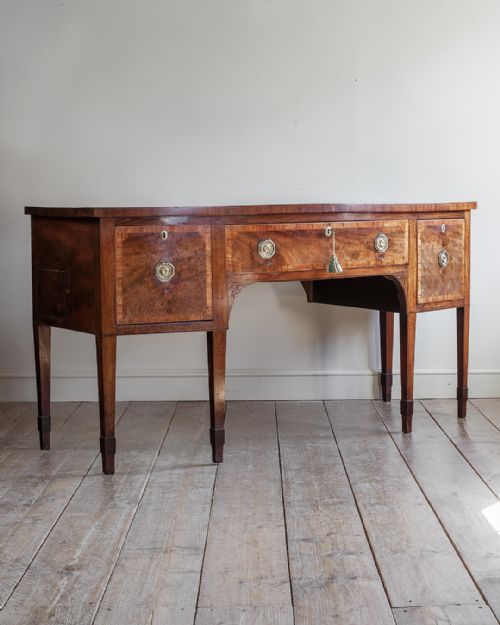
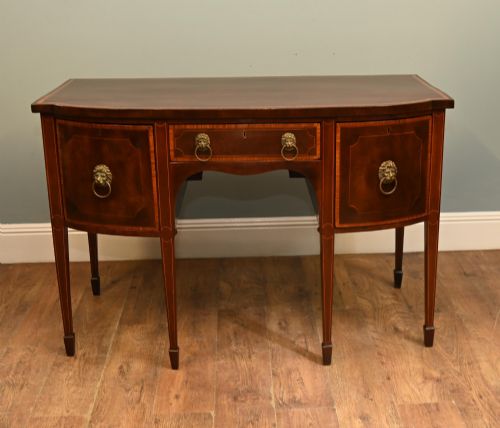
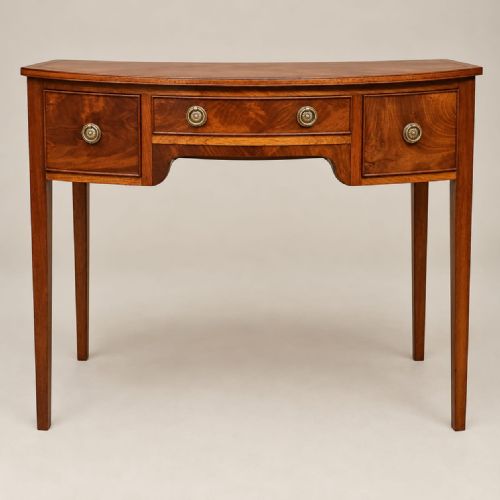
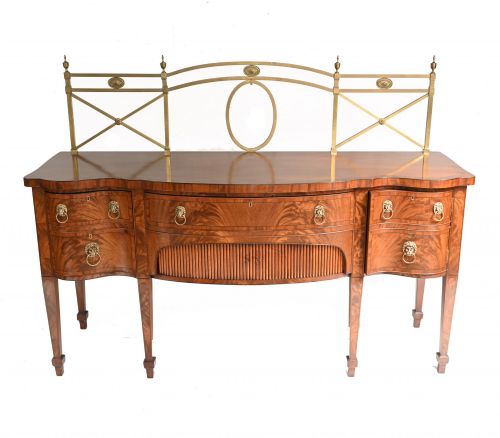
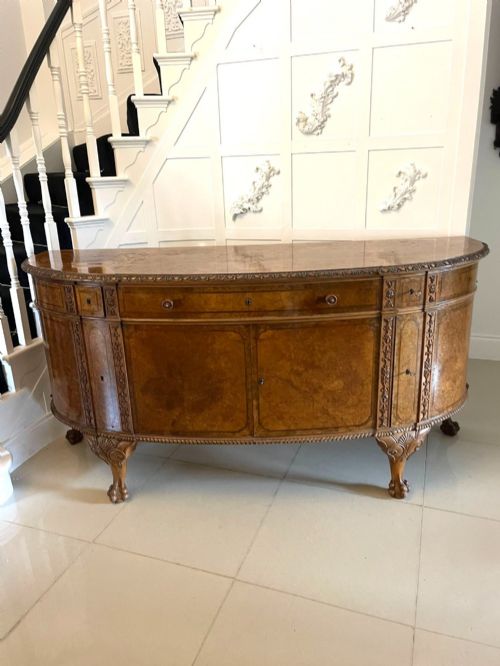
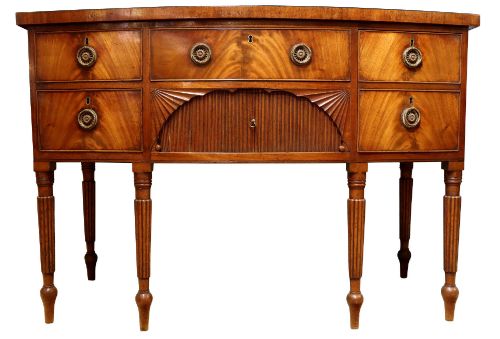
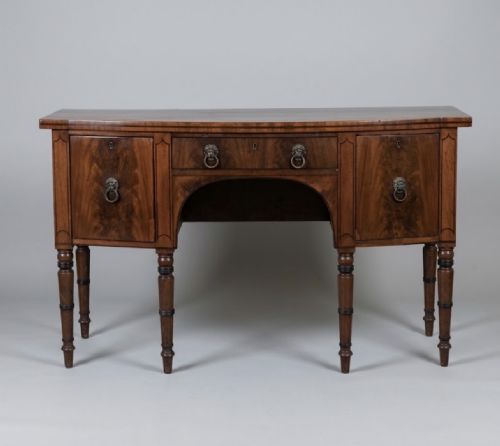
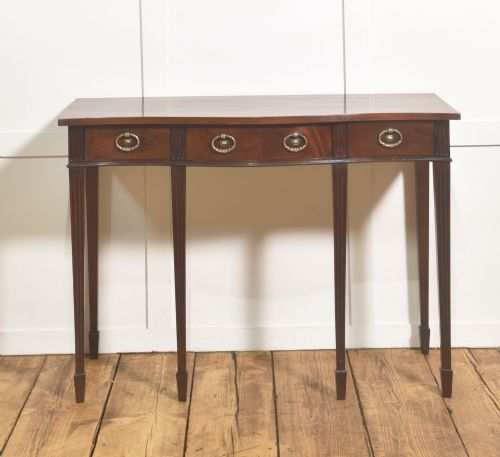
An antique bowfront server provides practical dining room storage through a graceful convex curved front that projects into the room. These pieces appear primarily across Georgian, Regency, and Edwardian periods, with later revivals bridging the styles.
The dominant forms are sideboards, side cabinets, and side tables in mahogany, often highlighted with contrasting satinwood or boxwood details. Buyers encounter both substantial proportions and neat, smaller formats suited to compact spaces.
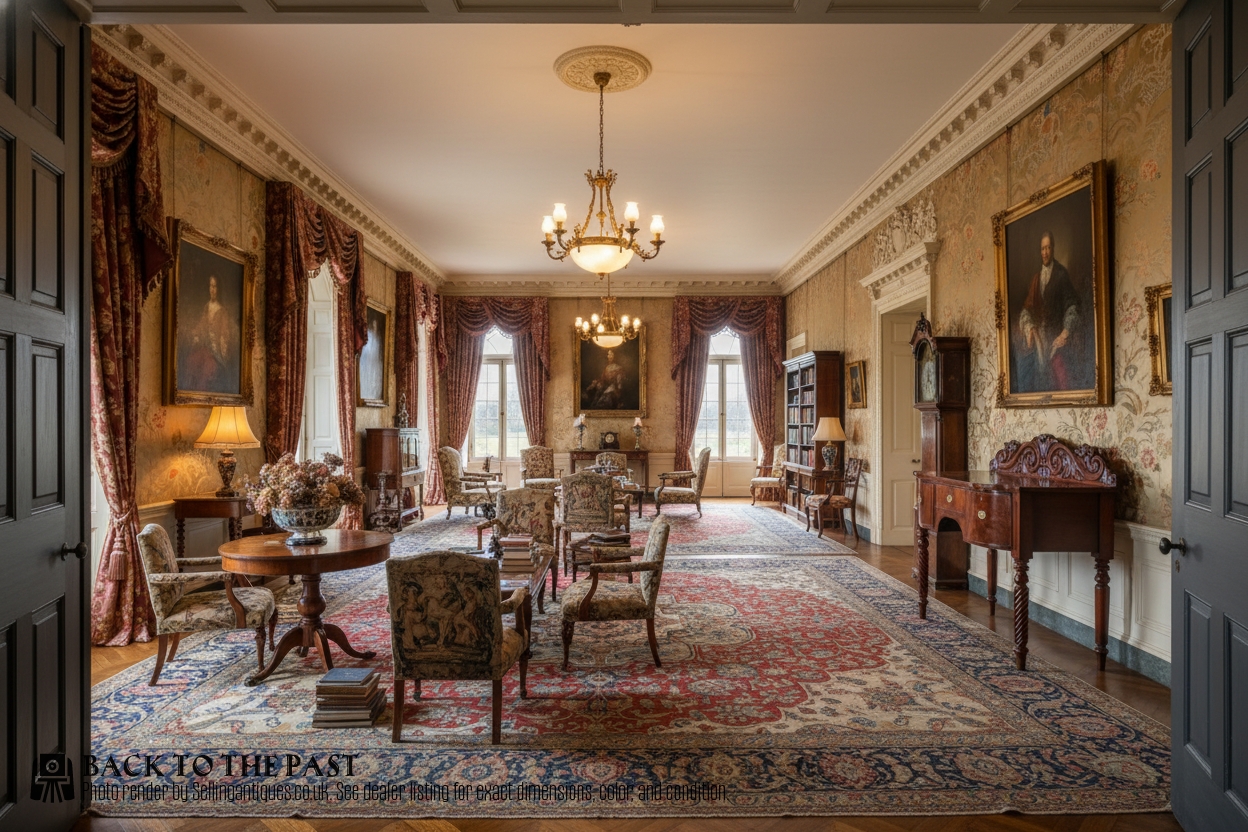
How they were made
Cabinet makers built these servers using solid mahogany and flame mahogany veneer over structural timbers, applying boxwood and satinwood for delicate stringing and inlay. Brass fittings such as handles and escutcheons punctuate the polished timber surfaces.
The curved front required skilled timber bending or precise segment construction to achieve the characteristic bow. Marquetry, crossbanding, and painted highlights completed the exterior decoration on finer examples.
Antique Bowfront Server Retail Price Guide 2026
Typical asking prices for bowfront server among the pieces listed under this phrase on Sellingantiques today, from the lower quarter to the upper quarter. They describe what is for sale here now, not the wider market.
Makers occasionally curved the drawers so deftly that closing the wrong one created an air pocket.
What varies in quality
The distinction between standard and superior pieces rests on the choice of timber figure, such as the liveliness of flame mahogany and the crispness of boxwood inlay. Cabinet work that maintains smooth drawer operation and tight joints separates baseline production from accomplished workshop output.
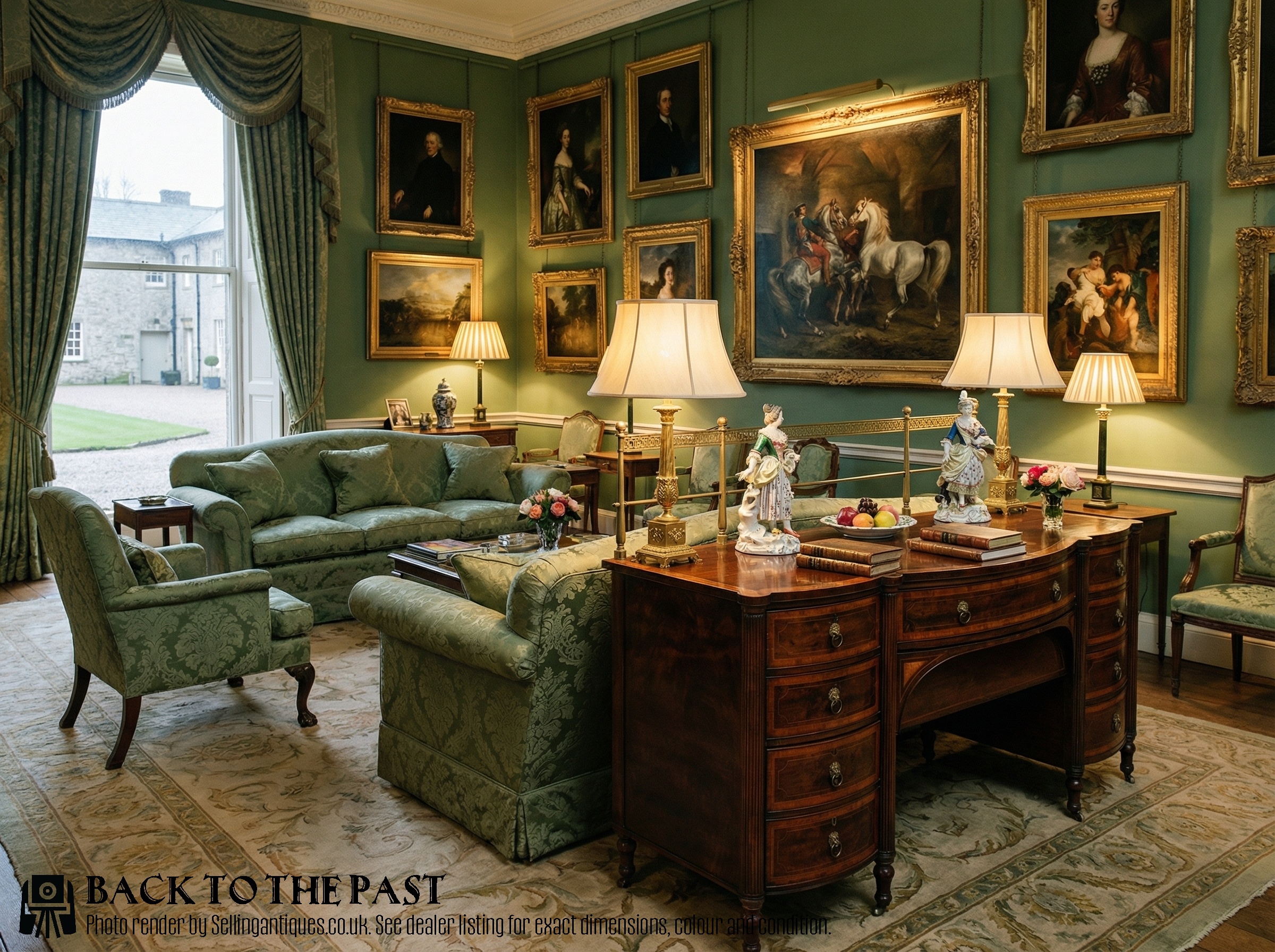
The Antique Bowfront Server Glossary
- Bowfront
- A convex curved front cabinetry design that swells outward from the centre, softening the linear angles of a room.
- Crossbanding
- A narrow strip of veneer laid perpendicular to the grain of the primary surface, framing the top or drawer fronts.
- Inlay
- Contrasting timber such as boxwood or satinwood set into a recessed channel within the main wood surface to form decorative patterns.
- Pedestal sideboard
- A form featuring distinct outer cupboards or pedestals flanking a central section, prominent during the Regency period.
Antique Bowfront Server: Frequently Asked Questions
What is an antique bowfront server used for?
These pieces serve primarily in dining rooms for storing tableware, linens, and serving dishes.
The flat top surface also functions as a convenient station for serving food and displaying decorative objects during meals.
Which periods do these servers come from?
The listings span the eighteenth century, the Georgian and Regency eras, through to Edwardian and later revival periods.
Earlier examples originate in the eighteenth century, while subsequent pieces reflect Victorian and Edwardian interpretations of Sheraton and Chippendale designs.
How do I identify a Georgian server?
Georgian servers generally display solid proportions constructed from rich mahogany, often accented with understated boxwood inlay.
They rely on classic joinery and balanced, elegant lines rather than heavy ornamentation.
What materials are typical for these pieces?
Mahogany serves as the primary timber, frequently enhanced by flame mahogany veneer for added visual depth.
Details often include contrasting satinwood and boxwood inlay alongside brass handles and drawer fittings.