





Georgian Breakfront Sideboard
A georgian breakfront sideboard is a formal dining room serving piece with a projecting central section, sought after for its imposing presence and generous storage.
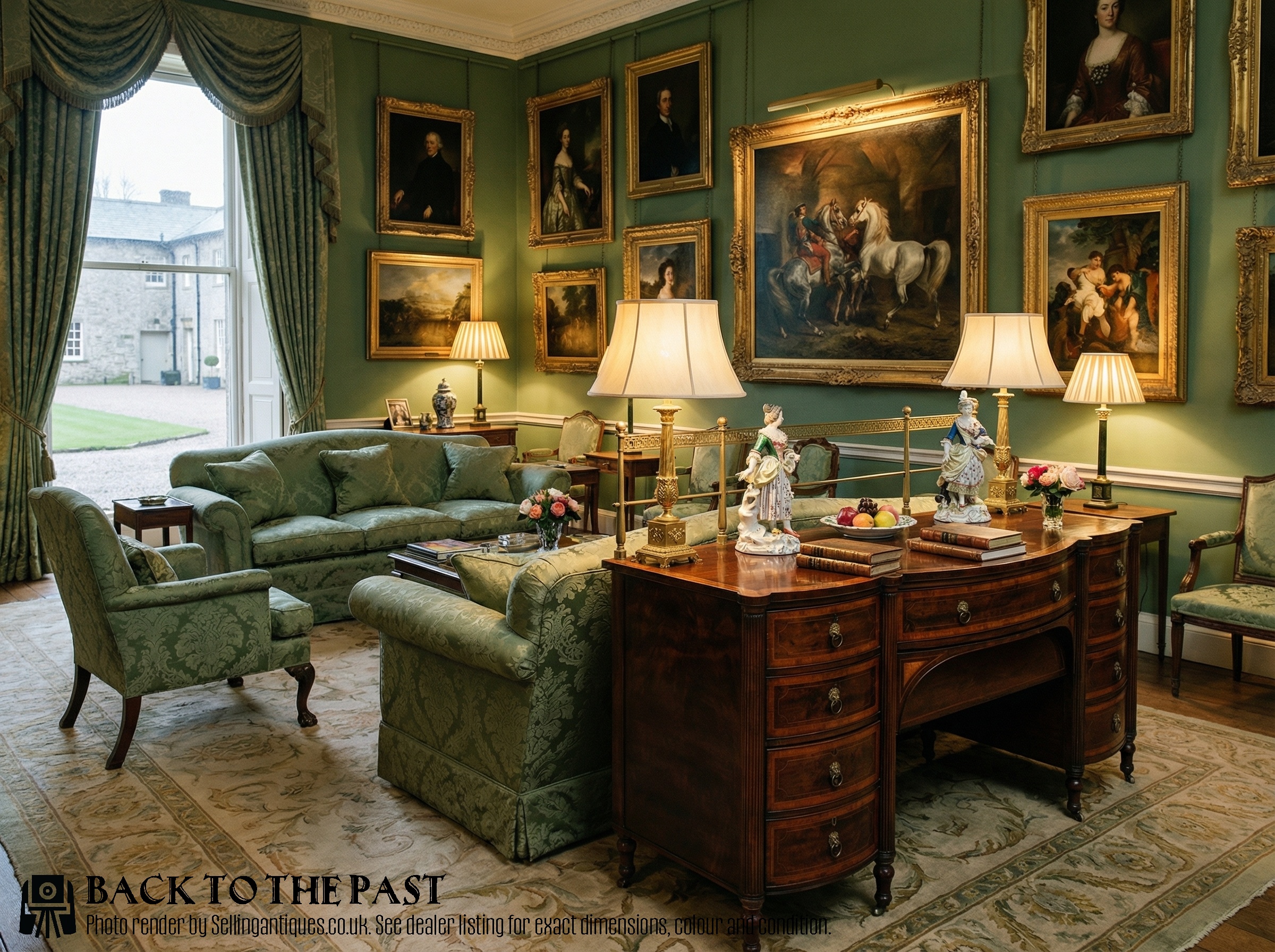
Georgian Breakfront Sideboard
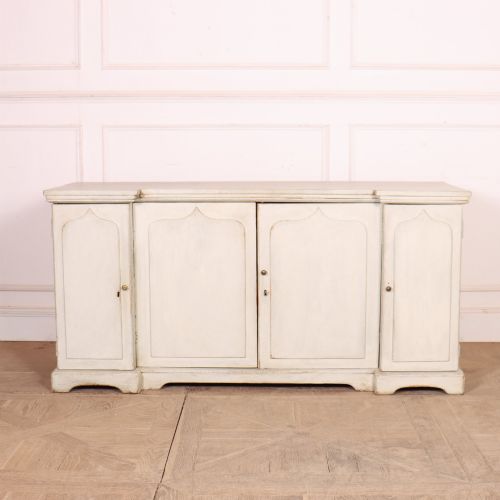
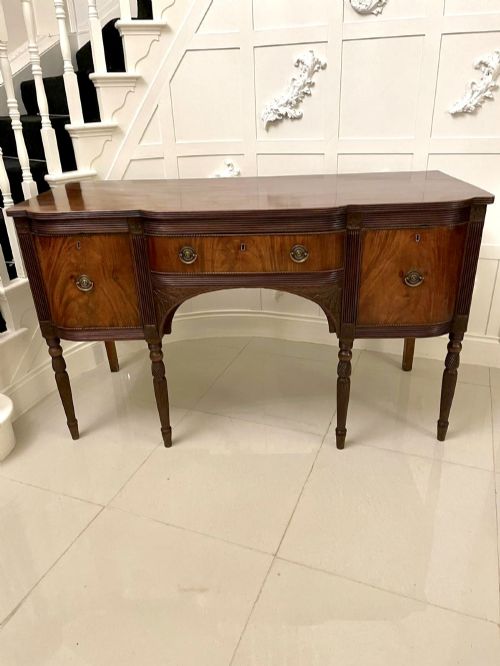
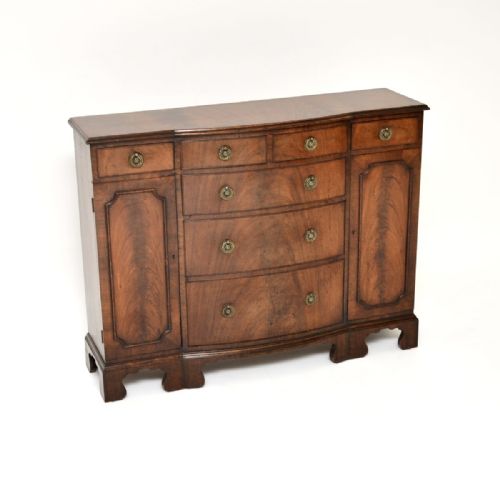
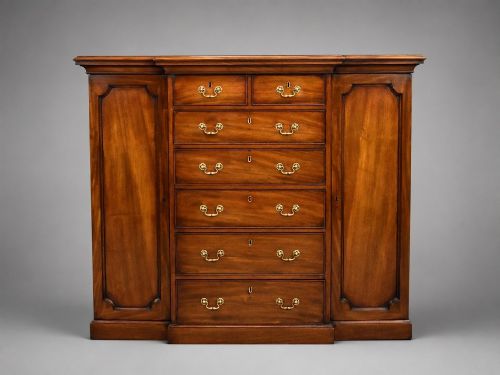
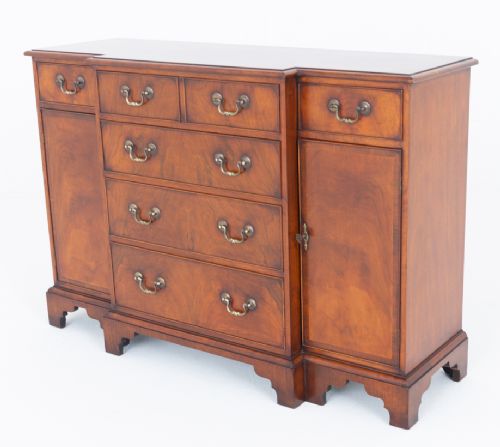
A georgian breakfront sideboard is a substantial dining room furnishing characterised by a central section that steps forward from the flanking cupboards or drawers. You will find these pieces spanning the eighteenth, nineteenth, and twentieth centuries, encompassing genuine period items alongside later Georgian revival interpretations.
The materials seen in these listings range from dense mahogany and figured flame mahogany veneer to sturdy oak and rich walnut, often enriched with satinwood or brass inlays. Alongside traditional sideboards, the selection includes related formats like dresser bases, side cabinets, and bookcase combinations sharing the characteristic breakfront outline.
Pieces originate from English workshops as well as Welsh country makers and continental makers, reflecting diverse regional interpretations of the form. Buyers select them to anchor a dining room or hallway, combining display surfaces with deep internal storage capacity.
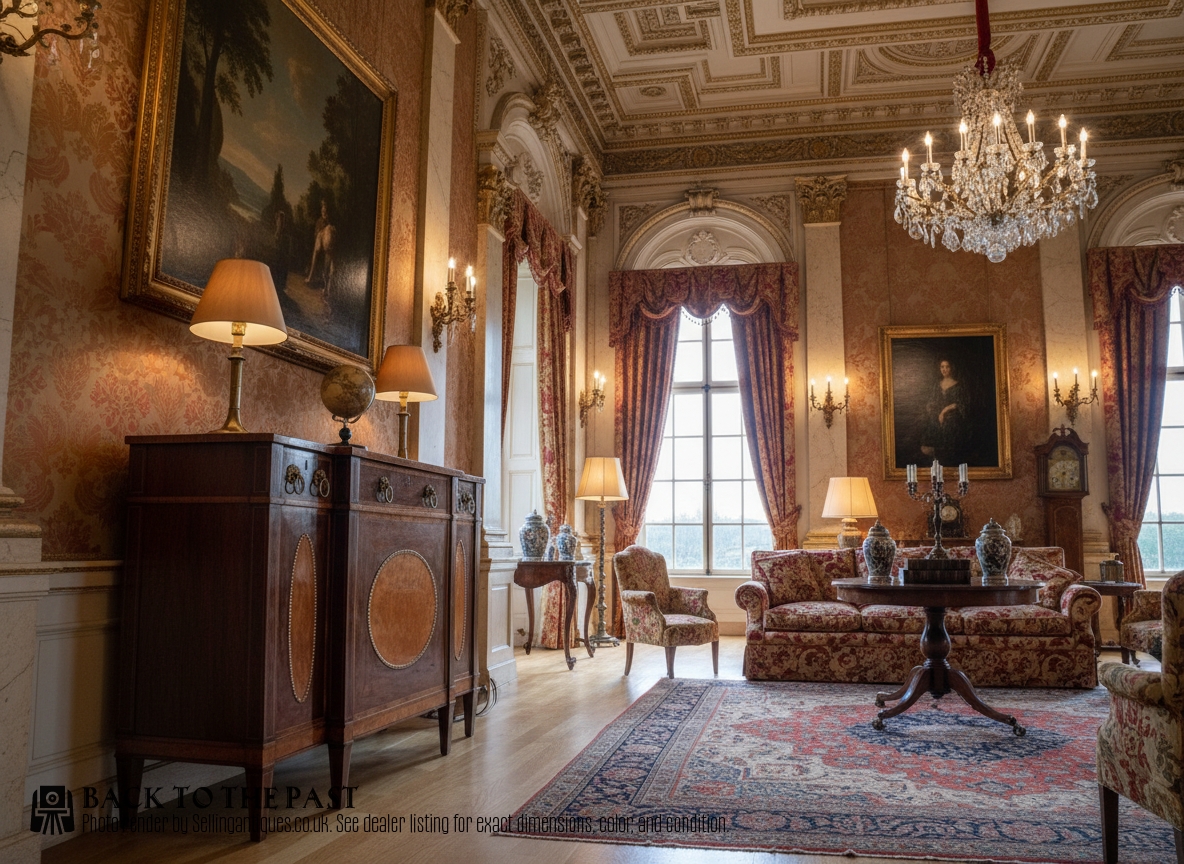
How they were made
Cabinet makers utilised solid timbers alongside carefully sliced veneers, applying flame mahogany, satinwood, and walnut to large flat surfaces to create dramatic grain patterns. Carcass construction relied on traditional joinery techniques, housing drawers with hand-cut dovetails and mounting panelled doors on sturdy hinges.
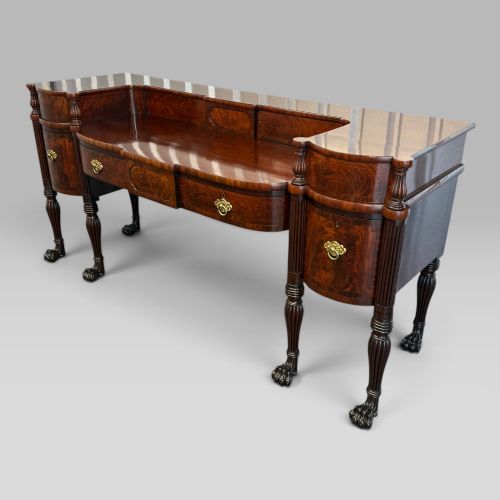
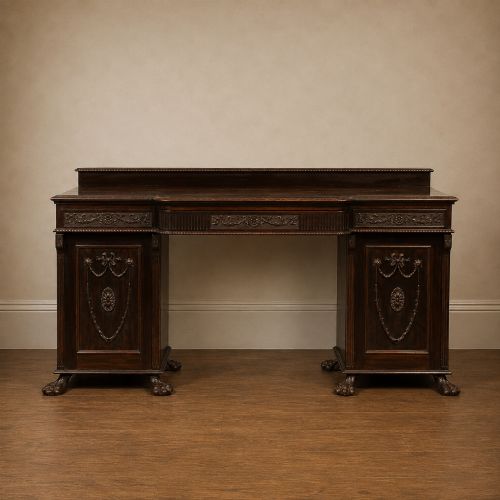
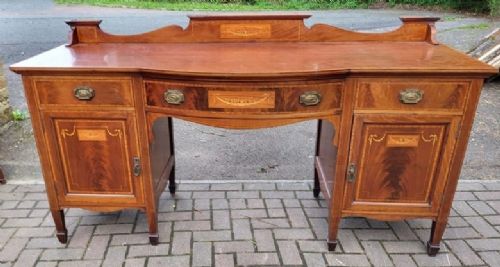
Decorative detailing involved contrasting wood inlays, brass stringing, and cast brass hardware such as lion paw feet or ring handles. Painted finishes and delicate cross-banding appear on later revival pieces, while earlier examples depend entirely on the natural figure of the timber.
Georgian Breakfront Sideboard Retail Price Guide 2026
Typical asking prices for georgian breakfront sideboard among the pieces listed under this phrase on Sellingantiques today, from the lower quarter to the upper quarter. They describe what is for sale here now, not the wider market.
Several bold pieces stand firmly upon cast brass lion paw feet, ready to pounce across the dining room floor.
What varies in quality
The choice of timber dictates the initial visual impact, with highly figured flame mahogany and richly patinated oak sitting at the upper end of the scale. Superior examples display seamless veneer matching across the projecting central section and uninterrupted grain flow along the drawer fronts.
Execution of detail separates workshop standards, evident in the crispness of brass inlay, the weight of cast hardware like lion paw feet, and the precision of internal drawer construction. The integrity of the original surfaces and the balance of proportions determine the overall standing of an individual piece.
Maple & Co
The Georgian Breakfront Sideboard Glossary
- Breakfront
- A cabinet design where the central section projects further forward than the left and right wings. This architectural arrangement creates depth and visual rhythm across the piece.
- Flame mahogany
- A veneer cut from the fork of the mahogany tree where the branch meets the trunk. It produces a fiery, undulating grain pattern highly prized by cabinet makers.
- Dresser base
- A heavy low cabinet providing drawer and cupboard storage, often forming the lower section of a Welsh dresser. These frequently share the proportions of standard sideboards.
- Cross-banding
- A decorative border of veneer laid around the perimeter of a tabletop or drawer front with the grain running perpendicular to the central panel. It frames the primary wood.
- Satinwood
- A pale, hard timber from tropical trees used extensively for inlay and stringing during the late eighteenth and nineteenth centuries. It provides sharp contrast against dark mahogany.
Georgian Breakfront Sideboard: Frequently Asked Questions
What is a breakfront sideboard?
A breakfront sideboard is a large storage unit for the dining room where the middle portion steps forward from the outer cupboards. This configuration breaks up a long flat facade and provides deeper central drawers.
Cabinet makers used this layout across the eighteenth and nineteenth centuries to add architectural presence to dining spaces. Today they function as serving surfaces and practical storage units.
How do I date a sideboard?
Dating relies on examining the timber species, construction methods, and secondary woods used inside drawers. Earlier pieces from the eighteenth century often feature oak drawer linings and hand-cut dovetails.
Revival pieces from later periods mimic these Georgian proportions but employ machine-cut elements or different internal timbers. Comparing the hardware and inlay styles against known period examples confirms the era of manufacture.
Where were these sideboards placed?
These pieces traditionally stood against the main dining room wall to hold silver platters, serving dishes, and glassware during meals. Their generous proportions meant they required substantial wall space to look properly balanced.
In modern interiors, they serve similar functions in large dining rooms or operate as statement storage credenzas in wide hallways and drawing rooms.
What is the difference between revival and original pieces?
Original pieces date from the Georgian or Regency periods and show the authentic wear and construction methods of eighteenth and early nineteenth-century workshops. Revival pieces date from later periods like the Edwardian era or nineteen hundred.
Revival items deliberately copied the earlier Georgian aesthetic using period-appropriate timbers and decorative techniques. Both offer functional storage, but original items carry the patina of age.