
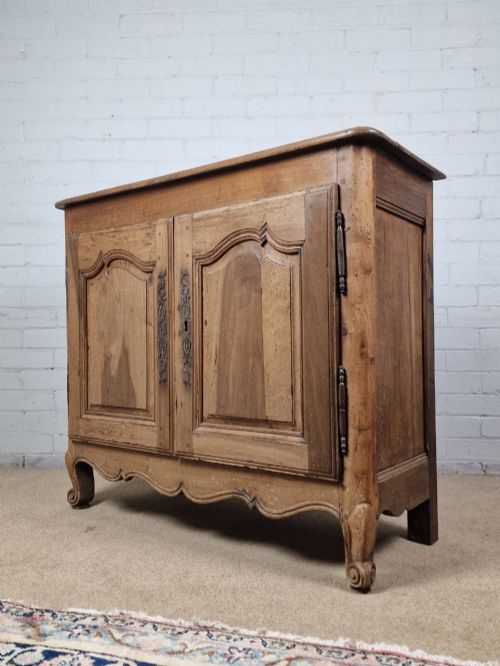

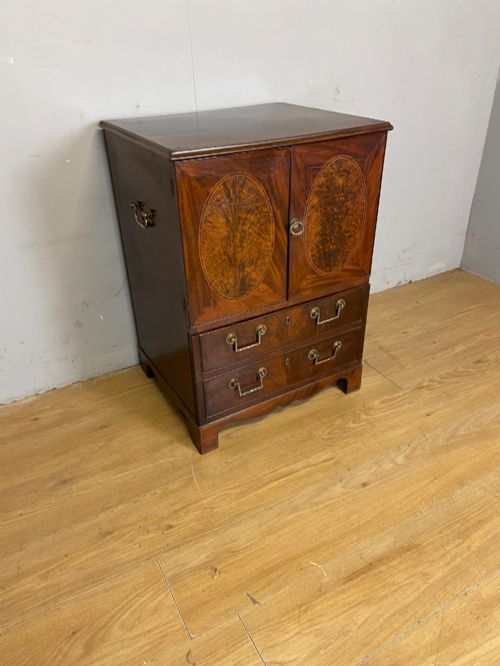


Late 18th Century Sideboard
A late 18th century sideboard brings serious Georgian proportion and timber to a room, offering both surface and storage.
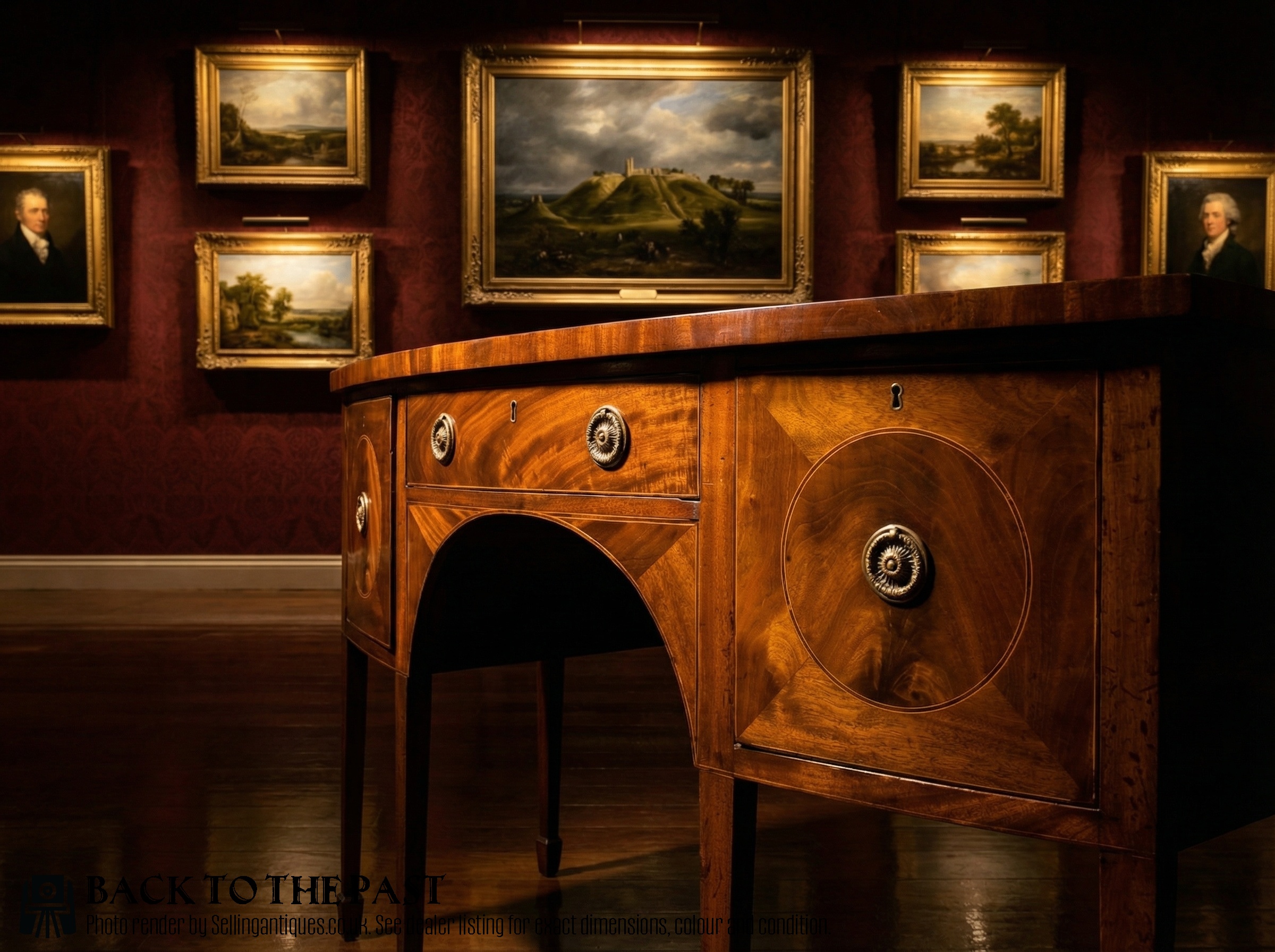
Late 18th Century Sideboard
A late 18th century sideboard represents a key development in dining room furniture, evolving from simple serving tables into dedicated storage units with pedestals and drawers. When searching for a late 18th century sideboard, buyers encounter forms ranging from sharp bow fronts to sweeping serpentine outlines and demi-lune shapes.
The material palette of these pieces relies heavily on rich mahogany, often accented with satinwood inlay, alongside regional interpretations in oak and walnut. Alongside standard sideboards, the selection includes related dining room forms such as side tables, serving tables, breakfront cabinets, and paired cutlery or knife boxes.
Stylistically, the pieces span George III designs, Sheraton periods, and continental examples including French commodes and Dutch tambour cupboards. The listings demonstrate a clear preference for figured timber and clean architectural lines suited to formal dining spaces.
How they were made
Cabinetmakers of this era constructed carcasses using solid native and imported timbers, applying fine mahogany veneers and contrasting satinwood inlay to primary surfaces. Drawer linings typically consist of secondary woods like oak or pine, joined with hand-cut dovetails that indicate skilled workshop production.
Surface enhancement involved careful polishing to bring out the natural flame and grain of the wood, sometimes complemented by gilt bronze mounts or solid brass handles and feet. Structural elements like tambour fronts, curved bow fronts, and serpentine shapes demanded advanced woodworking techniques to bend and shape timber accurately.
Late 18th Century Sideboard Retail Price Guide 2026
Typical asking prices for late 18th century sideboard among the pieces listed under this phrase on Sellingantiques today, from the lower quarter to the upper quarter. They describe what is for sale here now, not the wider market.
Several pieces include narrow cutlery boxes fitted with solid silver mounts designed for upright dining knife storage.
What varies in quality
The caliber of a piece rests primarily on the choice of timber, particularly the selection of figured flame mahogany and the precision of contrasting inlay work. Superior examples display balanced proportions, uninterrupted grain matching across drawers, and original hardware rather than later replacements.
Construction detail further distinguishes finer items, seen in the tightness of dovetail joints, the smoothness of curved tambour actions, and the crispness of carved or applied decorative mounts. Pieces associated with notable design traditions or specific regional cabinet-making centres command particular attention for their elevated execution.
The Late 18th Century Sideboard Glossary
- Bow front
- A convex curved cabinet front that projects outward in a smooth arc. This shape became popular during the late Georgian period to soften room angles.
- Serpentine outline
- A front configuration featuring a convex centre flanked by concave curves, creating a fluid wave shape. It requires precise woodworking and high-grade timber.
- Demi-lune
- A half-moon shape used for tables and cabinets designed to stand flat against a wall. These pieces often feature tambour doors or folding tops.
- Cutlery box
- A tapered wooden box, often paired, designed to store dining knives and forks upright on a sideboard. They frequently feature inlaid details and silver mounts.
- Tambour
- A flexible shutter made of narrow vertical strips of wood glued to canvas, allowing doors to slide around curved corners. It appears on specialised small cupboards and desks.
- Inlay
- A technique of inserting contrasting woods, shells, or metals into recesses cut into the primary wood surface to form decorative patterns. Line inlay uses thin strips to frame drawer edges.
Late 18th Century Sideboard: Frequently Asked Questions
How do I spot a true late 18th century piece?
Examine the secondary woods inside the drawers, such as oak or pine, and look for hand-cut dovetails that show irregular spacing rather than machine uniformity. Construction methods and timber ageing provide the clearest indicators of period authenticity.
Check for original backboards, period brass hardware, and timber shrinkage patterns that align with furniture produced around seventeen-ninety.
What is the difference between a sideboard and a serving table?
A serving table is an open frame with legs and a top, designed purely for holding dishes during a meal without built-in drawers or cupboards. A sideboard incorporates integrated drawers and lower compartments for storing cutlery, linen, and glassware.
Sideboards developed specifically to consolidate dining room storage into a single architectural piece against the wall.
How do I care for antique mahogany furniture?
Keep wooden surfaces away from direct sunlight and heat sources to prevent the timber from drying out, fading, or cracking over time. Maintain a stable indoor humidity level to protect old veneer and joints.
Apply traditional beeswax periodically and buff gently with a soft cloth to nourish the grain without building up heavy silicone residues.
What distinguishes Sheraton style furniture?
Sheraton design relies on classical geometry, straight tapered legs, and delicate proportions inspired by neoclassical architecture. The aesthetic avoids heavy carving in favour of flat surfaces decorated with contrasting veneers and geometric inlay.
Mahogany and satinwood feature prominently, often arranged to create radiant fan motifs or delicate border lines.