


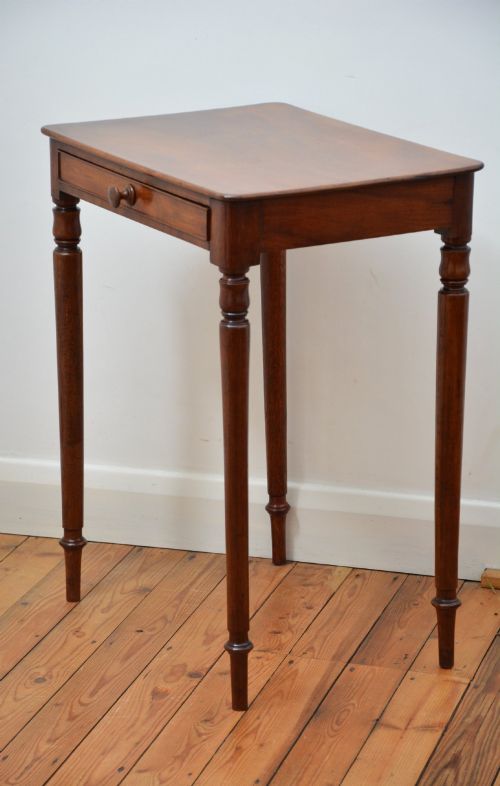
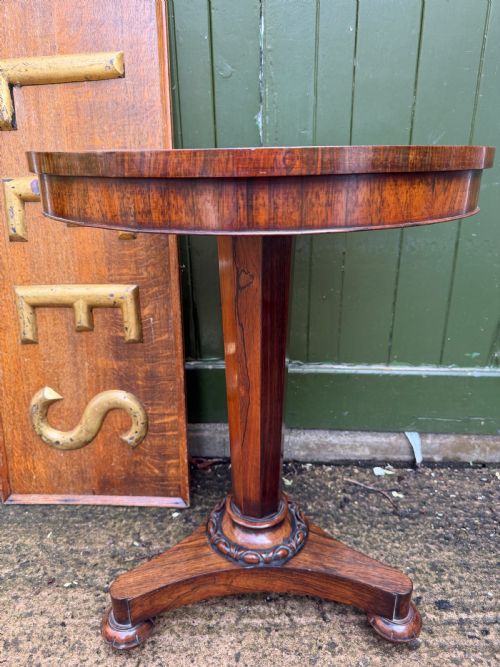
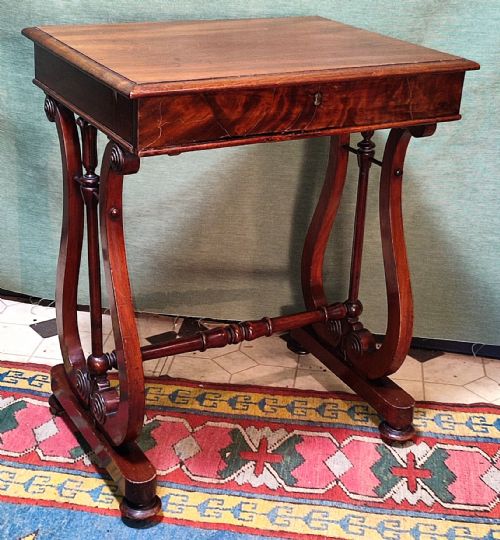


William IV Accent Table
A william iv accent table brings warm timber and sturdy proportion into a room, serving as a reliable perch for lamps and cups.
William IV Accent Table
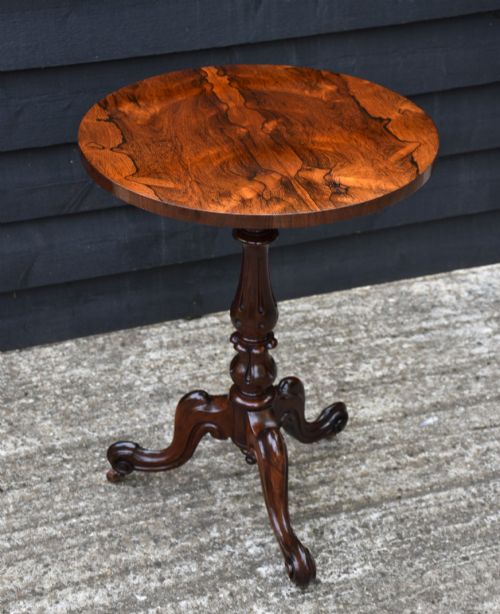
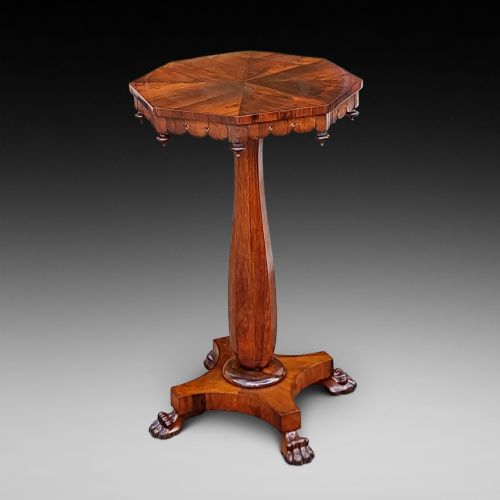
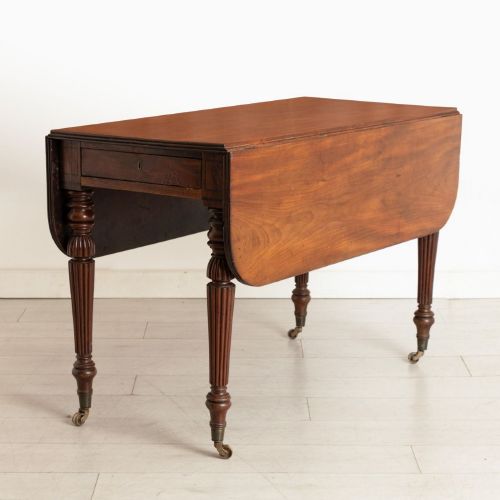
When you search for a william iv accent table, you are looking at solid nineteenth-century timber furniture designed for practical daily use in sitting rooms and parlours. These smaller tables take many forms, including side tables, occasional pieces, wine tables, and tea tables, often featuring circular, octagonal, or pembroke tops.
On this page, you will most frequently meet pieces fashioned from mahogany and rosewood, spanning periods from the late Georgian era through to the Victorian decade. Makers of the time built these tables to stand solidly beside seating, sometimes incorporating drawers, tilt-top tripod bases, or detailed inlaid compass roses.
How they were made
Cabinet makers of the period relied heavily on rich timbers like mahogany and rosewood, frequently selecting figured veneers for table tops and specimen wood arrangements. Solid turns of wood formed the central pillars, while tripod or four-swept leg bases provided stability.
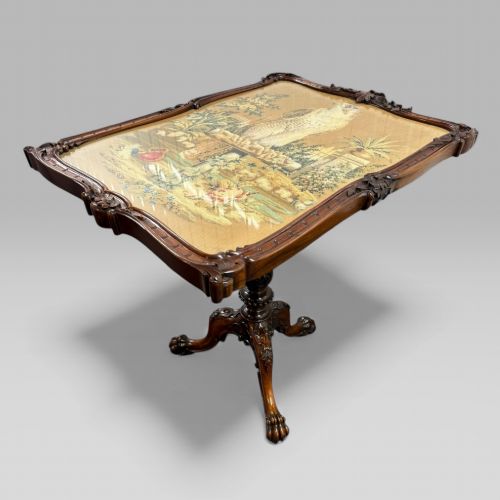
Secondary materials such as brass fittings, leather inserts, and gold leaf ornamentation appear across the pieces, alongside carved wooden detailing on pedestals and aprons.
Mahogany and rosewood dominate the listed timbers, supplemented by walnut, brass, leather, glass, and textile elements.
What varies in quality
The distinction between tiers of work rests on the choice of timber and the ambition of the joinery. Tables featuring dense, well-figured rosewood or elaborate specimen wood tops sit apart from simpler mahogany versions.
Carved detailing on the pedestals and legs demonstrates the hand of the maker, where crisp undercut foliage and balanced proportions elevate a standard side table into a notable example of the period.
Gillows
The William IV Accent Table Glossary
- Pembroke table
- A small occasional table with hinged drop leaves on two opposing sides. These flaps allow the surface area to expand when needed for writing or tea.
- Teapoy
- A small box on a pedestal used originally for storing loose tea leaves. Converted versions often serve as compact occasional tables.
- Tilt-top
- A table mechanism where the top hinges vertically for storage against a wall when not in use. It typically locks flat into position with a brass catch.
- Specimen wood
- A decorative technique utilising multiple contrasting timber species arranged in geometric patterns or pictorial motifs. This surface work requires precise woodworking skill.
- Tripod table
- A piece supported by a central pillar resting on three spreading feet. This design ensures stability on uneven floorboards.
William IV Accent Table: Frequently Asked Questions
How do I use a teapoy?
Originally built to hold tea caddies in the drawing room, a teapoy now functions well as a small lamp table or bedside stand. Its internal compartments offer compact storage for small household items.
Position it beside an armchair where the enclosed space keeps reading materials or odds and ends out of sight while maintaining a neat surface.
What is a pembroke table used for?
A pembroke table provides a flexible surface through its drop leaves, which fold down to save floor space or lift up to accommodate tea and writing.
In a smaller room, keep one leaf dropped against a wall and raise both when guests visit or extra table space is needed.
Where should I place an occasional table?
These smaller tables suit positions beside sofas, near reading chairs, or in hallways where a surface is useful for lamps and everyday objects. Their modest footprint allows them to fit easily into corners or tight spaces.
Avoid placing them in direct sunlight or beside active heat sources to protect the polished timber and veneer surfaces from drying out.
How do I care for rosewood and mahogany?
Maintain the timber by dusting regularly with a soft cloth and occasionally applying a suitable wax to nourish the grain. Keep moisture away from the surface by using coasters under glasses.
Harsh chemical cleaners strip the historic finish, so gentle cleaning preserves both the appearance and the character of the wood over time.