

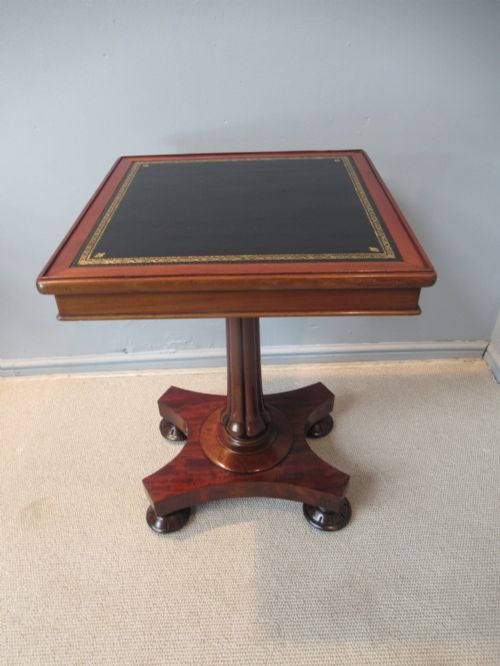


Antique Square Top Table
An antique square top table brings proportion and utility to a room, offering a distinct geometry found in side, card, and occasional pieces.
Antique Square Top Table
An antique square top table is a versatile form spanning side tables, occasional tables, card tables, and dining tables produced across the eighteenth, nineteenth, and twentieth centuries. These pieces appear in periods ranging from Georgian and Regency to Edwardian and Arts & Crafts, reflecting evolving domestic needs.
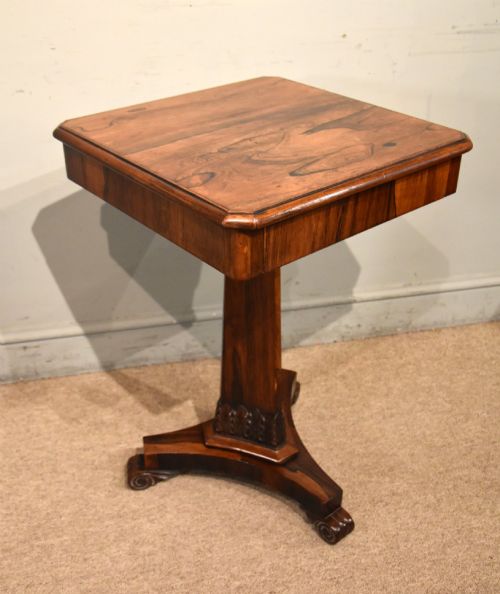
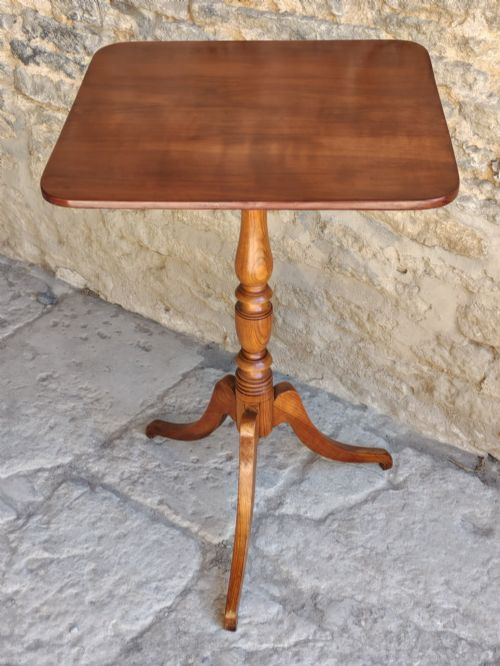
The selection on this page demonstrates the wide variety of forms sharing this geometry, from tilt-top wine tables and tripod stands to larger centre tables and games tables. Mahogany is the most frequent wood, accompanied by oak, fruitwood, rosewood, and pine.
Buyers seeking an antique square top table will encounter simpler lamp tables alongside more complex designs featuring satinwood banding, marble tops, or penwork decoration. The scale ranges from small kettle stands to larger dining and centre tables seating several people.
How they were made
Cabinetmakers constructed these tables using dense hardwoods like mahogany and oak, often incorporating secondary timbers such as pine. Finer examples display decorative veneers like burr yew, satinwood, and padouk, sometimes enhanced with contrasting stringing or boxwood inlay.
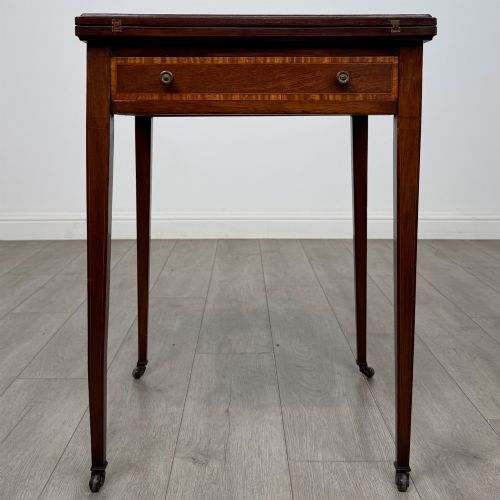
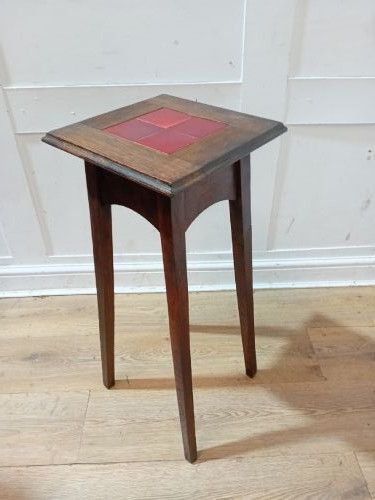
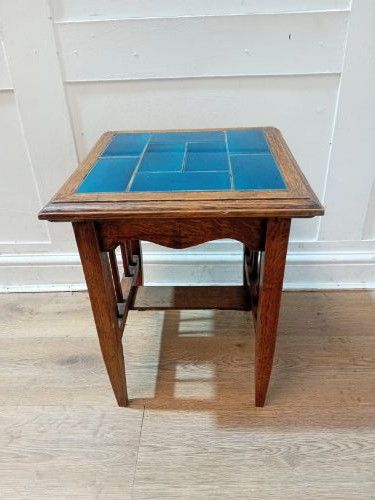
Construction techniques varied according to the function of the piece, utilising tilt mechanisms, tripod pedestals, concertina actions for card tables, or traditional four-leg frames. Surface treatments included leather inserts for writing or games tables, as well as marble insertions and tile tops.
Listings feature woods including mahogany, oak, satinwood, burr yew, and fruitwood across the eighteenth to twentieth centuries.
What varies in quality
Quality in these pieces depends upon the selection of timber and the precision of the joinery, particularly where top boards meet pedestals or frames. The crispness of carved details, such as tripod legs or edge moulding, separates standard workshop production from finer cabinet work.
The integrity of mechanisms, including tilt-top catches, envelope folds, and concertina actions, dictates the structural success of functional tables. Original surfaces and patination on woods like mahogany and oak elevate the standing of a piece.
Baillie Scott·Hepplewhite
The Antique Square Top Table Glossary
- Tilt top
- A table mechanism allowing the surface to pivot to a vertical position when not in use. This saved space in smaller domestic interiors.
- Tripod table
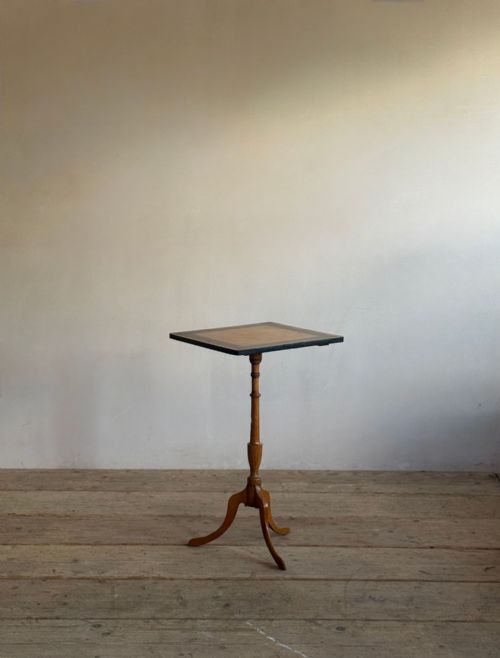
- A small freestanding table supported by a central pillar resting on three legs. These are typically round or square in top form.
- Satinwood banding
- A decorative border of pale, lustrous exotic timber inlaid around the perimeter of a table top. It creates visual contrast against darker woods like mahogany.
- Concertina action
- An expanding frame mechanism used on card tables to support the folding top when open. It extends outwards like a bellows.
Antique Square Top Table: Frequently Asked Questions
How were square top card tables used?
These tables functioned primarily for social games like whist or patience, featuring folding leaves that doubled the surface area when opened. Lined with baize or leather, they provided a stable playing area during the Georgian and Victorian periods.
When not in use, the tables folded closed and stood flat against a wall as side or console pieces, maximising domestic space.
How do I identify a Georgian table?
Georgian pieces, produced during the eighteenth and early nineteenth centuries, typically rely on solid mahogany or oak with restrained proportions and careful joinery. Look for classic timber patination and traditional construction methods beneath the top.
Stylistic markers from this era include tripod bases, simple square profiles, and subtle mouldings rather than heavy ornamentation.
Where should I place an occasional table?
An occasional table suits smaller spaces where a full-sized desk or dining piece proves too large, functioning well beside seating or as a lamp stand. Their compact square footprint allows them to fit into corners or between armchairs easily.
They also serve effectively in hallways or bedrooms to hold decorative objects, plants, or lighting.