




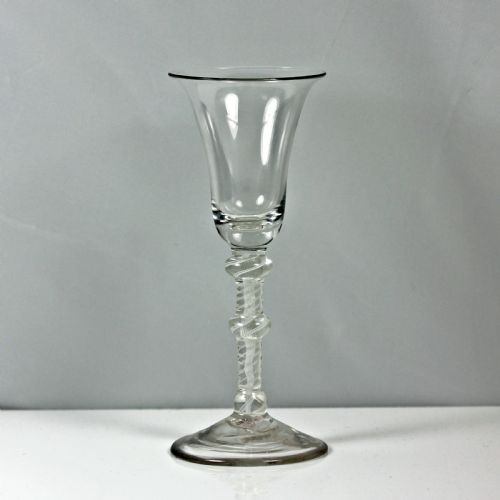

White Opaque Twist Stemware
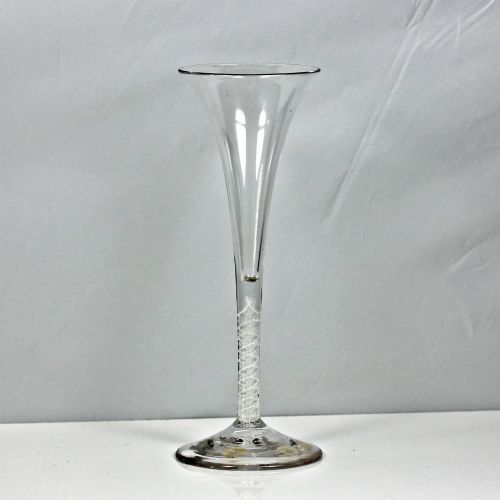
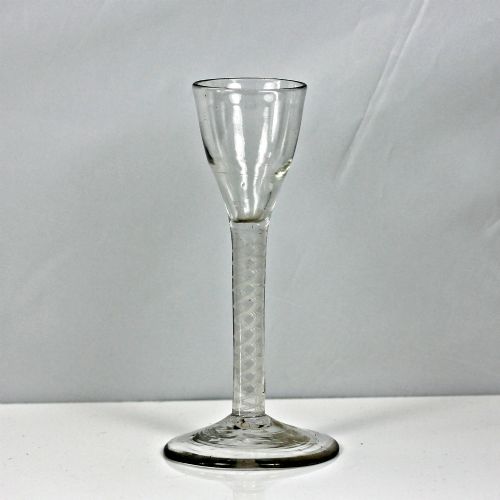
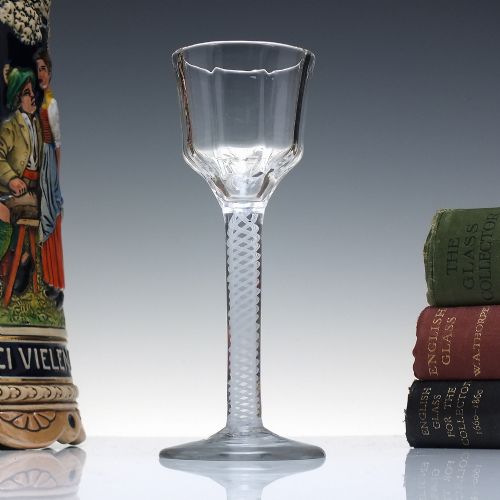
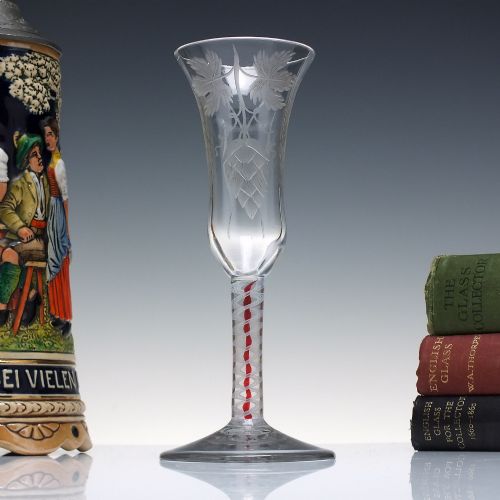
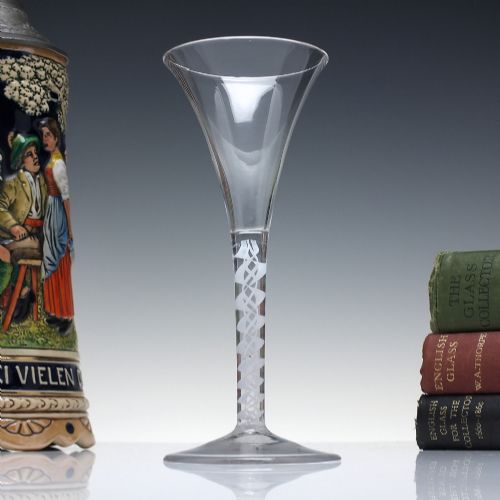
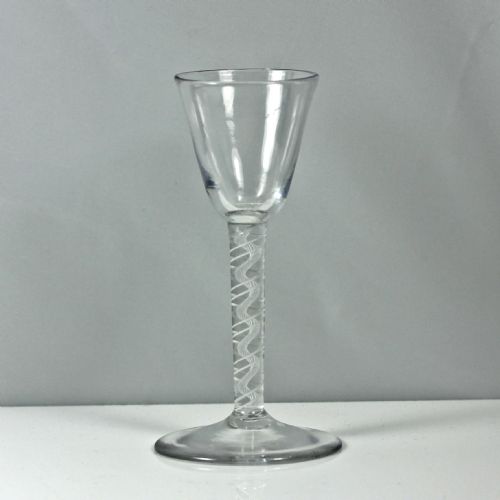
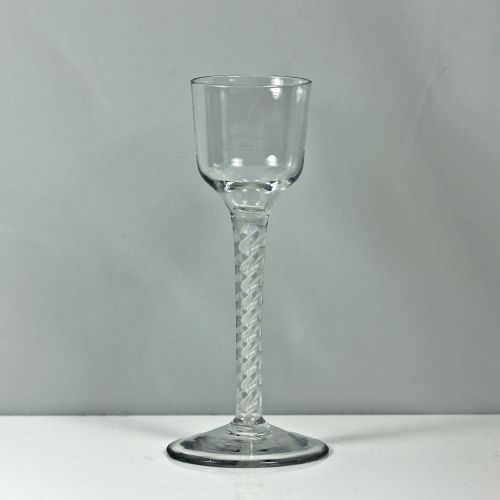
White opaque twist stemware brings brilliant 18th century glass art to the table through delicate white enamel threads encased in clear lead crystal stems.
White Opaque Twist Stemware
White opaque twist stemware consists primarily of Georgian drinking vessels from the eighteenth century, alongside occasional Victorian interpretations. The selection on this page focuses on English wine glasses, ale glasses, cordials, and sweetmeats featuring characteristic white enamel threads drawn through the stem.
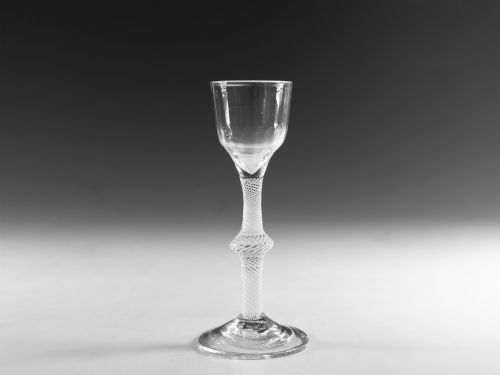
The dominant forms span trumpet, ogee, and fluted bowls supported by conical feet, frequently enhanced with single or double series twists, knops, and ribbing. Pieces range from simple conical bowls to complex multi knop variants produced across the Georgian era.
Materials and technique
Makers formed these drinking vessels from lead glass and lead crystal, incorporating white enamel to create the characteristic internal threads. The manufacturing process required pulling and twisting softened glass rods to trap opaque enamel filaments in clear flint glass before shaping the bowl and foot.
Techniques varied from single series twists to multi spiral and double series arrangements, sometimes incorporating air bubbles alongside the enamel or forming multiple knops along the stem.
Quality and craftsmanship
Quality in white opaque twist stemware rests upon the precision and complexity of the internal twist formation, ranging from simple single strands to intricate multi spiral configurations. The clarity of the lead crystal and the crispness of bowl mouldings, such as flute-moulding or full ribbing, separate standard production from finer examples.
Structural refinement also dictates standing, where balanced proportions between bowl, stem knops, and conical foot demonstrate superior glasshouse execution.
The White Opaque Twist Stemware Glossary
- Opaque twist
- A stem containing white enamel glass threads enclosed within clear lead glass. These threads form single or double series patterns.
- Double series twist
- A stem design featuring two distinct sets of opaque white threads twisted around a central column of air or glass. This creates a complex internal lattice effect.
- Ogee bowl
- An S-profile drinking vessel shape curving outward at the rim and inward toward the base. It appears frequently on Georgian wine glasses.
- Knop
- A bulbous or swelling decorative projection on the stem of a glass. Multiple knops provide grip and visual punctuation.
- Sweetmeat glass
- A small, shallow vessel intended for serving confectionery or dried fruits. These pieces often share the stem characteristics of wine glasses.
White Opaque Twist Stemware: Frequently Asked Questions
How do I date white opaque twist stemware?
Dating relies on stylistic markers such as bowl shape, foot formation, and the complexity of the internal enamel twist. Eighteenth century pieces typically display distinct Georgian vessel proportions and hand-finished pontil marks on the base.
Later Victorian interpretations tend to present heavier glass weights and differing forming techniques. Comparing bowl profiles against documented period examples helps confirm the decade of manufacture.
What is the difference between single and double series twists?
A single series twist contains one set of opaque white enamel threads rotating through the clear lead glass stem. These represent an earlier development in English glassmaking.
Double series twists incorporate an outer cable of enamel threads surrounding an inner column of threads or air bubbles. This creates a denser and more visually intricate pattern within the crystal.
Can I use these glasses for modern dining?
These drinking glasses remain functional objects, though their age and delicate lead glass construction require careful handling. Hand washing in warm water without harsh detergents protects the historic material.
Avoiding sudden temperature changes prevents thermal shock to the eighteenth century lead crystal. Many collectors enjoy using them occasionally for special dinners while storing them securely.
Why do some stems feature knops?
Knops served both decorative and structural purposes on Georgian stemware, adding visual weight and tactile grip to the slender glass. Single, double, triple, or four knop variations alter the overall silhouette of the drinking vessel.
Master glassmakers formed these swellings by manipulating the hot metal during the drawing of the stem. Their presence often indicates finer craftsmanship in the finished piece.