



White Enamel Box
A white enamel box brings together bright vitreous surfaces and metal work, offering a neat container for small treasures.
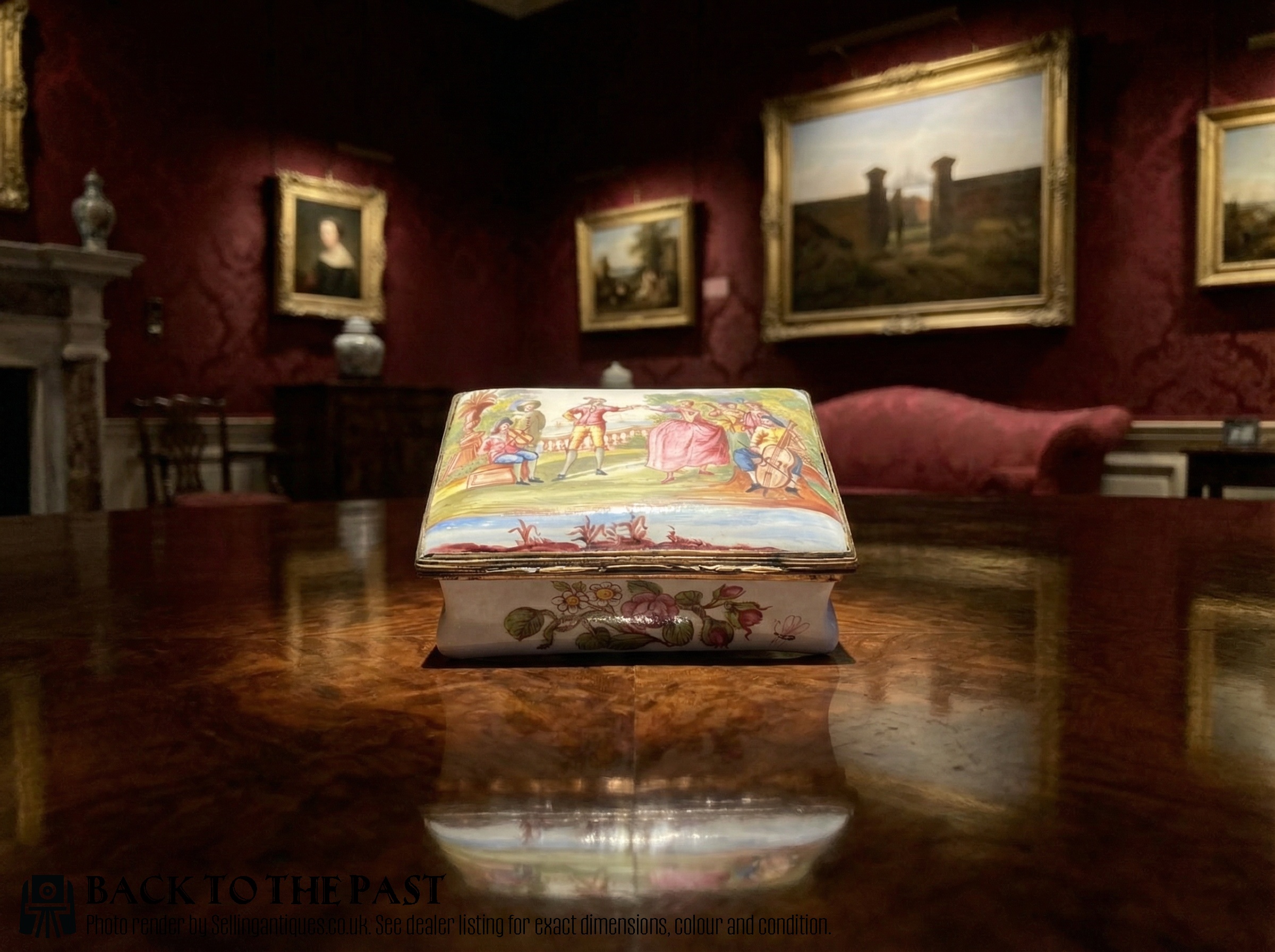
White Enamel Box
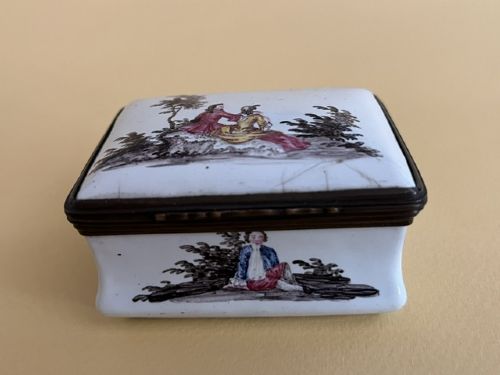
A white enamel box encompasses small receptacles designed for personal items, most commonly seen here in eighteenth-century patch and snuff boxes alongside twentieth-century dressing table jars and trinket boxes. The eighteenth-century pieces typically originate from Bilston or South Staffordshire, featuring hinged lids and painted pastoral scenes or inscriptions.
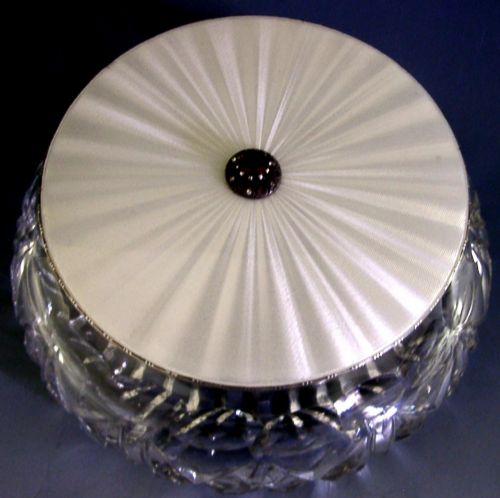
Later examples extend into the twentieth century, taking the form of guilloche enamel pill boxes, compacts, and sterling silver mounted glass dressing table pots. These diverse forms reflect shifts in personal grooming and social habits across the Georgian, Victorian, and Art Deco periods.
Buyers will encounter both small pocket-sized containers meant for snuff or patches and larger dresser pieces intended to hold cosmetics or jewellery. The core appeal lies in the smooth white glaze combined with metal mounts of brass, copper, or silver.
How they were made
The foundation of these pieces relies upon metal bases shaped from copper, brass, or silver, upon which powdered glass is fused through high-temperature firing. This vitreous enamel creates a glossy white coating that serves as a durable canvas for hand-painted details or engine-turned patterns.
Mounts and hinges utilise cast or stamped metals, often gilded or left in their natural sterling silver state, securing the lid to the main body. Techniques such as cloisonne and guilloche introduce wirework partitions or machine-engraved textures beneath translucent or opaque white enamel layers.
Musicians in parkland gaze eternally from eighteenth-century lids.
What varies in quality
Quality rests upon the crispness of the enamel surface and the finesse of any hand-painted decoration or metal chasing. Finer eighteenth-century pieces display delicate brushwork in miniature scenes, whereas lesser examples show simple dotting or plain white fields.
The structural integrity of the metal hinges and the snugness of the lid closure distinguish finer items from ordinary ones. Well-preserved pieces retain their original gilding and show minimal crazing or chipping to the vitreous coating.
The White Enamel Box Glossary
- Patch box
- A small container used in the eighteenth century to hold cosmetic fabric patches worn on the face. These boxes frequently feature a mirror fitted to the inside of the lid.
- Guilloche
- A decorative technique where a mechanical lathe engraves a precise repetitive pattern into metal before enamel is applied. This creates shimmering geometric effects beneath the translucent surface.
- Bilston
- A Staffordshire town renowned in the eighteenth century for producing enamelled copper trinket boxes and small wares. Pieces from this centre are particularly noted for their pastel palettes and copper bases.
- Champleve
- An enamelling method where troughs or cells are hollowed out of a metal plate and filled with enamel powder before firing. The surrounding metal walls remain visible to form the design outline.
White Enamel Box: Frequently Asked Questions
What were eighteenth-century patch boxes used for?
These small containers held small silk or velvet shapes that fashionable individuals applied to the face to disguise blemishes or mark social status. They were designed to slip easily into a pocket or reticule for use throughout the day.
Inside the lid, makers often fitted a small mirror so the owner could check the placement of their patches. Today, they survive as miniature canvases displaying pastoral views, portraits, or witty mottoes.
How do I care for antique enamel?
Enamel is essentially glass fused to metal, meaning it requires gentle handling to prevent scratching or impact damage. Keep pieces away from abrasive cleaners and store them individually to avoid rubbing against other metal items.
Cleaning is best done with a soft, dry cloth rather than immersion in water, particularly for pieces with iron or exposed copper bases that might rust or tarnish. Gentle care preserves both the metal mounts and the glossy glaze.
How can I tell a Georgian box from a later piece?
Georgian enamel boxes, particularly those from Bilston or South Staffordshire, typically feature copper bases with hand-painted pastoral scenes or inscriptions on white enamel. The construction relies on simple hinged mounts that often show hand-finishing marks.
Later twentieth-century examples, such as Art Deco compacts or silver-mounted dressing table jars, utilise machine-rolled metals and different fastening mechanisms. The presence of sterling silver hallmarks or modern geometric guilloche patterns usually points away from the eighteenth century.
What is the difference between a trinket box and a pill box?
Trinket boxes generally offer a larger internal capacity suited for storing rings, brooches, or small keepsakes on a dressing table. They appear in materials ranging from cast bronze to sterling silver and glass.
Pill boxes are considerably smaller, designed to fit into a waistcoat pocket or handbag for carrying daily doses of medicine or lozenges. Their interiors lack the larger open space needed for jewellery.