
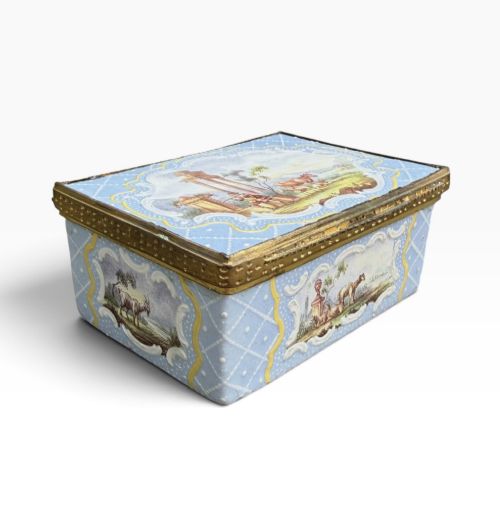


Gilt Metal Snuff Box
These small gilt metal snuff box examples offer miniature 18th Century and Victorian craftsmanship, prized for their decorative metalwork and inset stones.
What a gilt metal snuff box is
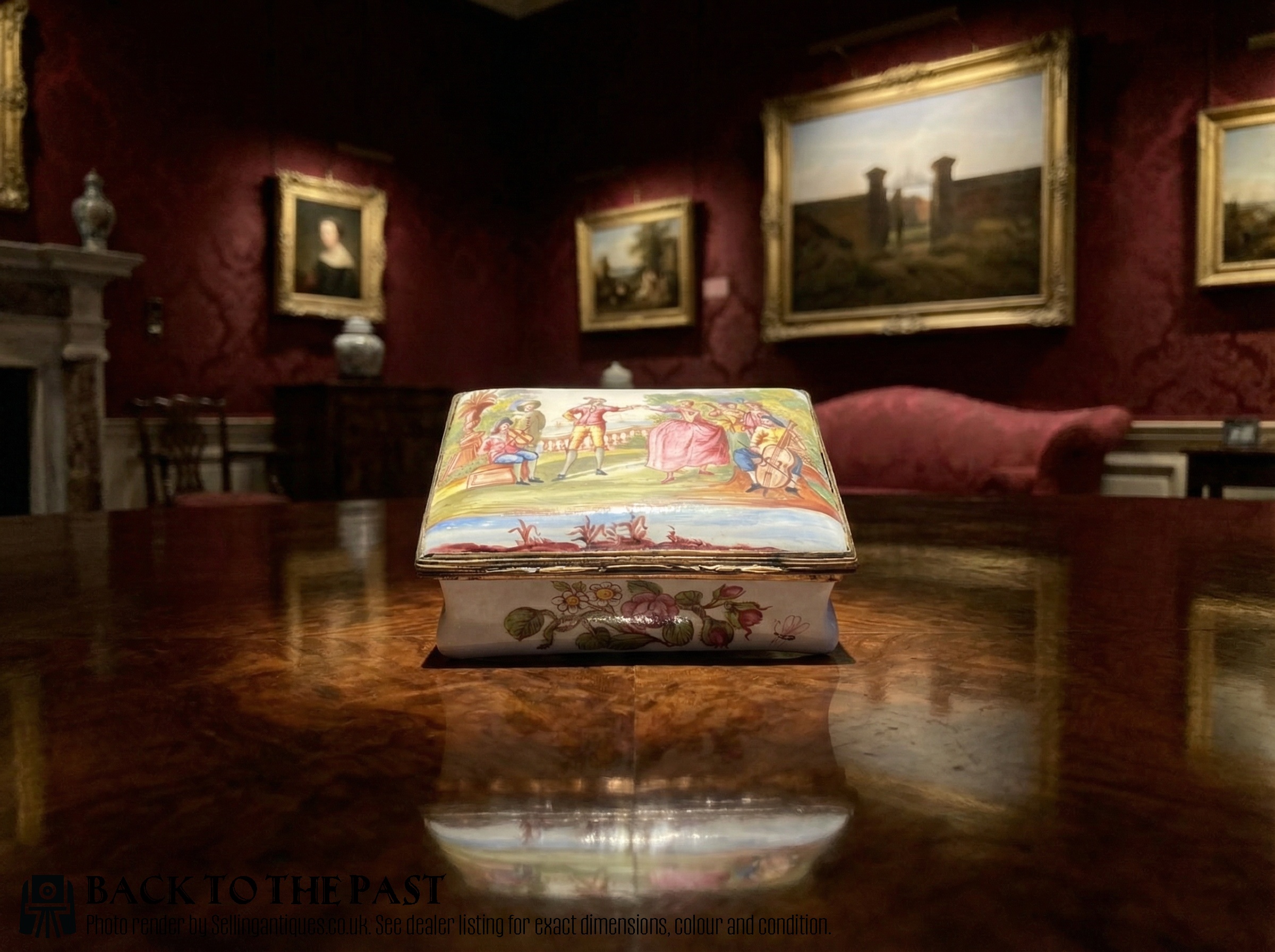
When you search for a gilt metal snuff box, you are looking at small personal containers designed to hold powdered tobacco, though many served equally well for pills or trinkets. The examples found here span the 18th Century and the Victorian era, showing Georgian, Georgian and Rococo, and Victorian stylistic influences.
The version you are most likely to meet on this page is an 18th Century South Staffordshire piece or an item featuring natural stones. Forms range from simple rectangular boxes to oval shapes and detailed leaf designs.
Origins stretch across English regional centres such as Staffordshire, alongside pieces featuring imported minerals. They reflect a period when portable luxury items demonstrated personal taste and social standing.
How they were made
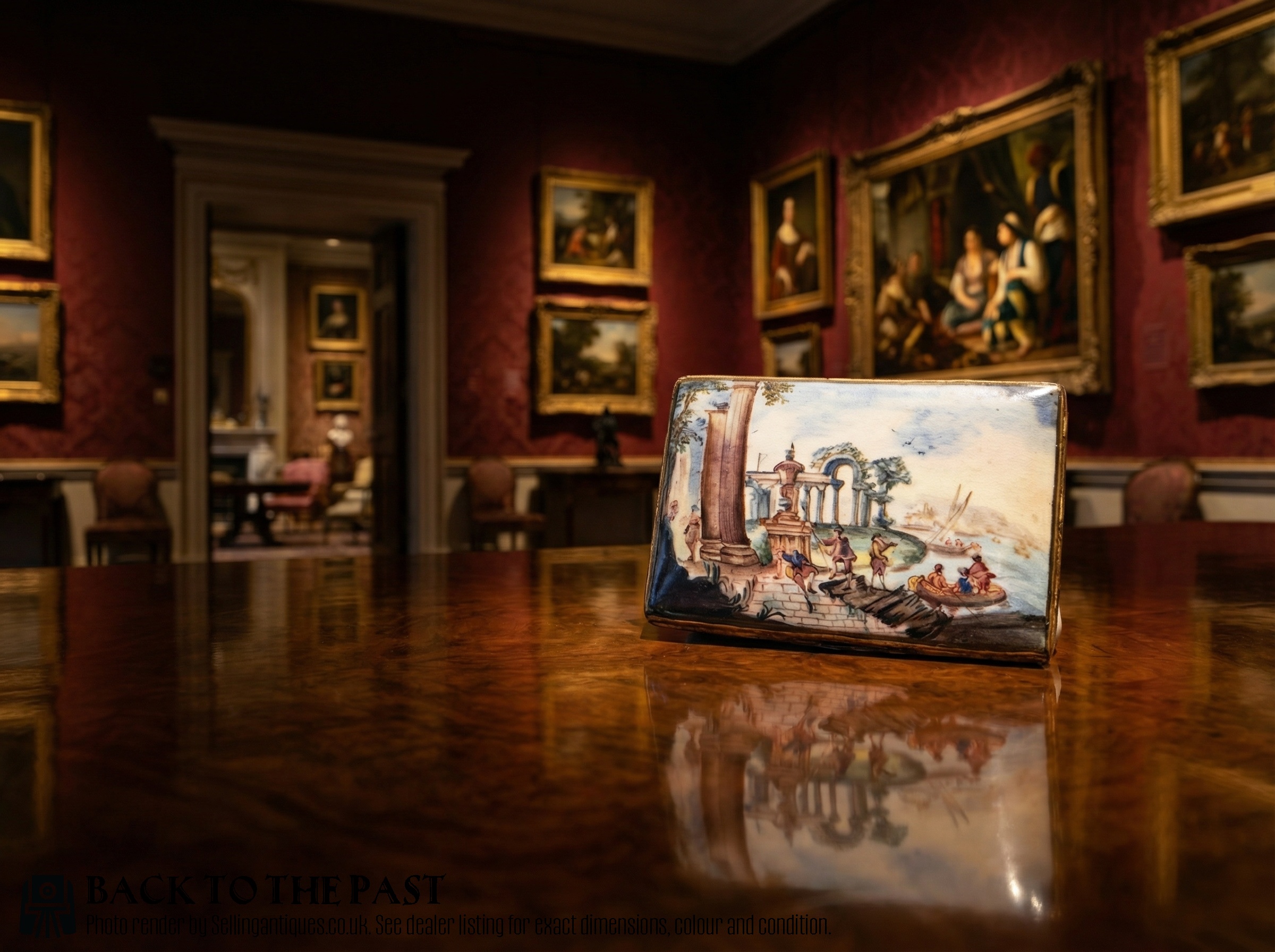
The construction combines a base of copper, tortoiseshell, or gilt metal, finished with a layer of gilding. Many 18th Century pieces utilise enamel panels created in Staffordshire workshops.
Stones such as moss agate and banded agate are cut, polished, and fitted directly into the metal lids and bases. Hand-painted ceramic plaques and miniature scenes like musicians in parkland are integrated into the metal frames.
What varies in quality
Quality in these boxes rests on the crispness of the chased metalwork and the depth of the gilding. Superior pieces show precise alignment between the metal mount and the inset enamel or stone.
The artistic merit of hand-painted plaques or the mineral clarity of moss and banded agate panels dictate the standing of an individual box. Intricate details such as double-agate panels or figurative scenes separate standard containers from finer examples.
The Gilt Metal Snuff Box Glossary
- Gilt metal
- A base metal treated with a thin layer of gold or gold-coloured alloy. This technique provides the appearance of solid gold while keeping the object lightweight and affordable.
- Moss agate
- A form of chalcedony containing green dendritic inclusions that resemble moss or foliage. It was frequently cut flat and polished to display natural patterns.
- Bilston enamel
- Opaque glass fused to a copper substrate in the Staffordshire town of Bilston. These panels often featured hand-painted pastoral scenes.
- Banded agate
- A variety of quartz showing distinct parallel layers of colour. Craftsmen shaped these stones to form the striking lids of Georgian boxes.
- South Staffordshire
- A regional English centre famous for producing enamels and metal trinket boxes during the 18th Century. Items from this area often display distinct copper cores and white enamel interiors.
Frequently Asked Questions
What did people keep in a gilt metal snuff box?
These containers were primarily made to hold dry powdered tobacco, known as snuff, which users would inhale or apply to the inside of the nose.
Over time, owners also utilised them for other small personal items, including headache pills, patches, and small trinkets.
How do I tell an 18th Century box from a Victorian one?
Eighteenth-century examples often feature copper bases covered in white enamel or hand-painted Bilston plaques with Rococo scrollwork.
Victorian pieces frequently incorporate natural stones like moss agate or tortoise shell within heavier cast metal mounts.
Are these boxes fragile?
While the metal frames and agate panels are robust, the enamel panels found on Staffordshire pieces can chip if dropped or struck sharply.
Careful handling and soft storage prevent damage to the delicate painted surfaces and the gilt finish.
Where were most of these boxes made?
Many of the enamel and metal examples originated in English workshops, particularly around Staffordshire during the Georgian period.
Other variations incorporating tortoiseshell and imported stones reflect wider European decorative traditions of the 18th and 19th centuries.