


White Earthenware Dishes
White earthenware dishes bring centuries of hand-painted tin-glaze and transfer-printed scenes to the table, offering a tangible link to historical domestic life.
White Earthenware Dishes
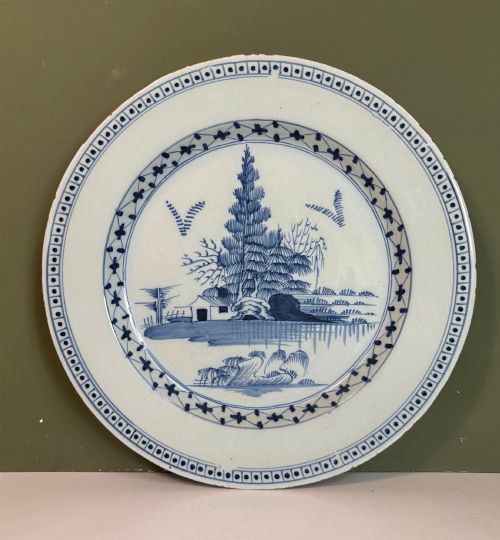
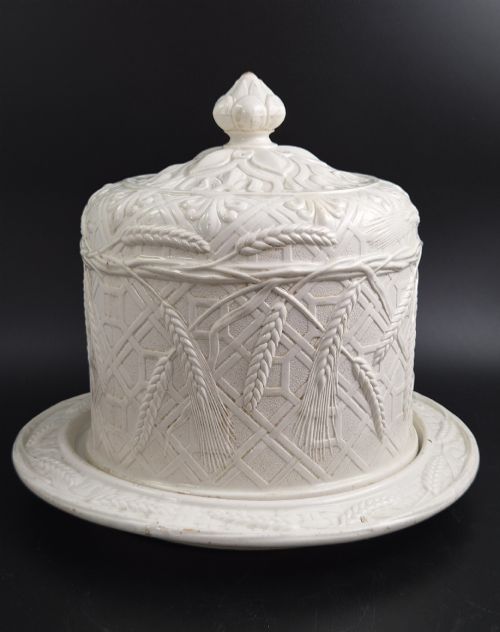
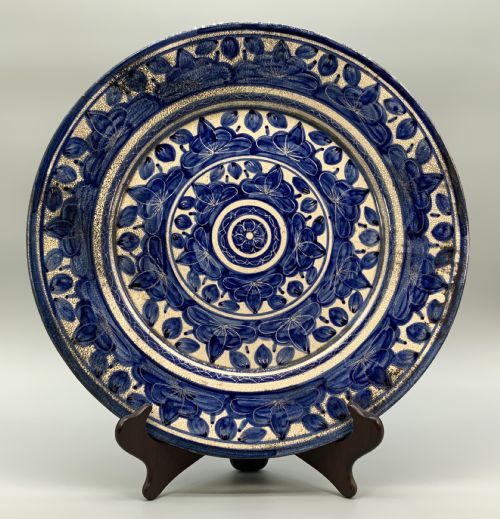
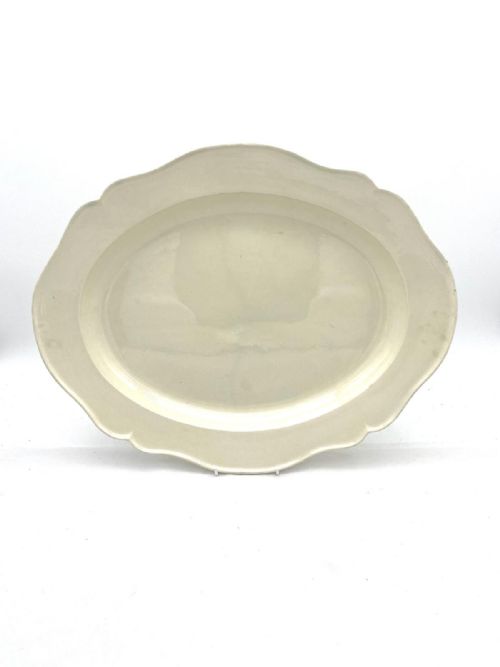
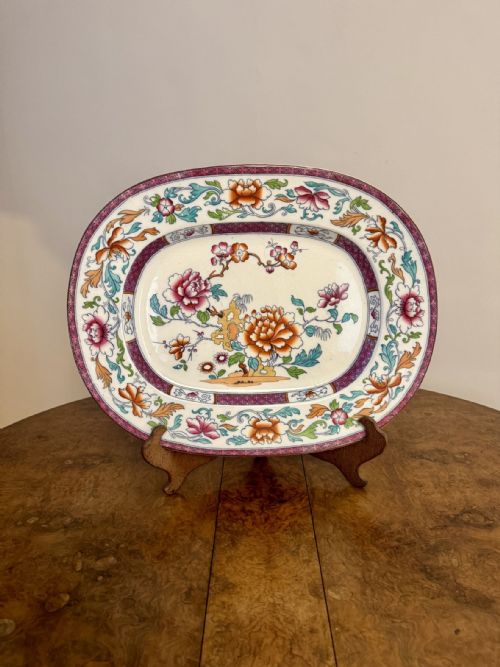
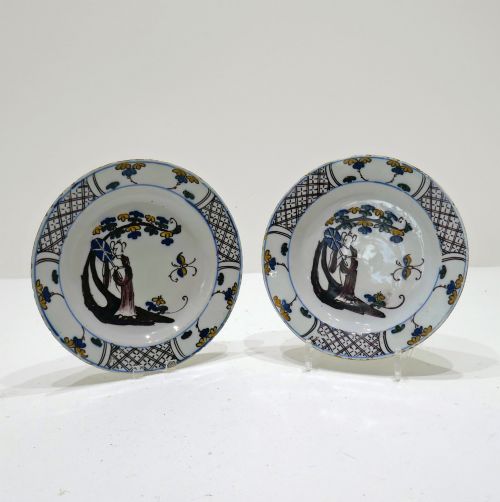
White earthenware dishes encompass a broad category of ceramic tableware, including chargers, platters, tureens, and plates produced across the seventeenth, eighteenth, and nineteenth centuries. When searching for white earthenware dishes, buyers encounter everything from early tin-glazed Delftware chargers to nineteenth-century transfer-printed meat platters and creamware serving vessels.
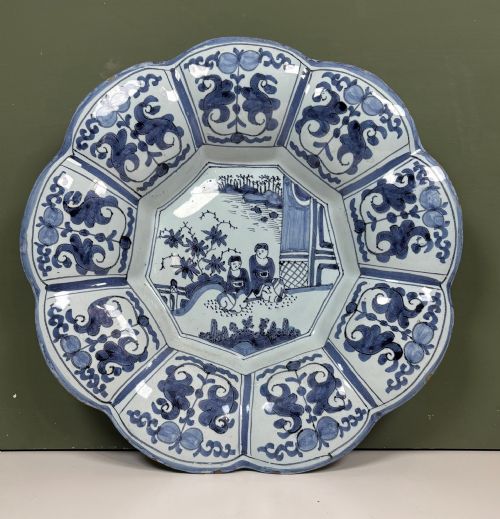
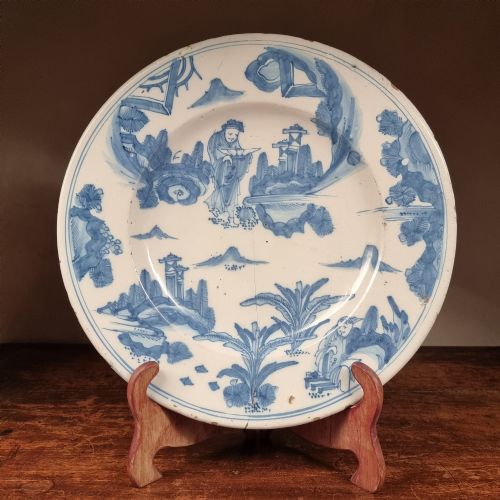
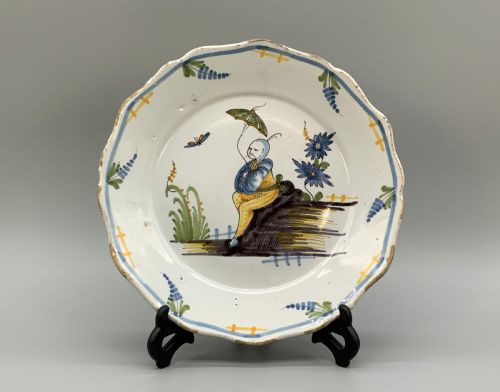
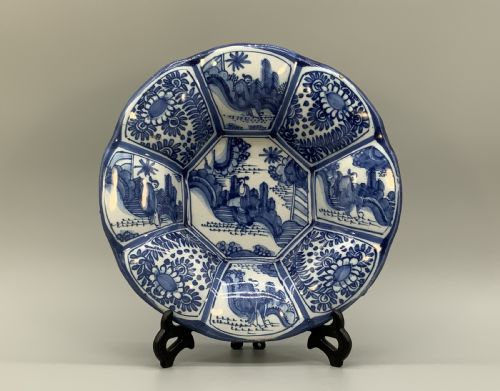
The assortment on this page reflects centuries of ceramic production across England, France, Spain, and the Netherlands. Pieces range from large decorative chargers bearing Dutch Baroque and Chinoiserie motifs to functional Victorian meat dishes and vegetable tureens stamped by notable factories.
How they were made
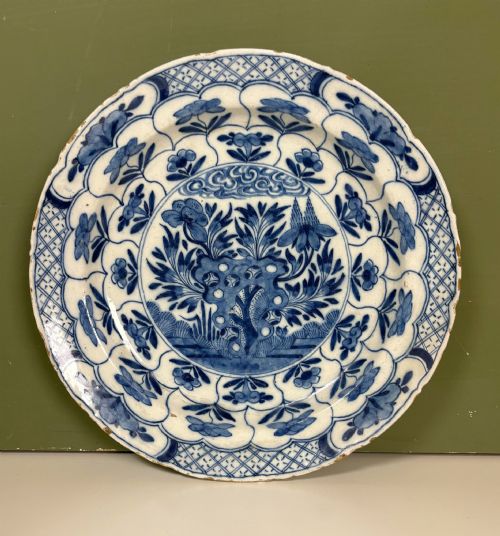
Potters formed these pieces using local earthenware clays, which were then coated in a white glaze, most notably tin-glaze in earlier examples or standard ceramic glaze on later ironstone and creamware. Cobalt pigment and manganese were brushed directly onto the unfired or lightly fired surface to create vibrant blue and polychrome designs.
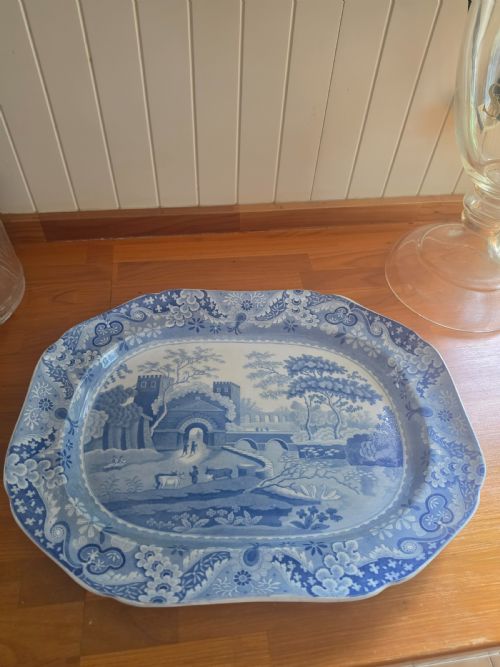
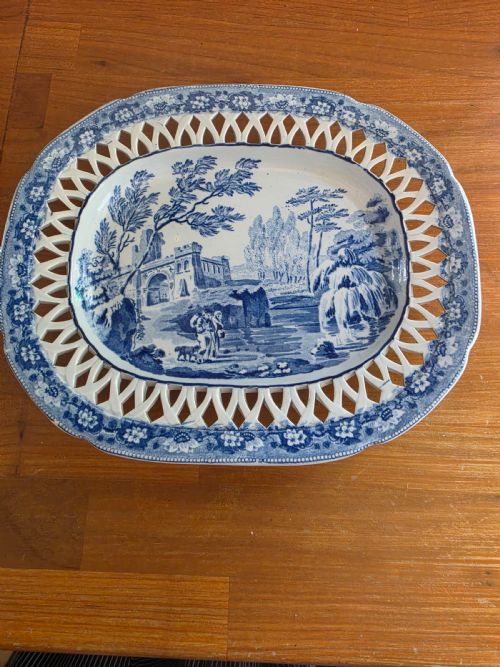
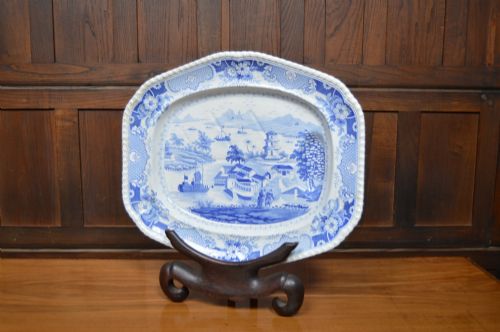
By the nineteenth century, transfer printing largely superseded hand-painting on commercial earthenwares, allowing factories to apply complex pictorial scenes like Gothic castles and rural landscapes directly to plates and platters from engraved copper plates.
Early medical technology meets tableware in the seventeenth-century Dutch barber's bowl, designed with a curved rim to catch shaving suds or blood during routine bleedings.
What varies in quality
Quality in these earthenwares rests heavily on the clarity of the glaze and the precision of the painted or transfer-printed decoration. Early tin-glazed pieces display varying thickness in the enamel and depth of the cobalt pigment, where skilled hand-painting yields crisp lines and rich tonal contrasts.
Later transfer-printed items differ in the sharpness of the pattern transfer and the smoothness of the ceramic body beneath. Superior pieces maintain registration across complex multi-element scenes without blurring or pooling in the glaze.
Spode·Davenport·John Rogers and Son·James Wallace and Co·J and R Clews·J and R Riley
The White Earthenware Dishes Glossary
- Tin-glazed earthenware
- Pottery covered with a glaze made opaque by the addition of tin oxide, providing a white surface for painted decoration. This technique underpins Dutch Delftware and English delft.
- Transferware
- Ceramic pieces decorated by pressing an engraved copper plate onto tissue paper, then transferring the ink impression onto the unfired or biscuit-fired clay. It became the dominant method for mass-producing patterned tableware in the nineteenth century.
- Charger
- A large decorative plate or dish, typically measuring over twelve inches across. These were used primarily for display on sideboards or dining tables rather than for individual dining.
- Creamware
- A refined earthenware developed in Yorkshire during the eighteenth century, featuring a pale yellow or cream-coloured transparent lead glaze. It offered a lighter, more durable alternative to porcelain.
White Earthenware Dishes: Frequently Asked Questions
What is a charger dish?
A charger is an oversized plate intended mainly for ceremonial use, communal serving, or decorative display on a wall or sideboard. They measure significantly larger than standard dining plates.
Historically, these large earthenware surfaces showcased the finest hand-painted tin-glaze or transfer-printed scenes produced by potteries in England and on the continent.
How do I date an old earthenware dish?
Dating relies on examining the ceramic body, glaze composition, and decorative technique. Tin-glazed earthenware and polychrome delft generally point to the seventeenth and eighteenth centuries.
Nineteenth-century pieces frequently feature transfer-printed historical or pastoral scenes on denser bodies like ironstone or creamware, sometimes accompanied by maker marks or registration diamonds.
Can I use antique earthenware daily?
While these pieces were originally created for functional use in domestic kitchens and dining rooms, age and historical glaze composition make careful handling necessary. Many collectors prefer to display them rather than subject them to modern dishwashers and cutlery.
Earthenware is more porous than porcelain, meaning old glaze can stain or craze if soaked in water for extended periods.
What is the difference between delft and ironstone?
Delft refers to tin-glazed earthenware produced in the Netherlands and England, typically characterised by a softer porous body and a white tin enamel painted with cobalt blue. Ironstone is a much denser, harder white earthenware patented in the nineteenth century.
Ironstone was engineered to withstand heavy everyday use, resulting in heavier, more durable vessels compared to earlier delft chargers.