


Antique Blue Earthenware
Antique blue earthenware brings together centuries of tin-glazed chargers, Staffordshire jugs and Delft vessels painted in cobalt pigment.
Antique Blue Earthenware
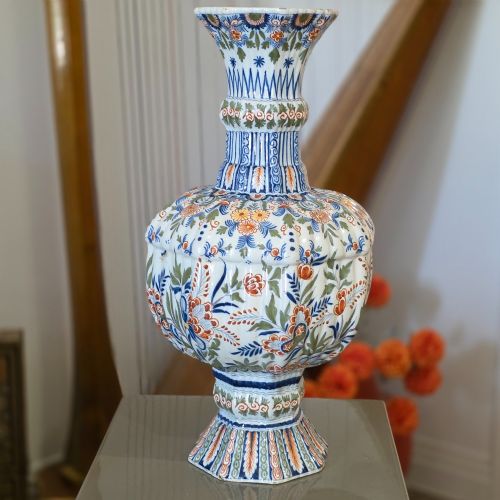
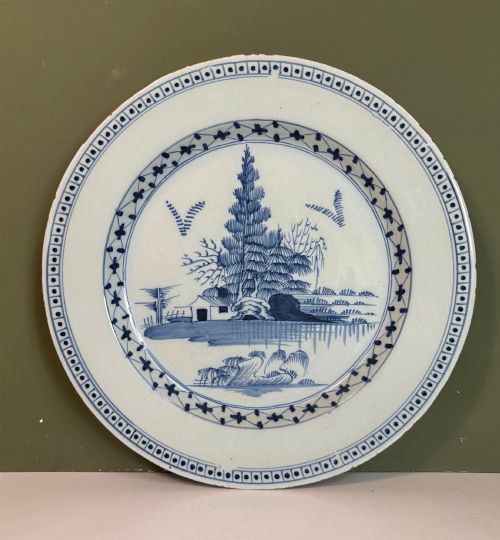
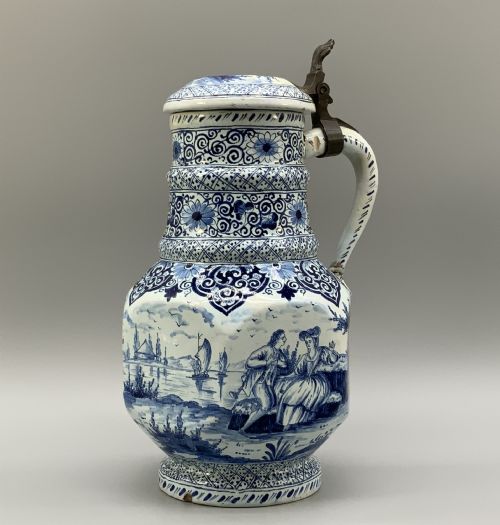
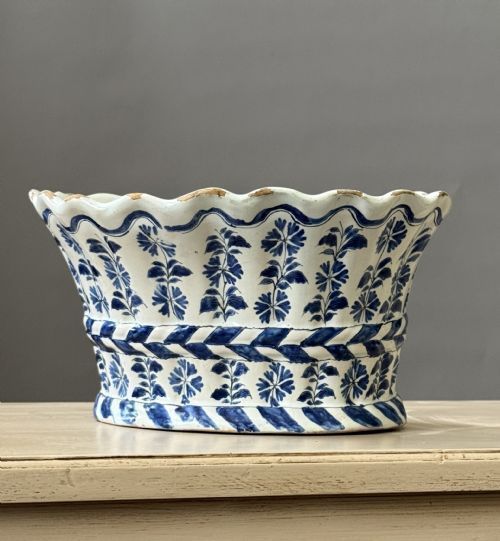
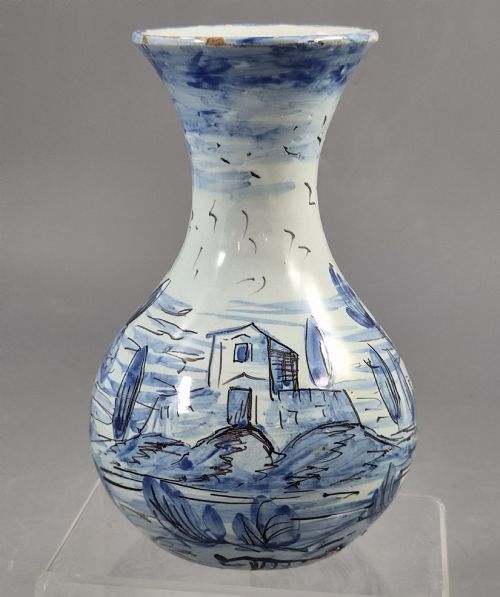
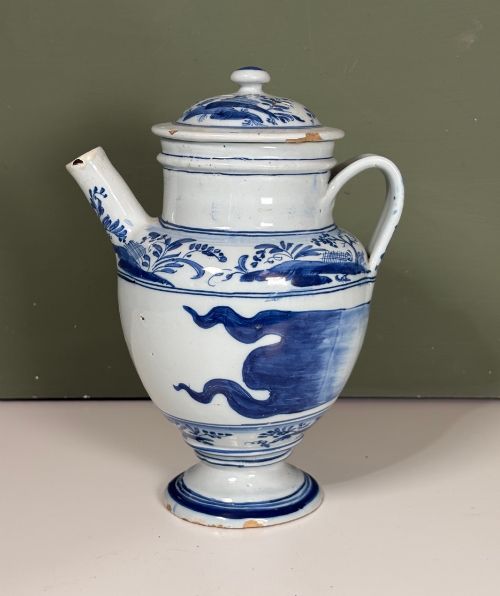
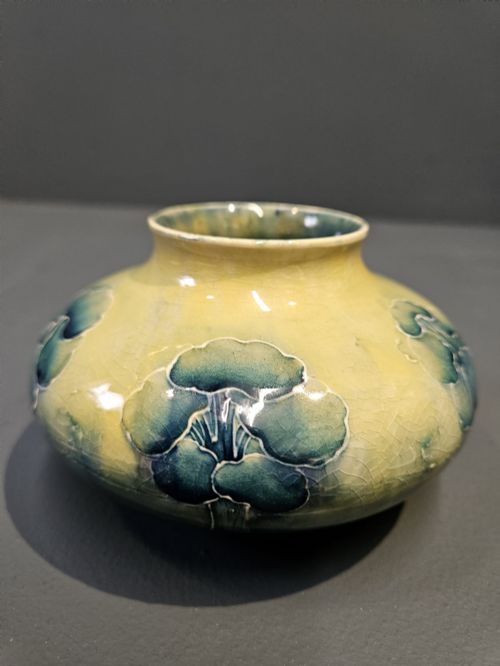
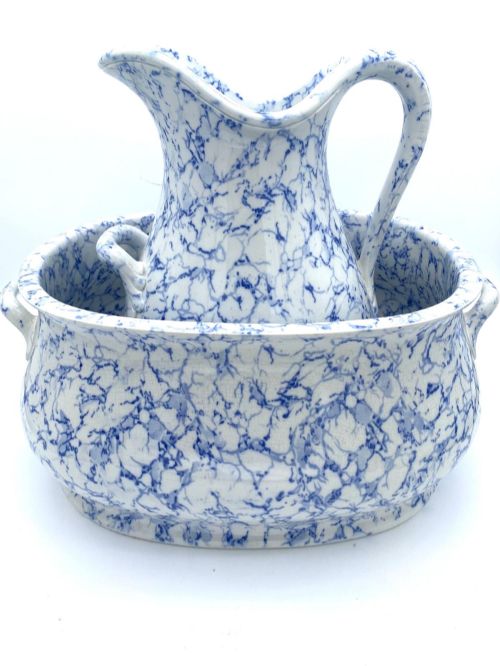
Antique blue earthenware encompasses a wide range of tin-glazed, creamware and pottery vessels originating from English, Dutch and continental European kilns across the seventeenth, eighteenth and nineteenth centuries. When searching for antique blue earthenware, buyers encounter everything from large charger plates and apothecary jars to footbath jugs and decorative vases finished in striking cobalt blue patterns.
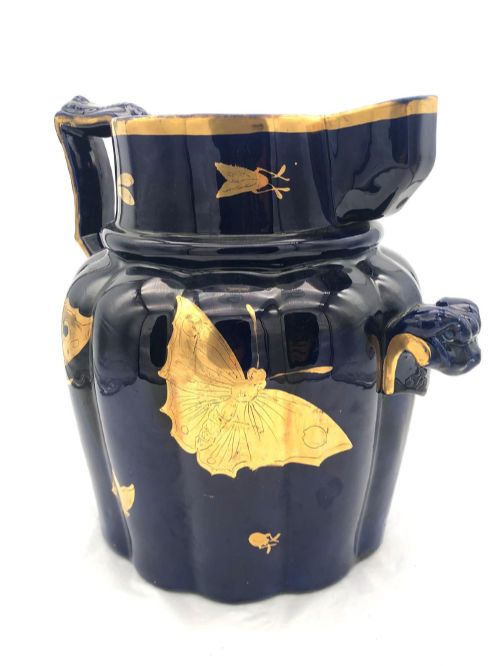
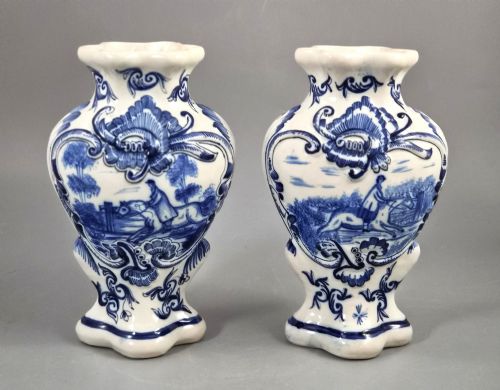
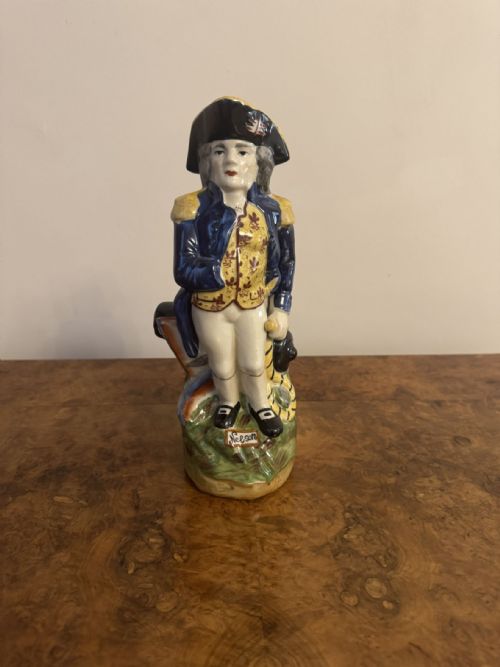
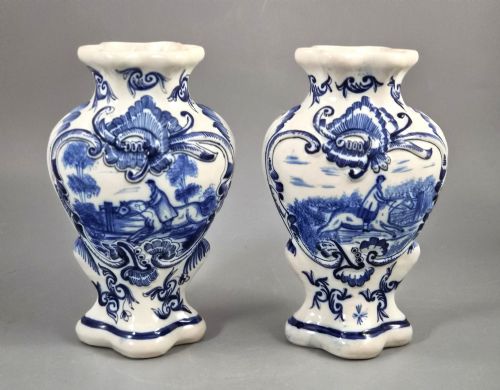
The pieces appearing on this page lean heavily towards eighteenth-century Dutch Delftware and nineteenth-century Staffordshire production. Domestic tableware forms such as serving platters and dining plates sit alongside more decorative objects including pottery figures, bough pots and puzzle jugs.
How they were made
Potters shaped the clay body on a wheel or pressed it into moulds before applying a tin glaze or ceramic slip to create an opaque white surface. Artisans then painted cobalt pigment directly onto the absorbent unfired glaze, capturing deep blue tones during the high-temperature kiln firing.
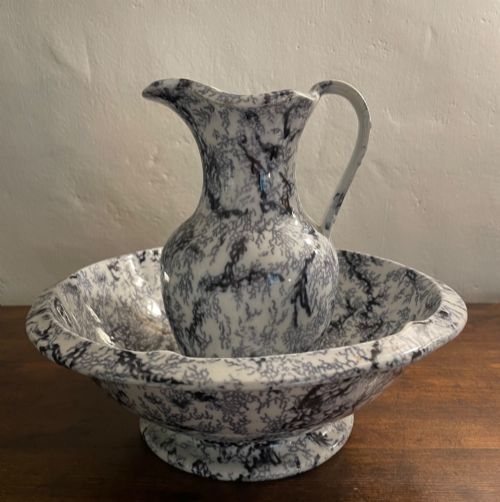
Transfer printing emerged later in the period, allowing factories to apply intricate multi-toned blue patterns onto earthenware bodies with mechanical precision. Finished vessels received a protective clear glaze before a final kiln run to seal the pigment and surface.
What varies in quality
Quality rests heavily upon the crispness of the cobalt painting and the stability of the glaze during firing. Early tin-glazed earthenware often shows subtle pooling and soft brushwork, whereas later transfer-printed wares display precise lines and uniform coverage across complex forms.
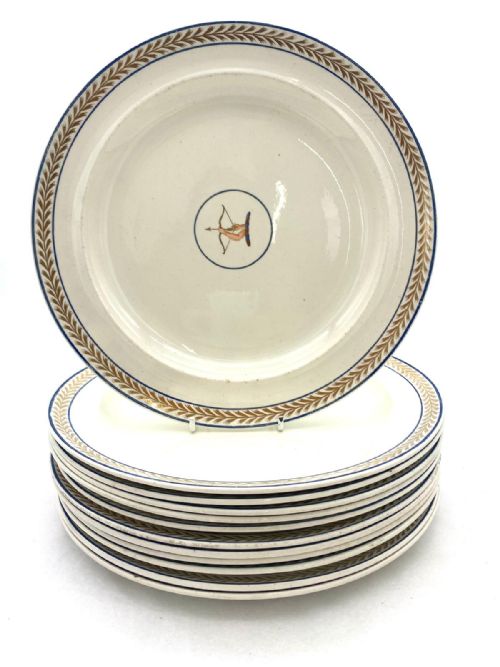
The crispness of moulded detail in Staffordshire figures and the symmetry of thrown vessels distinguish standard utility items from superior cabinet pieces. Surviving lids, original matching pairs and well-preserved armorial crests elevate the desirability of individual chargers and jugs.
Cantagalli·Moorcroft·Fourmaintraux Courquin·Minton·Wedgwood·Spode·Davenport·George Jones·Copeland
The Antique Blue Earthenware Glossary
- Earthenware
- Porous pottery fired at lower temperatures than stoneware or porcelain, requiring a glaze to achieve waterproof qualities.
- Tin-Glaze
- An opaque white ceramic glaze containing tin oxide that provides a smooth canvas for blue cobalt painting.
- Cobalt Pigment
- A metallic oxide used under the glaze to produce deep blue decoration that withstands high kiln temperatures without fading.
- Charger
- A large decorative or ceremonial plate designed to be displayed on a wall or dresser rather than used at the dining table.
- Flow Blue
- A nineteenth-century transfer printing technique where excess chloride vapour caused the cobalt blue pigment to blur slightly into the white glaze.
Antique Blue Earthenware: Frequently Asked Questions
What is antique blue earthenware?
Antique blue earthenware comprises ceramic vessels and plates finished with cobalt blue decoration over an earthenware body.
These items range from early tin-glazed Dutch chargers to Victorian transfer-printed Staffordshire jugs.
How do I date an old jug?
Dating relies on identifying the potting technique, glaze composition and stylistic markers associated with specific periods like the eighteenth or nineteenth century.
Factory marks, when present, help narrow the production era alongside the specific shade of cobalt pigment used.
Were chargers used for dining?
Large charger plates were primarily intended for display on sideboards or walls during earlier centuries rather than daily dining.
Their substantial size and painted pictorial scenes made them prominent decorative objects in domestic interiors.
How do I care for tin glaze?
Tin-glazed earthenware requires gentle handling because the soft ceramic body and glaze can chip or craze upon heavy impact.
Display these pieces away from direct sunlight and clean them only with a dry or lightly dampened soft cloth.