
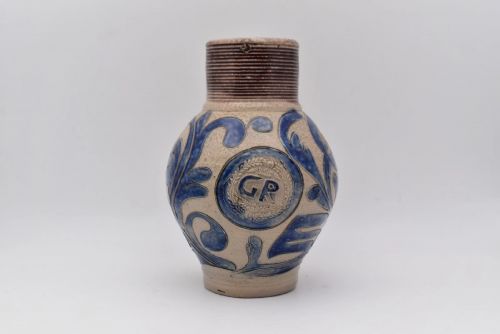


Cobalt Glaze Stoneware
Cobalt glaze stoneware vessels combine robust ceramic bodies with striking blue decoration, offering both historical depth and durable utility for the modern home.
Cobalt Glaze Stoneware
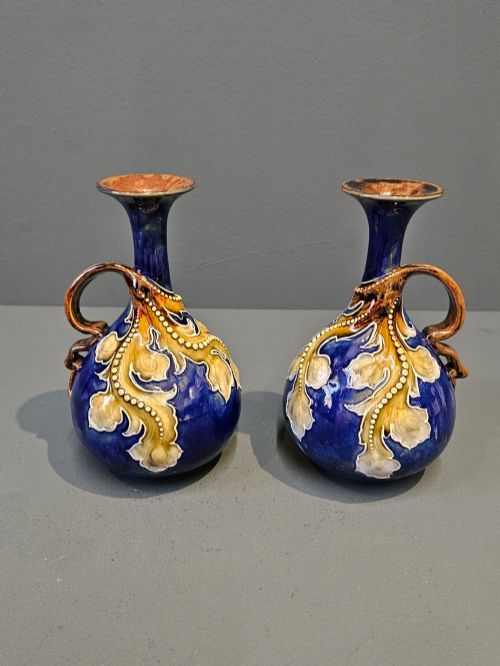
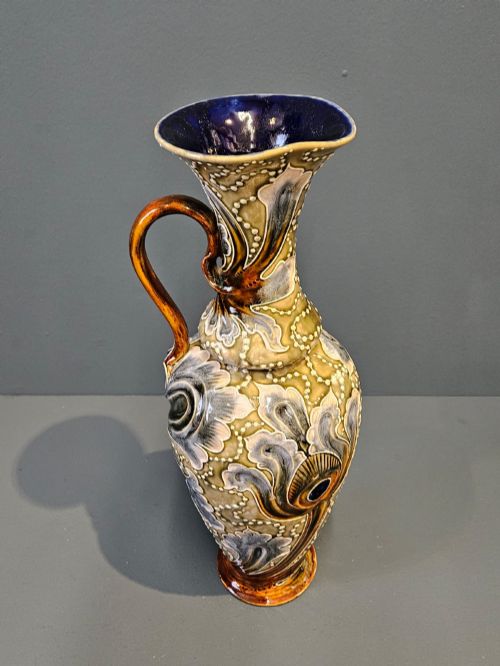
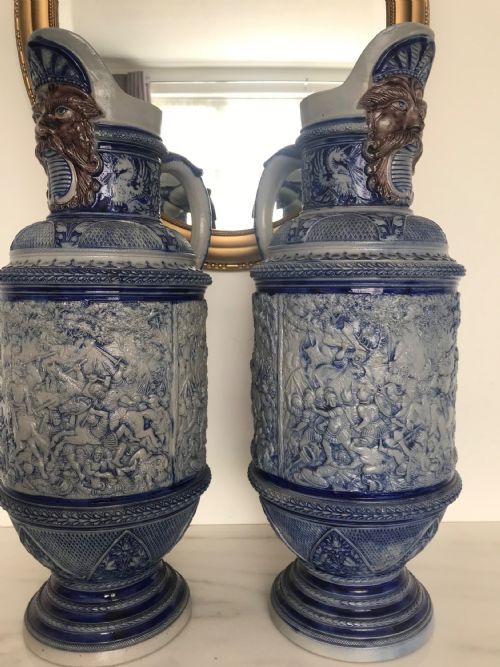
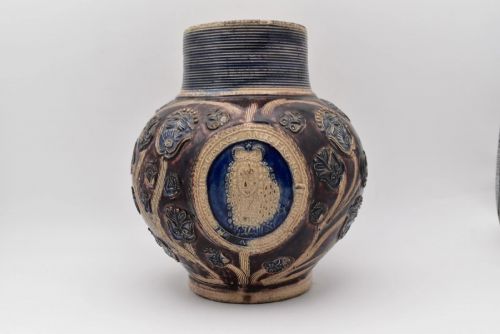
Cobalt glaze stoneware encompasses a sturdy range of utilitarian and decorative vessels, with Victorian Doulton Lambeth pieces and earlier German Westerwald jugs forming the core of what you encounter here. These items span from the seventeenth century through the Victorian era, displaying forms such as vases, tankards, pitchers, and jardinières.
The selection leans heavily towards English and German production, notably salt-glazed wares featuring rich blue pigments against grey or earthy bodies. Buyers gravitate towards these pieces for their robust materiality and the distinctive visual punch of cobalt oxide decoration.
How they were made
Potters shaped dense ceramic and stoneware bodies, applying metallic cobalt oxide to achieve the signature blue coloration before firing at high temperatures. Many traditional German pieces utilised salt-glazing techniques, where common salt thrown into the kiln vaporised to form a durable, pebbled sheen over the surface.
Makers often embellished the damp clay with incised patterns, moulded reliefs, or enamel highlights before the final vitrification process locked the decorations permanently into the matrix.
What varies in quality
Quality rests primarily in the crispness of the moulded or incised detail and the depth of the cobalt blue application. Pieces decorated by named artists or featuring intricate historical scenes and royal ciphers display a superior artistic standard compared to plain utility items.
The integrity of the salt glaze and the balance of the vessel proportions further distinguish standard production from exceptional collector pieces.
Doulton Lambeth·Royal Doulton·Simon Peter Gerz·John Ridgway
The Cobalt Glaze Stoneware Glossary
- Salt-glaze
- A ceramic finish created by throwing salt into the hot kiln, producing a pitted texture resembling orange peel. This impervious coating protected the porous clay beneath.
- Westerwald
- A German region renowned for producing salt-glazed stoneware vessels featuring cobalt blue ornamentation. These items often date from the seventeenth and eighteenth centuries.
- Slaterware
- A Victorian ceramic technique involving textured body treatments that mimic lace or fabric. Doulton famously applied this method alongside cobalt colouring.
- Jardinière
- A large decorative ceramic pot designed to hold potted plants. They frequently feature elaborate floral or geometric incised patterns.
Cobalt Glaze Stoneware: Frequently Asked Questions
How do I clean my stoneware?
Wash salt-glazed stoneware gently using warm water and a soft cloth to protect the historic glaze surfaces. Avoid harsh detergents or abrasive scrubbers that might damage the fired body.
Dry the vessel thoroughly after washing to prevent any residual moisture from settling into microscopic fissures in the ceramic.
Are these jugs waterproof?
Many historical stoneware jugs remain completely vitrified and hold water effectively due to the high firing temperatures used in their creation. However, porous early specimens or pieces with hairline fractures are best used solely for display.
Check the interior of the vessel carefully before filling it with water to protect antique surfaces from accidental damage.
How do I date Westerwald pottery?
Westerwald pieces are often dated by examining the specific royal ciphers, such as GR for George Rex, or the style of the impressed floral and battle motifs. Early German pieces from the seventeenth and eighteenth centuries display distinct grey tones and hand-applied cobalt washes.
Consulting comparative examples from known archaeological finds helps narrow down the production decade for unmarked German vessels.
Can I display stoneware outdoors?
Stoneware is frost-resistant due to its dense, non-porous composition, but historic pieces should be kept indoors to protect them from weathering. Sudden temperature drops can exploit old manufacturing flaws and cause historic salt glaze to flake.
Keep your decorative jardinères and vases inside where ambient conditions remain stable throughout the year.