
Victorian Blue Pottery
Victorian blue pottery comprises earthenware, stoneware, and porcelain vessels and figures shaped across the nineteenth century in shades of blue.
Victorian Blue Pottery
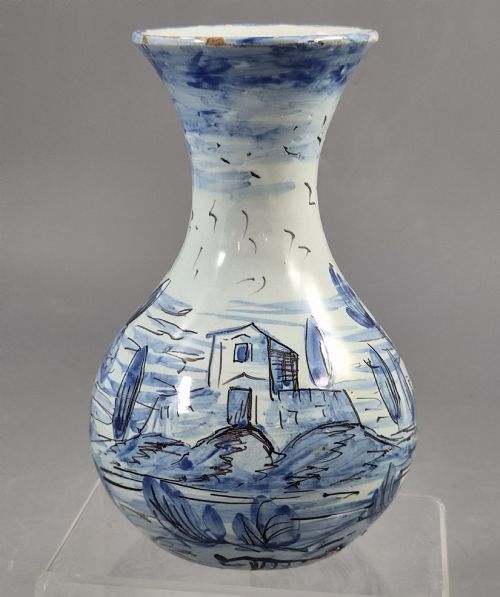
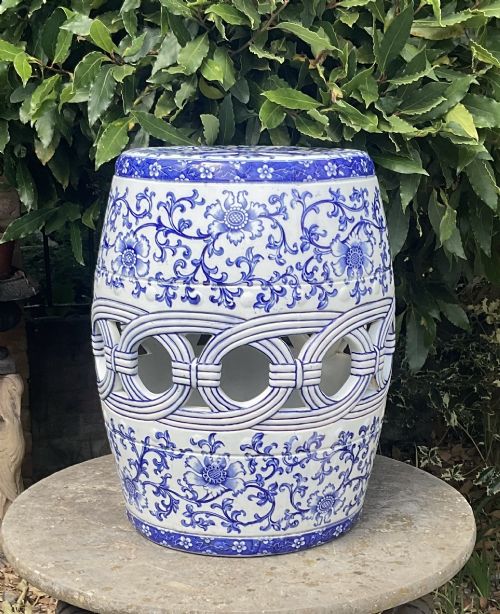
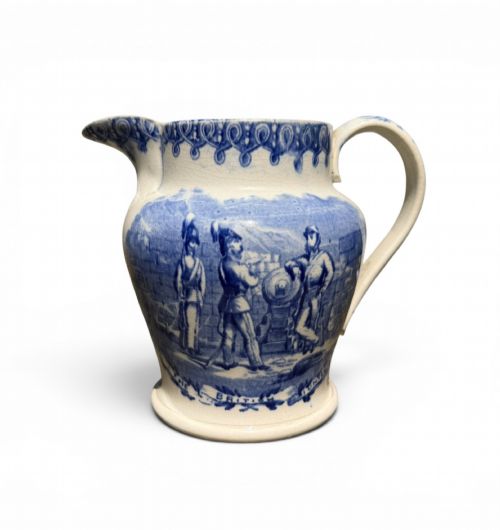
Victorian blue pottery encompasses a wide array of domestic and decorative objects produced during the nineteenth century, ranging from utilitarian jugs and basins to ornamental figures and garden seats. These pieces frequently feature transfer-printed scenery, floral motifs, or rich cobalt glazes applied to earthenware and stoneware bodies.
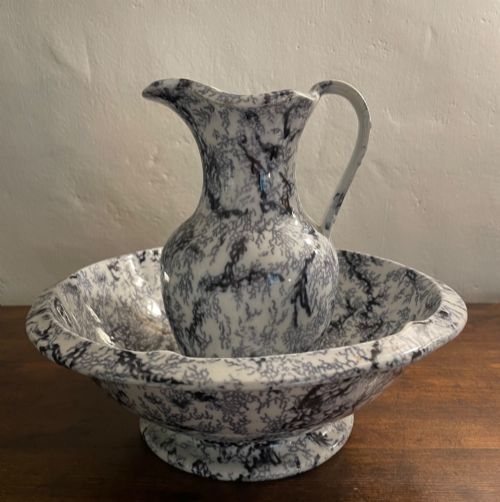
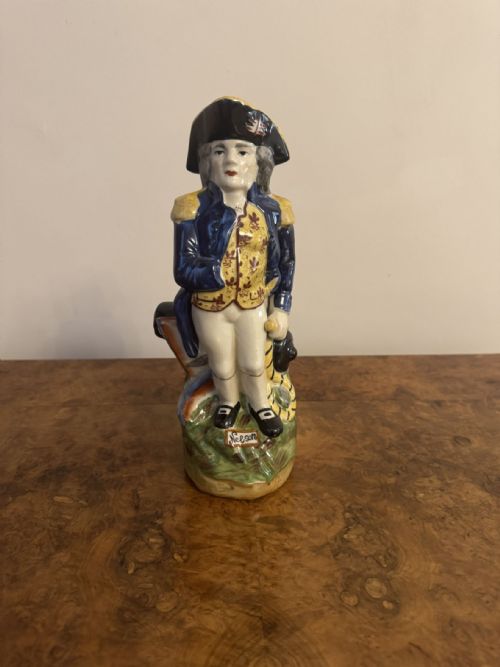
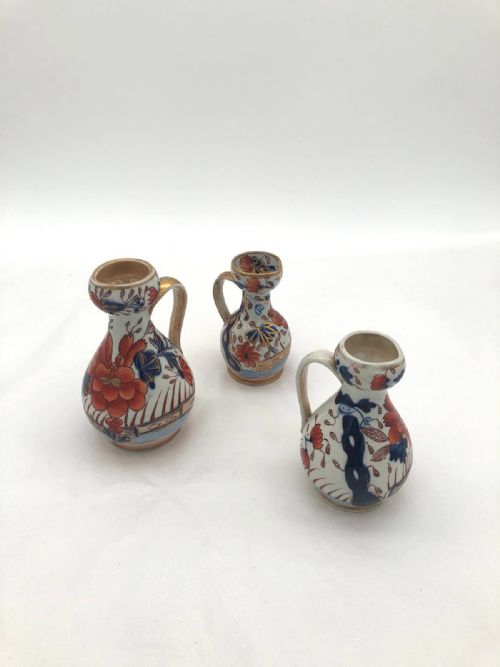
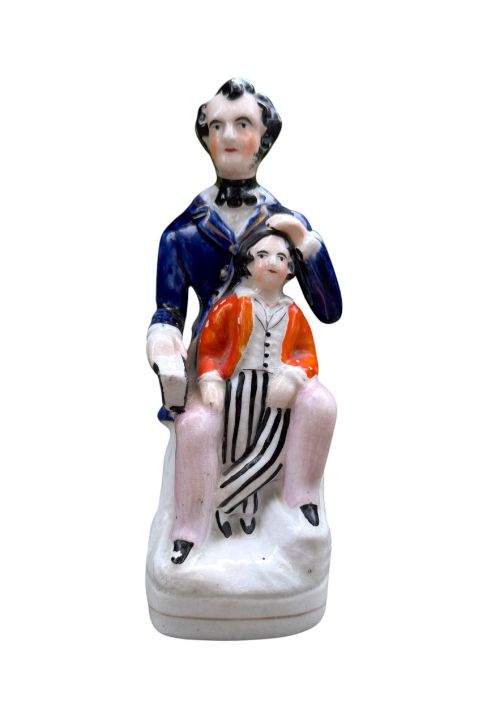
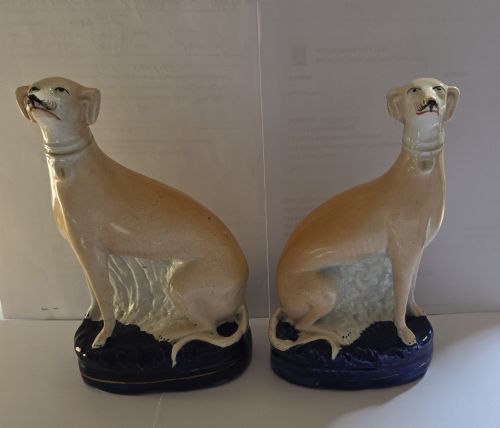
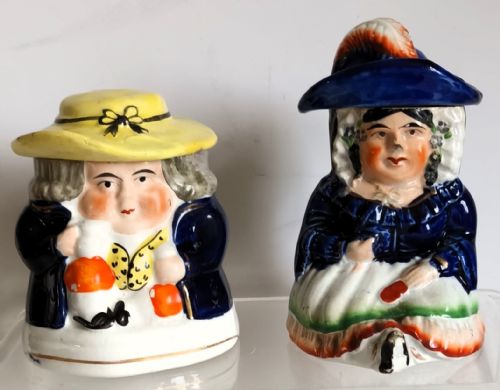
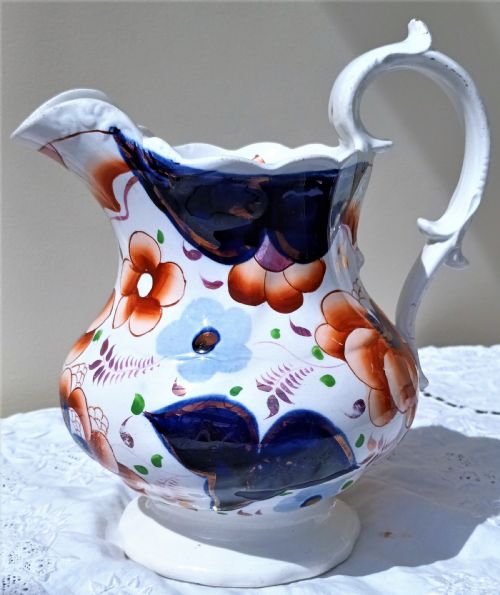
Jugs, pitchers, and decorative bowls form the most common domestic items found within this group, often displaying regional patterns such as Gaudy Welsh designs or Staffordshire transferware. Figural groups, Toby jugs, and portrait figures also appear regularly, depicting notable public figures, theatrical characters, and animals.
The objects originate primarily from English potteries, particularly Staffordshire works, alongside contributions from Welsh kilns and continental European factories. Buyers searching for Victorian blue pottery encounter pieces spanning the early nineteenth century through to the Edwardian transition, reflecting diverse revival styles including French Rococo and Italian Renaissance.
How they were made
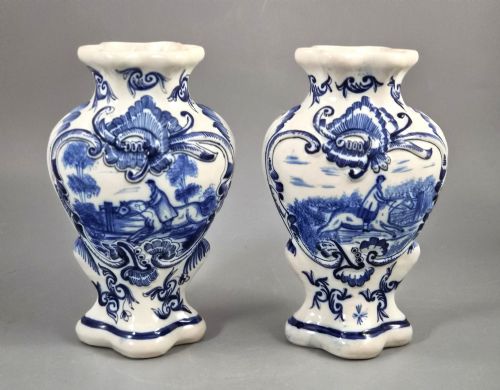
Potters utilised earthenware, stoneware, and porcelain as the primary ceramic bodies, shaping vessels on the wheel or casting figures in moulds before applying glazes and enamels. Transfer printing allowed intricate blue scenes to be transferred mechanically onto the ceramic surface from engraved copper plates.
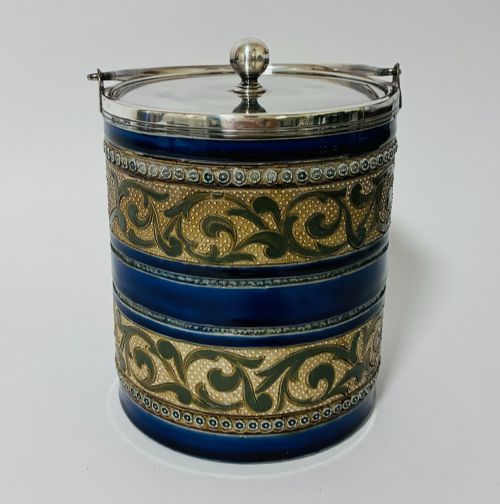
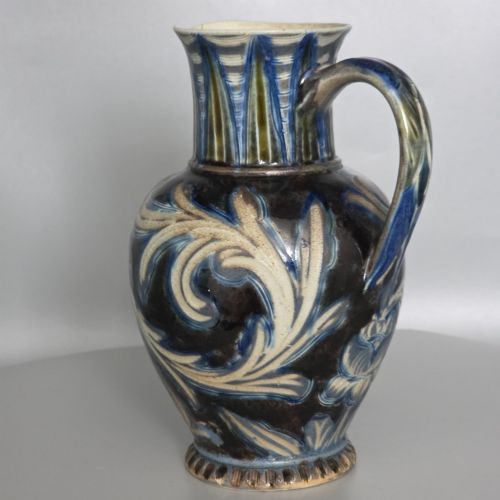
Specialised techniques such as flow blue caused the cobalt pigment to blur slightly into the surrounding glaze during firing, producing a soft, misty aesthetic. Incised decoration and silver plating were additionally applied to stoneware pieces to enhance textural depth and contrast.
Listings feature earthenware, stoneware, and ceramic bodies decorated with blue glazes and transfer prints across the nineteenth century.
What varies in quality
Quality in Victorian blue pottery rests upon the clarity of the transfer print, the depth and consistency of the cobalt glaze, and the crispness of moulded details in figures and vessels. Superior examples maintain sharp, well-defined patterns without smudging, whereas lesser pieces suffer from blurred prints or uneven glaze pooling.
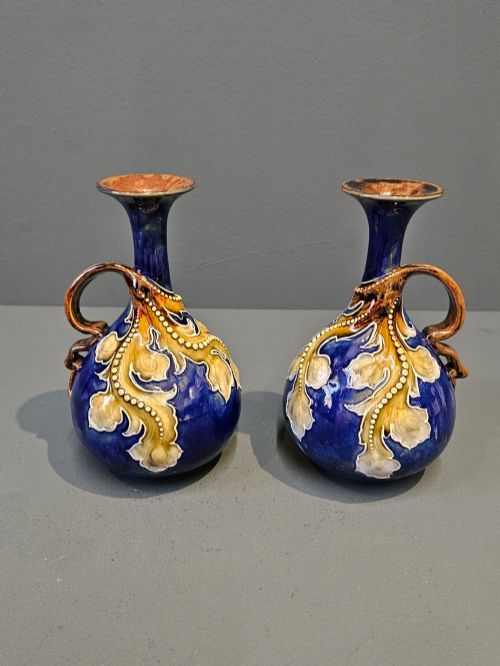
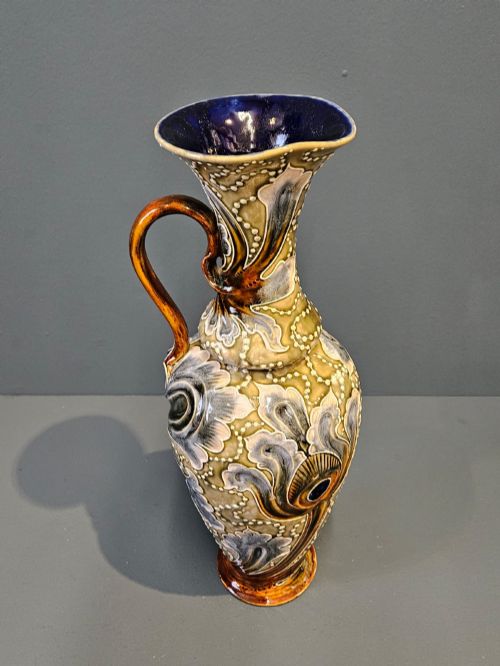
The artistic ambition of the form also dictates standing, distinguishing standard utilitarian tableware from individually incised art pottery pieces executed by named decorators and prominent factories.
Doulton Lambeth·Cantagalli·Fourmaintraux Courquin·James Dudson·Mintons·Doulton Burslem
The Victorian Blue Pottery Glossary
- Earthenware
- Porous ceramic fired at lower temperatures, commonly used for domestic jugs, basins, and Staffordshire figures.
- Transferware
- Pottery decorated by applying a printed design from an engraved copper plate onto the ceramic surface using a tissue paper transfer.
- Flow blue
- A nineteenth-century transfer printing technique where lime or ammonia chloride was introduced to the kiln to blur the cobalt pigment.
- Toby jug
- A pottery jug shaped as a seated person, typically depicted as a robust eighteenth or nineteenth-century figure holding a mug and jug.
- Majolica
- Low-fired earthenware coated with an opaque tin-lead glaze, brightly coloured with metallic oxides.
- Stoneware
- Dense, vitrified ceramic fired at high temperatures, rendering the material impermeable to liquids without requiring a glaze.
Victorian Blue Pottery: Frequently Asked Questions
What is flow blue pottery?
Flow blue is a nineteenth-century ceramic style where the cobalt blue transfer print deliberately blurred into the surrounding white glaze during the kiln firing process. This chemical reaction created a soft, hazy appearance across the pattern.
Potters achieved this effect by introducing volatile substances into the kiln atmosphere. The resulting smokey aesthetic became especially popular for dining services and large jugs.
How are Staffordshire figures identified?
Staffordshire figures are earthenware portrait pieces, animals, and theatrical groups modelled and painted by various nineteenth-century kilns. They often depict notable contemporary personalities, literary characters, or domestic animals.
Most examples remain unmarked, relying on modelling style, glaze characteristics, and subject matter for attribution. They served as decorative mantel ornaments in Victorian homes.
What is Gaudy Welsh pottery?
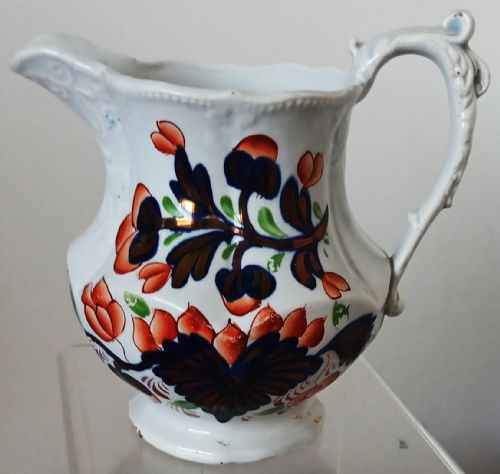
Gaudy Welsh refers to a style of utilitarian earthenware decorated with hand-painted cobalt blue, copper lustre, and vibrant enamel colours. It was produced primarily for domestic use in Welsh mining communities and surrounding regions.
Common patterns include floral motifs such as the grape, basket of flowers, and pagoda designs. The contrasting metallic lustre gives these pieces their distinctive iridescent quality.
Were these pieces used daily?
Many Victorian blue pottery items served practical functions in nineteenth-century households, including cheese dishes, vegetable tureens, basins, and water jugs. Kitchen and dining wares saw regular handling during meals and food preparation.
Decorative figurines and vases were conversely reserved for display on mantelpieces and parlour tables. The durability of ironstone and stoneware ensured utilitarian vessels survived heavy domestic routines.