

Blue Transferware Pottery
Blue transferware pottery brings nineteen-century scenes to your home through detailed cobalt prints on earthenware.
Blue Transferware Pottery
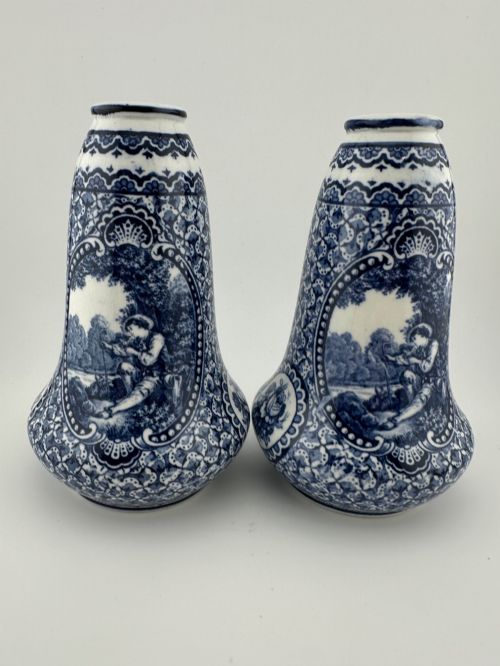
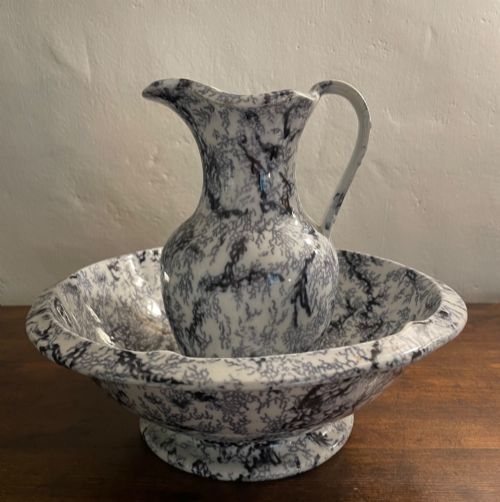
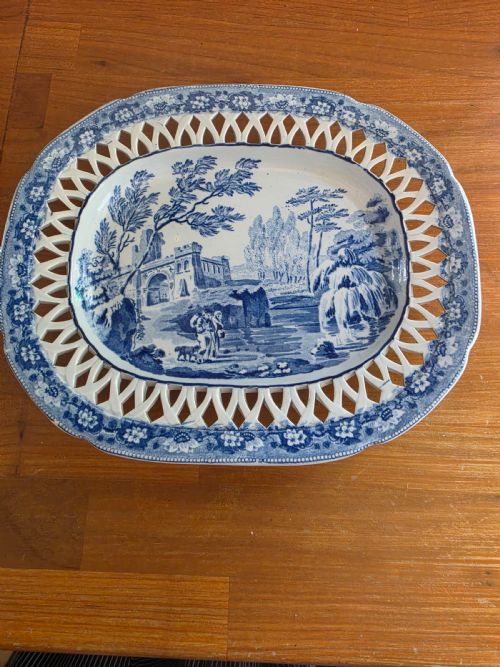
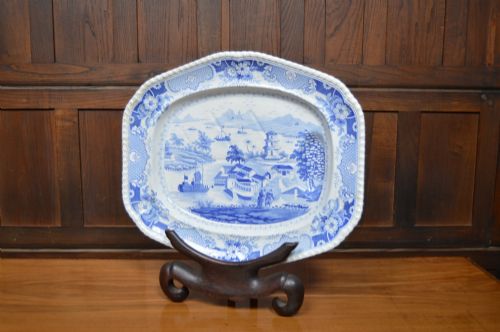
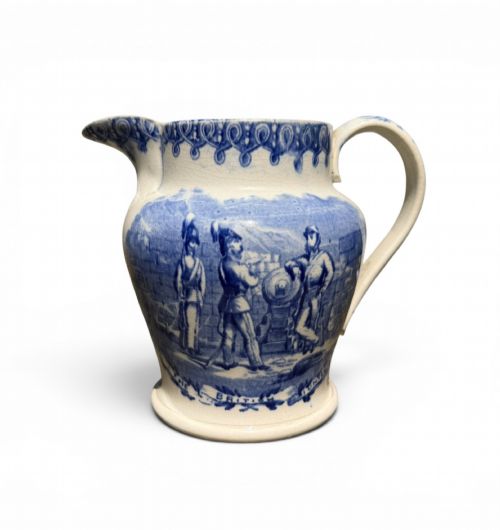
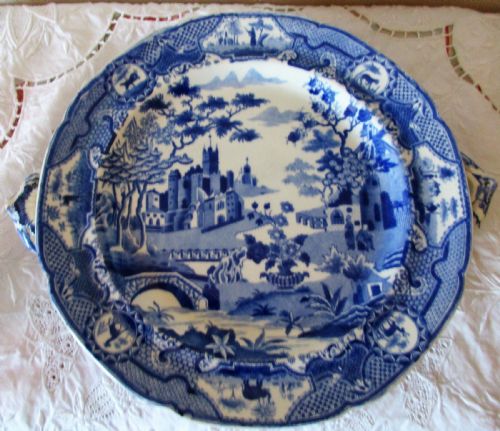
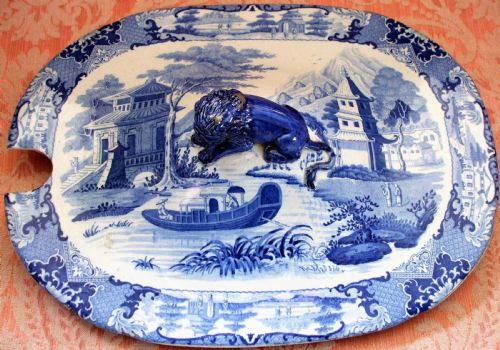
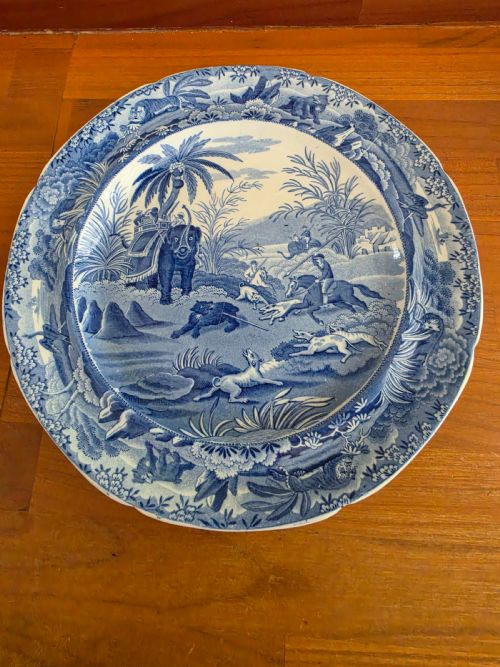
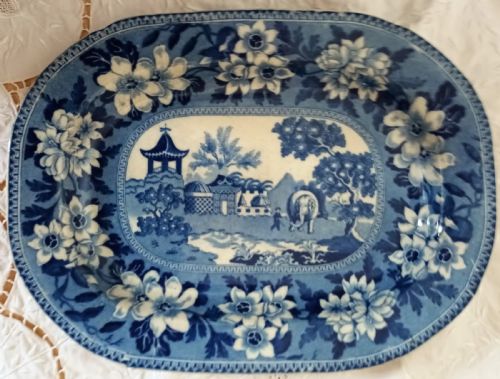
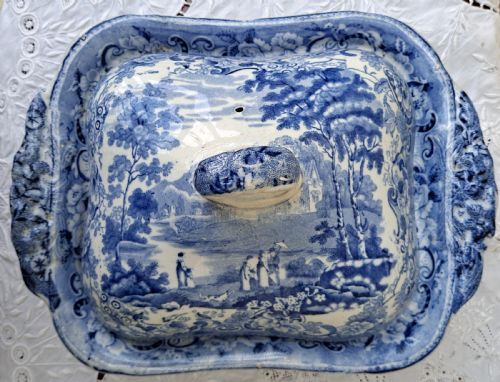
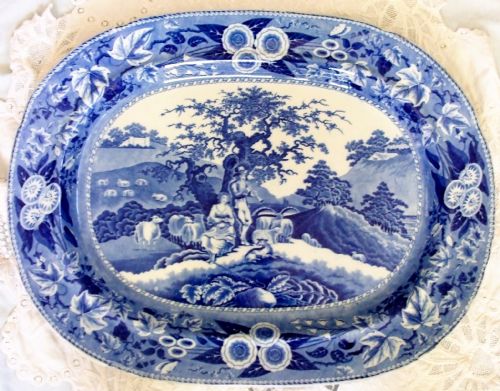
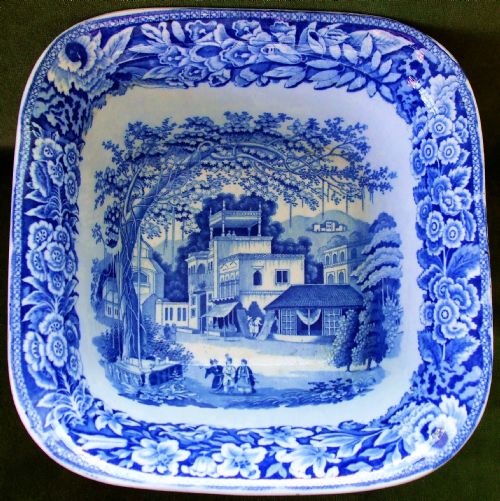
Blue transferware pottery encompasses serving platters, tureens, jugs, and decorative plates produced largely across the nineteenth century during the Georgian and Victorian periods. Collectors encounter architectural views, pastoral landscapes, and historic scenes printed in cobalt pigment upon ceramic bodies.
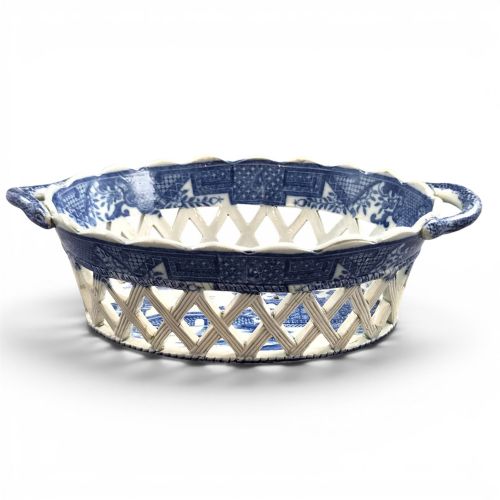
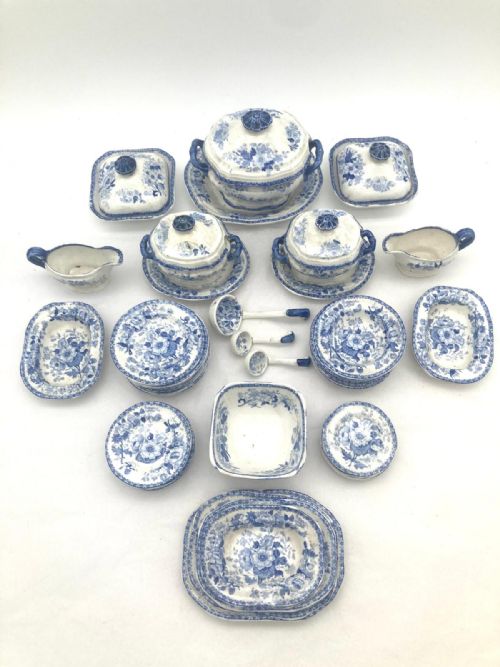
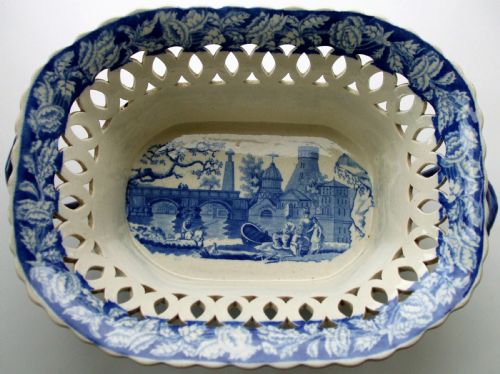
The objects on this page range from large footbaths and chestnut baskets to children's services and meat plates. Makers utilised varied styles including Chinoiserie and Gothic motifs alongside romantic British topography.
Materials and Techniques
Potters transferred engraved copperplate designs onto tissue paper using cobalt pigment, then pressed the paper onto earthenware, pearlware, or ironstone bodies before glazing and firing. This mechanical transfer method allowed factories to produce intricate patterns consistently across large services.
The pieces combine ceramic paste and transparent glaze with cobalt blue oxide, sometimes accented with gilt or silver plate details. Variations in the kiln firing process created depth within the blue tones, ranging from soft grey-blues to deep flow blue.
Listings feature earthenware and pearlware bodies decorated with cobalt pigment under transparent glaze across the nineteenth century.
Assessing Quality
Quality rests upon the clarity of the printed transfer and the precision of the copper engraving, where sharper lines and deeper cobalt saturation indicate superior work. The crispness of moulded details, such as pierced edges on chestnut baskets or reticulated serving dishes, also distinguishes finer pieces.
The balance of the ceramic body and the smoothness of the glaze influence the overall appeal of a piece. Early pearlware bodies and well-potted earthenware display a lighter weight and finer finish than later commercial wares.
Davenport·Spode·Robert Hamilton·John Rogers and Son·J and R Clews·J and R Riley·Stubbs·Mintons·Copeland·Ridgway·Doulton Burslem·Heathcote·John Ridgway
The Blue Transferware Pottery Glossary
- Transferware
- Pottery decorated by transferring a printed design from an engraved copper plate via tissue paper onto the ceramic surface. This technique revolutionised Staffordshire production during the Georgian era.
- Pearlware
- A refined earthenware developed by Josiah Wedgwood that featured a bluish-white glaze to emulate Chinese porcelain. It forms the base of many early nineteenth-century pieces.
- Flow Blue
- A style of transferware where cobalt pigment intentionally blurred into the surrounding glaze during the kiln firing. This created a hazy, ethereal effect popular in Victorian households.
- Tureen
- A deep covered serving vessel used for soup, vegetables, or gravy at the dining table. Many examples include matching ladles and undertrays.
- Reticulated
- Having an openwork or net-like pattern formed by cutting through the clay before firing. This decorative feature appears on baskets and serving dishes.
Blue Transferware Pottery: Frequently Asked Questions
How do I date blue transferware pottery?
Dating relies on identifying the pottery mark stamped or printed on the base, alongside stylistic clues such as the ceramic body type. Pearlware usually indicates an early nineteenth-century date, while heavier ironstone or flow blue often points to the Victorian era.
Shape and pattern names registered at the patent office also help narrow down the production decade. Comparing the border designs of plates to known manufacturer pattern books offers further chronological precision.
What was a footbath used for?
Large ceramic footbaths served elite households in the nineteenth century for washing feet in the bedroom before indoor plumbing became widespread. Servants brought warm water to the drawing room or dressing quarters in these heavy vessels.
Today, collectors repurpose these deep, handled basins as planters or decorative display pieces. Their size and bold transfer prints make them striking focal points in a room.
What is the difference between earthenware and ironstone?
Earthenware is a porous, lower-fired pottery body that forms the base of most early transferware, while ironstone is a denser, harder, and more durable semi-vitreous ceramic. Ironstone was patented in the nineteenth century to withstand heavier daily use.
Plates and platters made from ironstone generally feel heavier and ring with a clearer tone when tapped. Both bodies take cobalt transfer prints well, but ironstone resists chipping more effectively.
Can I use antique transferware for food?
While transferware plates and platters were originally made for dining, antique pieces often acquire glaze crazing over the centuries. This microscopic cracking can absorb liquids and harbour bacteria during modern use.
Collectors generally display these items rather than using them for daily meals to protect the glaze and cobalt decoration. Gentle hand washing is recommended if they are used occasionally for serving dry foods.