



White Bisque Porcelain Figure
White bisque porcelain figure works represent unglazed ceramic sculpture, capturing classical subjects and Victorian sentimental themes with matte elegance.
White Bisque Porcelain Figure
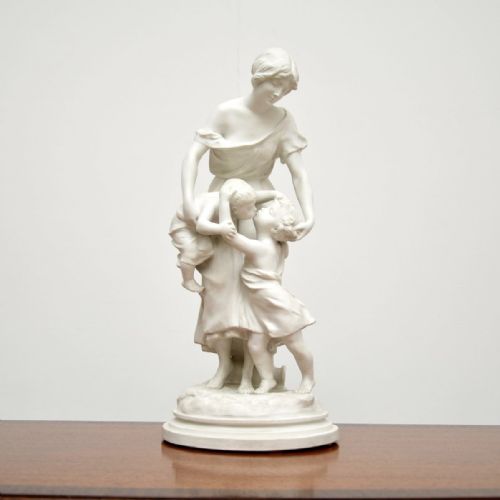
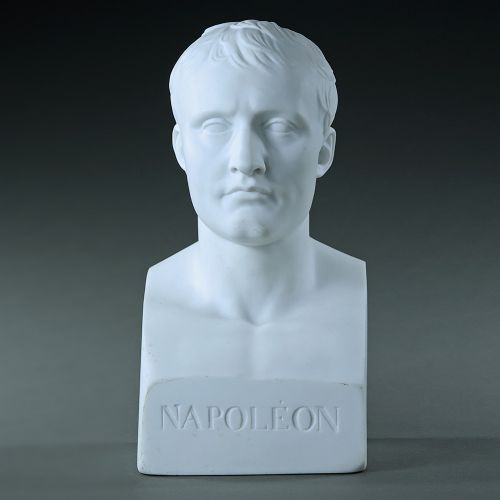
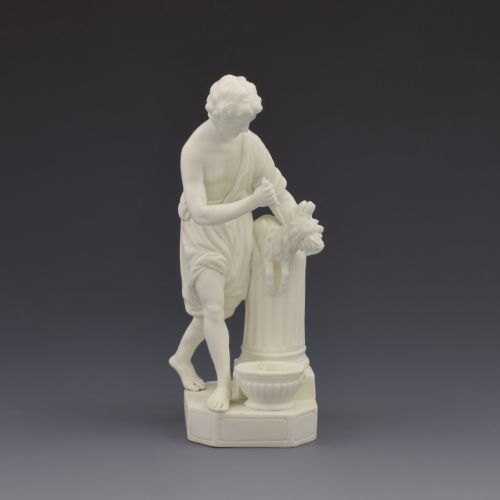
A white bisque porcelain figure presents a matte, unglazed surface that mimics carved marble, showing fine details in drapery, hair, and facial expression. These sculptures emerge primarily from nineteenth-century production, spanning Victorian examples alongside earlier eighteenth-century Georgian and continental works.
Buyers encounter subjects ranging from classical figures such as Ariadne, the Three Graces, and mythological maidens to domestic Victorian scenes like children, gardeners, and literary heroines. Forms vary from single statuettes and portrait busts to paired figures and sculptural groups.
Origins stretch across English factories like Derby, Copeland, and Minton, alongside continental makers from France and Germany. The selection leans heavily toward nineteenth-century Victorian parian ware and French biscuit porcelain.
Materials and production methods
Makers use soft-paste porcelain, parian ware, and biscuit ceramic, fired without a glossy glaze to achieve a porous, tactile finish. Parian porcelain, developed in the nineteenth century, includes a high feldspar content that vitrifies partially in the kiln, creating a dense body resembling marble.
Potters cast these pieces in multiple moulds, assembling individual limbs, drapery, and accessories before firing at high temperatures. Artisans then refine the dried surface by hand, cleaning seam lines and sharpening delicate details.
Listings feature nineteenth-century Victorian pieces alongside eighteenth-century Georgian works, utilising parian porcelain, soft-paste porcelain, and biscuit ceramic.
Differentiating quality across pieces
The choice of body material also influences refinement, as dense parian compositions hold sharper linear definition than softer biscuit clays. The reputation of the factory and the skill of the original sculptor shape the artistic standing of the work.
Derby·Luca Madrassi·Minton·Chantilly·Copeland·Triebner Ens And Co·Vion Et Baury·Sevres
The White Bisque Porcelain Figure Glossary
- Bisque porcelain
- Unglazed ceramic body fired once or twice to achieve a matte, porous finish resembling marble. This surface absorbs light differently than glazed porcelain.
- Parian ware
- Nineteenth-century British porcelain developed to imitate marble for statuary. It contains a high proportion of feldspar.
- Biscuit ceramic
- Alternative term for unglazed pottery fired to a hard state. French makers frequently used this descriptor.
- Neoclassical
- Style drawing inspiration from classical antiquity, prevalent in eighteenth and nineteenth-century figures. It emphasises balanced composition and mythological themes.
- Soft-paste porcelain
- Early ceramic composition fired at lower temperatures than hard-paste. It provides a creamy texture suited to detailed modelling.
White Bisque Porcelain Figure: Frequently Asked Questions
What is white bisque porcelain?
White bisque porcelain is ceramic material left unglazed after firing, producing a matte surface that resembles carved marble. This finish highlights sculptural detail.
Potters use the term interchangeably with biscuit porcelain and parian ware, depending on the specific clay recipe and period.
How do I clean these figures?
Dust unglazed ceramic gently with a soft brush, avoiding abrasive cloths that can catch on delicate fingers or floral elements.
Moisture can penetrate the porous body, so liquid cleaners require extreme caution to prevent staining the matte surface.
Why are some figures called Parian?
Parian refers to a specific nineteenth-century porcelain body designed to imitate Parian marble from the Greek island of Paros.
British factories adopted this formula for statuary figures to give an upscale, classical appearance without using actual stone.
How can I date a piece?
Dating relies on factory marks, ceramic body composition, and stylistic clues such as Victorian costume or neoclassical subject matter.
Early pieces from the eighteenth century typically feature softer pastes, while nineteenth-century parian figures display denser, marble-like bodies.