
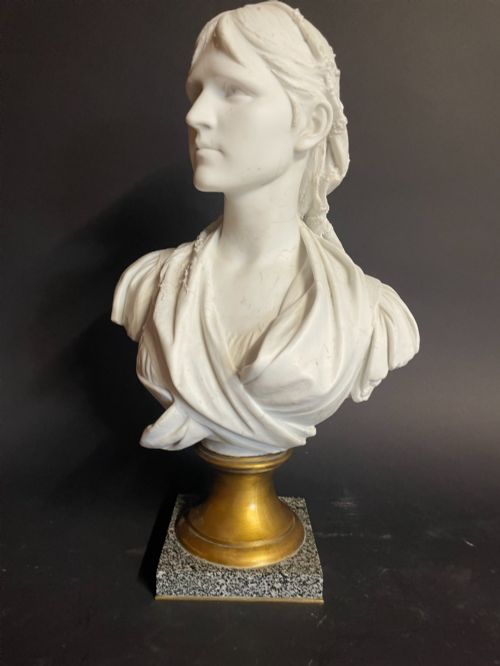
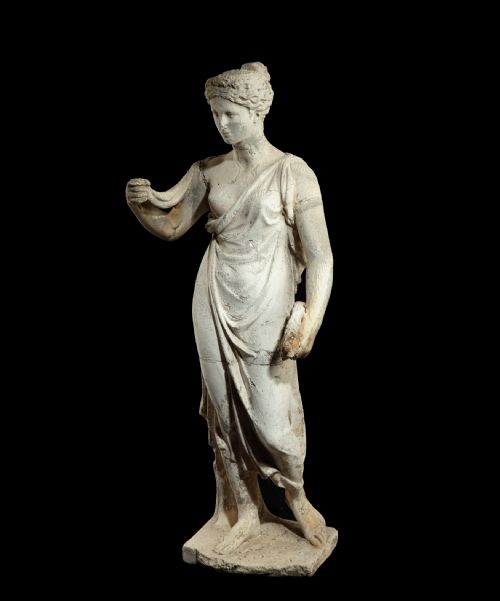


Neoclassical Draped Female Figure
A neoclassical draped female figure captures classical antiquity through draped garments, appearing in marble, bronze, and plaster.
Neoclassical Draped Female Figure
A neoclassical draped female figure represents classical antiquity through draped garments, often appearing as a marble sculpture, bronze statue, or plaster figure. These pieces draw directly on Greek and Roman sculpture traditions, depicting mythological goddesses, allegorical representations, or classical ladies.
Buyers searching for a neoclassical draped female figure will most frequently encounter nineteenth-century interpretations, alongside Regency and Victorian examples. These take various forms, ranging from large garden statues and torcheres to cabinet figurines in parian ware or porcelain.
The aesthetic focuses on balance, restraint, and draped drapery that echoes antiquity, whether cast in metal, carved from stone, or moulded in plaster. Originating from workshops in England, France, and Italy, these figures reflect broad European revivals of classical design.
Materials and construction methods
Carved marble and alabaster require skilled handwork to shape the stone and define the folds of drapery, while cast bronze and brass utilise foundry techniques for metal figures. Plaster, stucco, and reconstituted stone offer alternative modelling mediums for interior figures and garden statues.
Porcelain and parian ware pieces are slip-cast in moulds before being fired and sometimes glazed or left biscuit-matte. These methods determine whether a figure possesses the crisp detail of carved stone or the smooth finish of moulded ceramic.
Listings feature materials spanning marble, bronze, plaster, alabaster, porcelain, brass, granite, and reconstituted stone.
Factors determining quality
Quality in a neoclassical draped female figure rests on the precision of the carving, the crispness of the foundry cast, and the anatomical proportion of the subject. Finer pieces demonstrate careful attention to the fall of fabric and facial expression, whereas simpler versions show softer, less defined contours.
The choice of material similarly influences the character of the piece, with dense marbles and heavy bronzes sitting at a different level of craftsmanship compared to moulded plaster or cast stone.
Barbedienne·Humphrey Hopper·Royal Worcester·Pugi
The Neoclassical Draped Female Figure Glossary
- Neoclassical
- A style reviving the forms, motifs, and ideals of classical Greece and Rome. It dominates architecture, decorative arts, and sculpture of the eighteenth and nineteenth centuries.
- Parian ware
- A type of unglazed bisque porcelain developed in Victorian England that imitates white marble. It is frequently used for classical figures and portrait busts.
- Torchere
- A tall stand or ornamental pedestal designed to support a light, or a sculptural figure holding a light source. In neoclassical interiors, these often take the form of draped female figures.
- Caryatid
- A sculpted female figure serving as an architectural support taking the place of a column or pier. Pairs of these figures are often modelled in plaster or stone.
- Bisque porcelain
- Unglazed ceramic ware that has been fired once, producing a matte, porous surface resembling fine marble. It allows sculptural details to remain sharp and unmasked by glaze.
Neoclassical Draped Female Figure: Frequently Asked Questions
How are neoclassical figures cleaned?
Marble and bronze pieces require gentle dusting with a soft brush to protect the surface finish from abrasion. Moisture and chemical cleaners should be avoided, particularly on absorbent materials like plaster and unglazed porcelain.
Garden statues in stone or reconstituted stone tolerate gentle washing with water, though harsh scrubbing will damage the weathered patina built up over decades.
Where should plaster figures be displayed?
Plaster and stucco figures suit indoor settings away from dampness and direct moisture, which softens the material over time. Placing them on stable pedestals or brackets protects them from accidental knocks.
Larger plaster pairs and torcheres function well in hallways or reception rooms where the classical silhouette can be viewed from multiple angles.
How do I distinguish marble from alabaster?
Marble offers a harder, more crystalline stone structure with high resistance to scratching, whereas alabaster is softer and can be marked more easily. Alabaster also tends to possess a translucent quality when held near light.
Both materials were utilised for nineteenth-century classical figures, but their weight and surface hardness differ noticeably upon close inspection.
Are these figures suitable for gardens?
Only pieces explicitly designated as garden statues in stone, reconstituted stone, or durable bronze are suited for outdoor placement. Plaster, stucco, parian ware, and porcelain must remain indoors to prevent weather damage.
Stone garden figures develop a natural weathering over the decades that integrates them into landscape settings.