
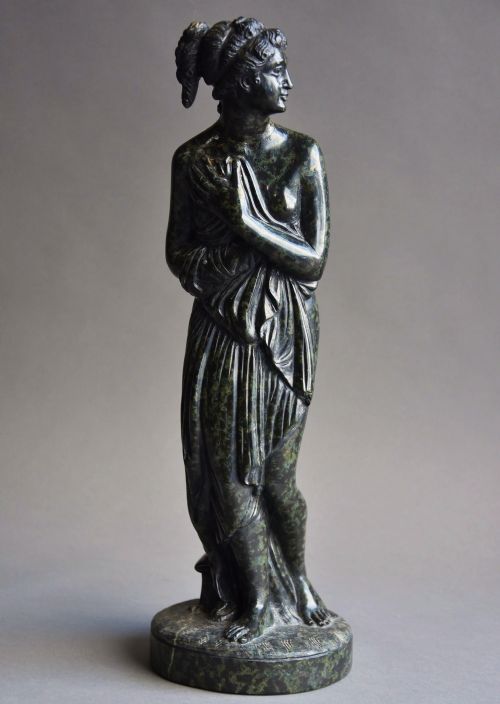
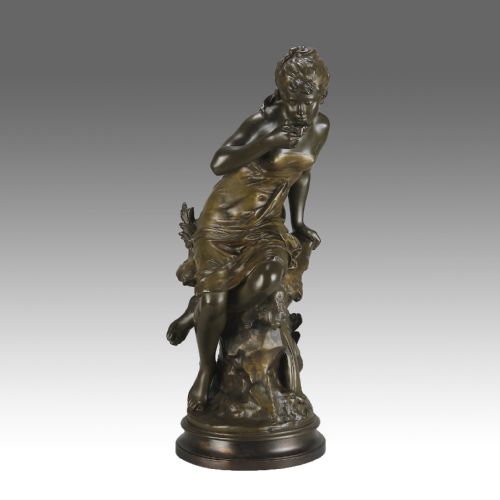
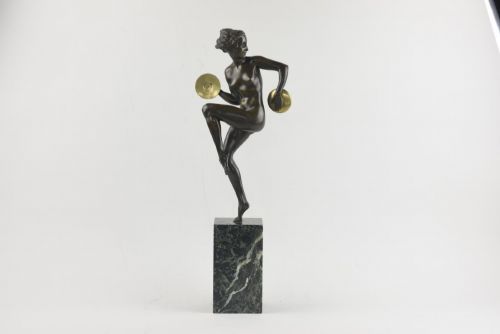
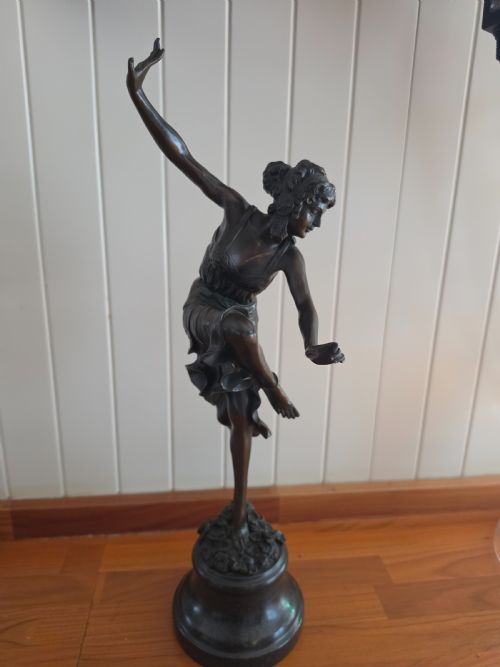




Classical Female Figure Figurine
A classical female figure figurine brings the enduring grace of antiquity into a room through sculpted form.
Classical Female Figure Figurine
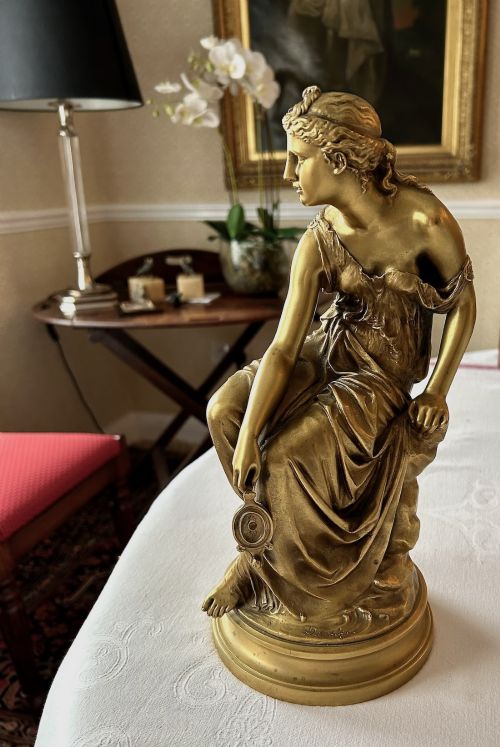
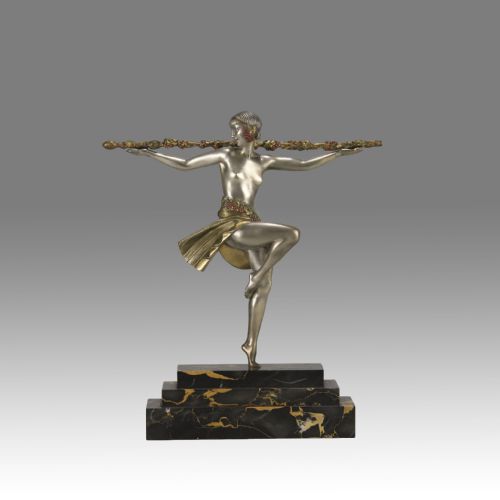
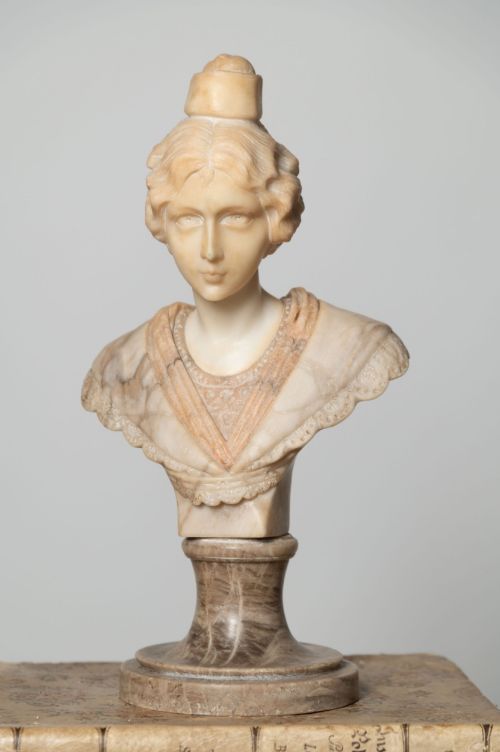
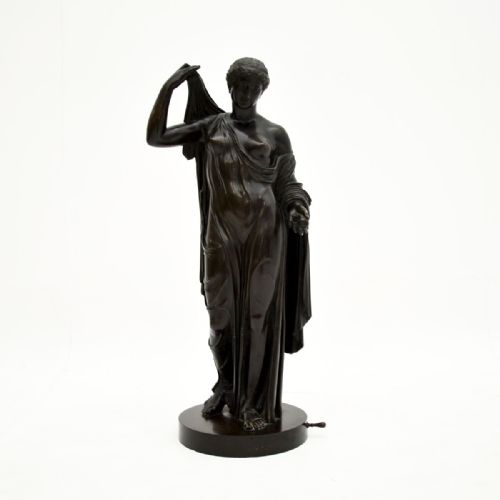
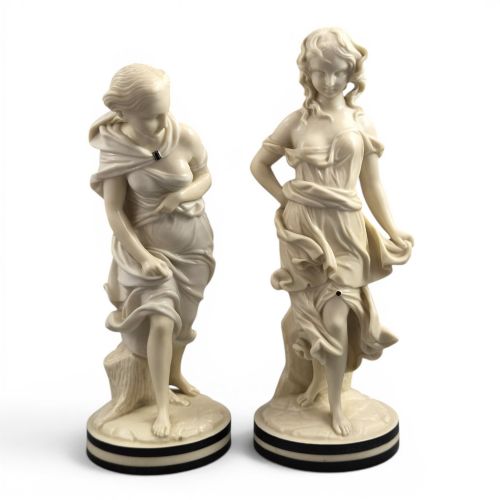
A classical female figure figurine captures mythological subjects, dancers, and allegorical maidens rendered in three dimensions. Buyers seeking this category encounter sculptures and busts created across the nineteenth and early twentieth centuries.
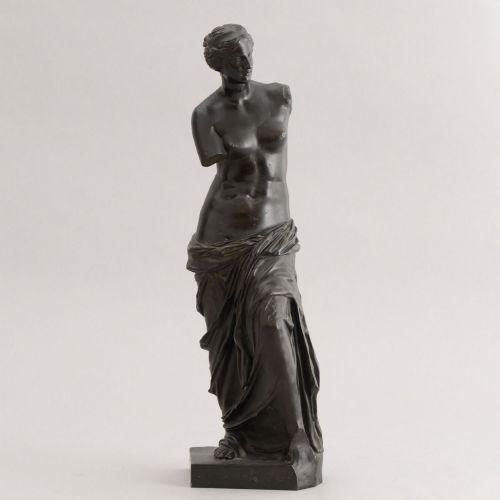
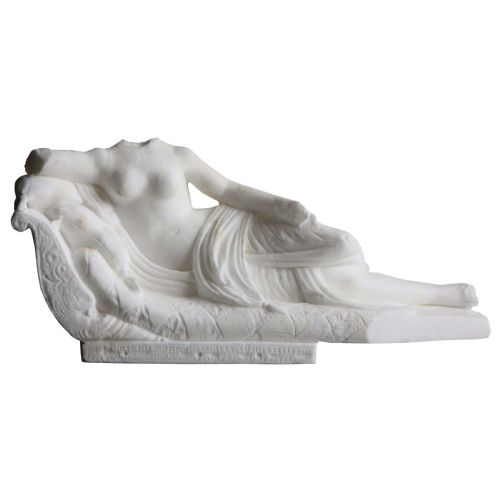
The selections span from Grand Tour souvenirs modelled after ancient sculpture to French Art Deco dancers and Victorian porcelain studies. These pieces bridge classical antiquity and modern decorative arts through varied interpretations of the female form.
Materials and construction
Foundries produced bronze sculptures using the lost-wax method, often adding cold-painted details or gold leaf highlights to enhance the surface. Alabaster and Carrara marble were hand-carved to achieve translucent flesh tones and soft drapery folds.
Ceramic works utilise porcelain, parian ware, and bisque, fired at high temperatures and occasionally finished with shot enamel. Wood carvings utilise limewood, shaping organic subjects with detailed chisel work.
Several figures hold unexpected companions, including a lizard, a dove, and a peacock.
Judging execution and detail
In carved marble and alabaster, the depth of undercut work and the smoothness of the polish separate master carvers from commercial workshops. Ceramic pieces depend on the precision of the mould and the evenness of the glaze application.
Etienne-Henri Dumaige·Pierre le Faguays·Mathurin Moreau·Antonio Canova·James Hadley·Royal Worcester·Royal Dux·Fritz Kochendorfer·Aristide Maillol·Hans Müller·Ernst Barrias
The Classical Female Figure Figurine Glossary
- Grand Tour
- A nineteenth-century tradition where wealthy travellers collected small bronzes and marble antiquities in Italy. These souvenirs replicated famous classical statues found in European museums.
- Parian ware
- A type of bisqueporcelain developed in Victorian England to imitate white marble. It earned its name from Paros, the Greek island renowned for its fine white marble.
- Cold painted
- A technique where oil paint is applied to cold bronze without subsequent firing. This method allowed for vibrant polychrome decoration on decorative sculptures.
- Bisque porcelain
- Unglazed ceramic fired once to produce a matte, porous finish resembling marble. It was widely utilised for Victorian figures to capture soft skin textures.
Classical Female Figure Figurine: Frequently Asked Questions
What is a classical female figure figurine?
These sculptures depict mythological goddesses, dancers, and historical women in bronze, marble, porcelain, and alabaster.
They reflect aesthetic movements from the Victorian era through Art Deco.
How do I identify a Grand Tour bronze?
Grand Tour pieces were produced in nineteenth-century Italy as travel souvenirs replicating ancient sculptures.
They typically feature dark patination and rest on marble bases.
Where should I display a marble bust?
Marble and alabaster pieces suit stable indoor locations away from direct sunlight and dramatic temperature shifts.
Placing them on sturdy pedestals or sideboards provides adequate structural support.
How do porcelain figures differ from bronze?
Porcelain and parian ware offer delicate translucency and matte white surfaces typical of nineteenth-century ceramic traditions.
Bronze provides greater tensile strength and allows for complex patination and cold-painted colours.