




White Porcelain Female Figurine
A white porcelain female figurine brings classical grace to a room, ranging from Victorian parian maidens to sleek Art Deco dancers.
White Porcelain Female Figurine
A white porcelain female figurine encompasses classical allegories, literary heroines, and stylised dancers rendered in pale ceramic bodies. When searching for a white porcelain female figurine, buyers encounter pieces spanning the eighteenth century through to the art deco period.
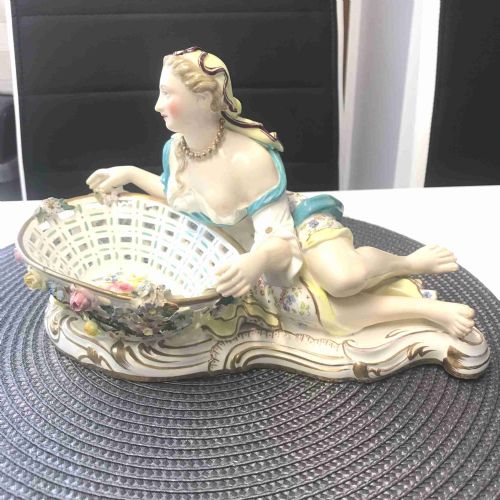
The selection here draws heavily on nineteenth-century Victorian works, alongside earlier continental figures and twentieth-century modernist designs. These objects take the form of table lamps, sweetmeat dishes, busts, and standalone statuettes.
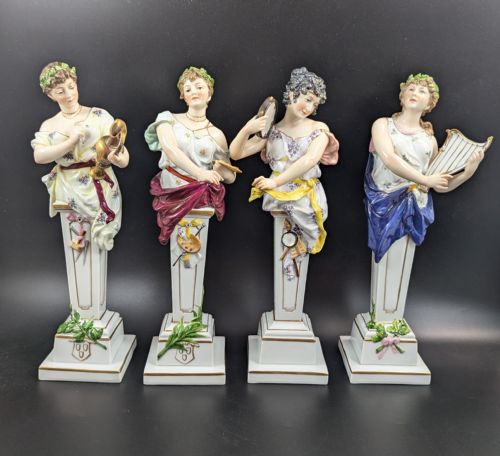
Depictions range from classical maidens with doves and cornucopias to portraits of historical figures and contemporary dancers. Each piece reflects the aesthetic priorities of its era, moving from ornate rococo and neoclassical styling to clean modernist lines.
Materials and manufacture
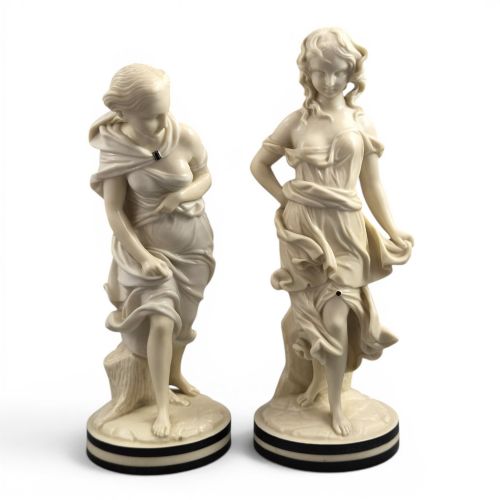
Makers utilised various ceramic bodies, notably hard-paste porcelain, bisque, and parian ware, which mimic the texture of carved marble without a glaze. Enamel accents and gold leaf occasionally highlight specific details such as garments or baskets.
The manufacturing process involved slip-casting or pressing clay into moulds before high-temperature firing, followed by careful hand-finishing of facial expressions and drapery. Biscuit and parian porcelain required precise kiln control to achieve a smooth, matte surface finish across the female form.
Several Victorian maidens share their pedestals with small reptiles, featuring lizards keeping a watchful eye on the classical drapery.
Assessing quality and execution
The choice of ceramic medium also dictates the visual depth, with superior parian and bisque bodies offering a fine grain and tactile weight. Artistic collaboration, such as named modellers or established factory marks, elevates the standing of individual sculptures.
Meissen·Royal Worcester·Sevres·Royal Dux·Achille Mollica·Sitzendorf
The White Porcelain Female Figurine Glossary
- Parian ware
- A fine-grained unglazed porcelain developed in the nineteenth century to imitate carved marble. It gained popularity for portrait busts and classical statuary due to its creamy, matte appearance.
- Bisque porcelain
- Unglazed ceramic fired once or twice to create a porous, matte finish resembling marble. It allows fine sculptural detail to remain sharp without the softening effect of liquid glaze.
- Neoclassical
- A style drawing inspiration from classical antiquity, prevalent in nineteenth-century figures depicting draped women, allegories, and mythological subjects. It emphasises symmetry, restraint, and classical dress.
- Sweetmeat dish
- A small decorative vessel or bowl incorporated into figural table ornaments, often held by a maiden or putto to serve small confectioneries. These pieces combine sculptural presence with functional table use.
- Hard-paste porcelain
- A durable ceramic composition fired at high temperatures using kaolin and petuntse. It provides a bright white, vitrified body capable of holding crisp details.
White Porcelain Female Figurine: Frequently Asked Questions
What is the difference between bisque and parian?
Bisque porcelain refers to any ceramic piece fired without a glaze, offering a flat white matte texture. Parian is a specific nineteenth-century porcelain formula containing a higher proportion of feldspar, designed specifically to imitate white marble.
Parian ware generally exhibits a heavier weight and a subtle translucent warmth compared to standard bisque. Both materials capture fine sculptural details without the glossy sheen of traditional porcelain.
How do I date an antique porcelain figure?
Dating relies upon factory bottom marks, stylistic cues, and the specific type of ceramic body used. Nineteenth-century pieces often display impressed registration diamonds or factory ciphers specific to eras like the Victorian period.
Examining the underside for firing scars, mould seams, and wear patterns also helps determine age. Stylistic shifts from neoclassical drapery to art deco geometry provide clear chronological markers.
Where should I display porcelain statuettes?
Place porcelain figures away from high-traffic edges and direct sunlight to protect them from accidental knocks and fading. Enclosed cabinets with stable shelving provide a secure environment that minimises dust accumulation on unglazed surfaces.
Ensure adequate lighting highlights the modelling of the ceramic body without exposing pieces to excessive heat from nearby lamps. Pairing figures with neutral backgrounds allows the white porcelain forms to stand out clearly.