
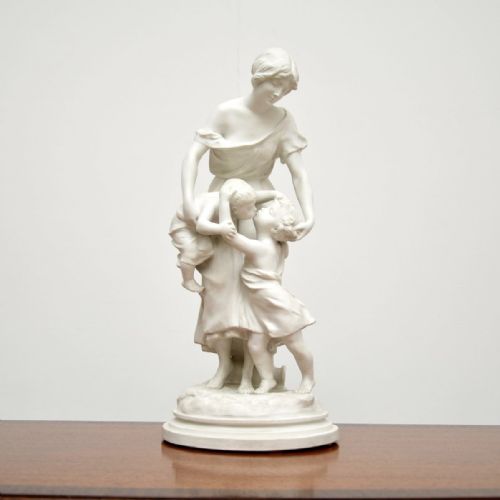


Bisque Porcelain Classical Statue
A bisque porcelain classical statue brings the serene grace of antiquity into a room, offering the tactile warmth of unglazed ceramic and the timeless appeal of classical form.
Bisque Porcelain Classical Statue
A bisque porcelain classical statue is an unglazed ceramic sculpture depicting figures from mythology, history, or classical allegory. When searching for this phrase, buyers encounter works ranging from diminutive figurines to substantial busts produced across the nineteenth century.
The most common versions met here include nineteenth-century English and continental figures, particularly Victorian parian ware and French biscuit porcelain. These pieces often portray mythological subjects, classical women, and historical personages modelled after renowned sculptors.
Originating from major European factories and smaller studios alike, these sculptures capture the nineteenth-century revival of classical ideals. They span periods from the mid-nineteenth century through to the early twentieth century, reflecting shifting tastes in interior decoration.
Materials and Manufacture
These figures are made from porcelain or parian ware fired without a glossy glaze, producing a matte, marble-like surface known as bisque or biscuit ceramic. Some examples incorporate subtle details in paint or gold leaf to highlight drapery and ornamentation.
Moulding and slip-casting techniques allow for the replication of intricate classical details, from elaborate hairbraiding to the delicate folds of drapery. Finished pieces require precise firing control to achieve an even, smooth texture across the entire sculpture.
Listings feature works spanning the nineteenth century, including Victorian interpretations and early twentieth-century examples in parian, bisque, and glazed porcelain.
Evaluating Quality
The choice of body material also influences the character of the piece, with dense parian ware offering a convincing imitation of carved marble. Weight, stability, and the subtlety of surface texture separate standard commercial output from finer sculptural studies.
Sèvres·Luca Madrassi·Copeland·Royal Dux
The Bisque Porcelain Classical Statue Glossary
- Bisque porcelain
- Unglazed ceramic ware fired at high temperatures to produce a porous, matte surface with a texture resembling marble. It is also known as biscuit porcelain.
- Parian ware
- A specific type of fine white porcelain developed in the nineteenth century to imitate carved marble. It contains a high proportion of feldspar, which vitrifies during firing to give a translucent quality.
- Neoclassical
- A style originating in the eighteenth and nineteenth centuries that draws inspiration from the art and culture of classical antiquity. It emphasises proportion, restraint, and classical subject matter.
- Cornucopia
- A horn-shaped vessel overflowing with fruit, flowers, and corn, frequently used in classical sculpture as a symbol of abundance. It often appears as an attribute held by allegorical figures.
Bisque Porcelain Classical Statue: Frequently Asked Questions
How do I clean a bisque porcelain statue?
Because the surface is unglazed and porous, bisque porcelain easily absorbs dirt and oils from handling. Dust the statue gently with a soft, dry brush.
For stubborn marks, use a dry cleaning sponge or a very slightly damp cloth without harsh detergents. Avoid soaking the piece in water.
What is the difference between parian and bisque?
Parian ware is a specific formulation of porcelain developed in the nineteenth century specifically to resemble carved marble. It is denser and slightly more vitrified than standard bisque.
Standard bisque porcelain covers a broader range of unglazed ceramic bodies produced across Europe. Both share the characteristic matte finish.
How can I date a nineteenth-century figure?
Dating relies on stylistic cues, manufacturing marks, and the quality of the ceramic body. Mid-nineteenth-century examples often feature crisp neoclassical modelling and factory impressed marks.
Later Victorian and early twentieth-century pieces may show softer details or different glaze and clay formulations. Comparing the subject matter to known sculptural models also helps narrow the date.
Where were these statues displayed originally?
In nineteenth-century homes, these sculptures sat on mantelpieces, sideboards, and dedicated pedestals in drawing rooms and parlours. They served as visible indicators of cultivation and classical learning.
Their matte surfaces were chosen to mimic marble gallery sculpture on a domestic scale.